
• Home
  • Escapes and Pleasures
  • Family and Friends
  • Go Sox
  • The Outer Loop
  • Articles of Interest

MillersTime

MillersTime

Tag Archives: THE LIST

The List: MillersTime Readers’ 2025 Favorite Books

31 Wednesday Dec 2025

Posted by Richard in Articles & Books of Interest, Escapes and Pleasures

≈ 3 Comments

Tags

A. Lincoln, Best Friends, Favorite Reads, MillerrsTime Readers' Favoirte Books, MillersTime Readers Favorites, The 2025 List, THE LIST
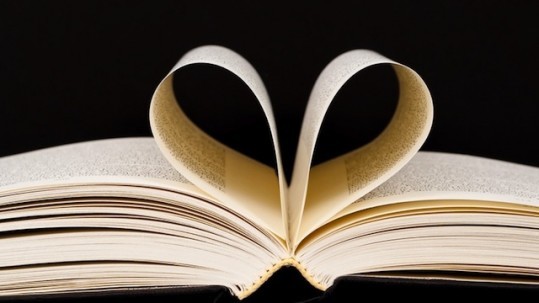
“A best friend is someone who gives me a book I’ve never read.” — A. Lincoln

Happy New Year to all—and welcome to my favorite post of the year.

This year, 63 contributors (35 female, 28 male) shared the reads that stayed with them, with fiction (F) narrowly edging out nonfiction (NF), 52% to 48%.

As always, the range of titles is broad, and it’s the contributors’ reflections on why a book resonated that make this list especially rewarding.

One suggestion: don’t limit yourself to names you recognize. Some of your best picks may come from contributors you don’t know.

I usually pick a dozen or so titles from this list to read over the year ahead, most of which are new to me.

Contributors are listed alphabetically by first name. Any errors are mine, and I’m grateful for corrections. And if you missed the deadline, I’m happy to add your 2025 favorites to those below.

Allan Latts:

1929 by Andrew Ross Sorkin (NF). The Gist: A narrative history of the Wall Street Crash of 1929. Reads almost like a financial thriller, detailing the hubris, panic, and key players—bankers, politicians, and fraudsters—whose actions led to the global economic collapse. 

Jews vs Rome by Barry Strauss (NF). The Gist: A gripping military and political history covering the two centuries of Jewish rebellion against the Roman Empire. It focuses on three major conflicts: the Great Revolt (which destroyed the Second Temple), the Diaspora Revolt, and the Bar Kokhba Revolt. Strauss explains how these brutal wars not only devastated Judea but fundamentally reshaped both Judaism and the emerging Christian faith.

The Golden Road by William Dalrymple (NF). The Gist: A sweeping history that re-centers the ancient world around India rather than Rome or China. Dalrymple argues that for over a millennium, India was the globe’s intellectual and economic superpower—exporting Buddhism, mathematics (including the number zero), and art across the “Golden Road” to influence civilizations from the Mediterranean to Southeast Asia.

As a Jew by Sarah Hurwitz (NF). The Gist: A powerful, modern manifesto on Jewish identity by a former White House speechwriter. Hurwitz (author of Here All Along) tackles the rise of contemporary antisemitism—from both the right and the left—and argues for a reclaiming of Jewish pride. She moves beyond the “victim narrative” to explore the deep wisdom, joy, and resilience found in Jewish tradition, offering a clear-eyed look at what it means to be Jewish today.

Barbara Friedman:

The Daughters of Shandong by Eve J. Chung (F) is a wonderful book about a Chinese mother and her daughters who escape to Taiwan during the Communist revolution and how they make a life of their own.  An AMAZING story and worth a read. . . and without the men who should have shouldered the burden. While this book is listed as fiction, it is based on the author and her family’s life in China.

Blood and Sand: Suez, Hungary, and Eisenhower’s Campaign for Peace by Alex Von Tunzelmann (NF) is a wonderfully written history of the Suez and Hungarian crises in 1956 that threatened to result in WW III.  Major players in this account are Anthony Eden, Abdel Nasser, David Ben-Gurion, Guy Mollet, and Dwight Eisenhower.  This is a book well worth a read.

The Art Spy by Michelle Young (NF) is a fascinating — and very sad — story of Rose Valland who worked at the Jeu de Paume and had a first hand view of Paris in WW II. She saw the Germans loot the Paris museums for Hitler who was amassing the art for his future museum. She worked hard to bring back to the Jeu de Paume and other French museums the art work that had been plundered and to a large extent, she succeeded.

Loving Frank by Nancy Horan (F) is a novel but with a lot of truth to it as well.  A good read re Frank Lloyd Wright.

Ben Senturia:

Lessons in Chemistry by Bonnie Garmus (F). The novel follows the career (and life) of the smart, straight talking Elizabeth Zott as she confronts academic prejudice, sexual violence, parental prejudice. The journey from chemistry teacher to popular TV cooking show hostess, is filled with eccentric characters many unlikable although some are a delight. The family dog, “6:30” and Zott’s daughter Madeline are unforgettable characters. The often tongue in cheek descriptions are a lot of fun.

Nightshade by Mike Connelly (F). I have read (and watched) every Harry Bosch story followed by the Lincoln Lawyer series. I am a devotee. I was excited to follow his new character Detective Stillwell, but I was disappointed. Stillwell who had been exiled to Catalina Island for apparently alienating jealous colleagues, is solving crimes that stump others. The crime solving is ok but the character development is stale and familiar. I hope that I am wrong.

The Book of Doors by Garerh Brown (F). I am halfway through and completely captivated. The story follows NY book seller, Cassie, who is given a magical book that gives her access from any immediate door to any other door in the world. That leads her to incredible adventures and dangerous people who are trying to control that and many other books with equally powerful magic.

Bina Shah:

The Heaven and Earth Grocery Store by James McBride (F).

The Guest List by Lucy Foley (F).

Behind the Beautiful Forevers by Katherine Boo (NF).

Brandt Tilis:

Rebel Ideas by Matthew Syed (NF). A book about the power of diverse perspectives to create big ideas. Usually the theme of this kind of book is the takeaway, and the examples are fillers.  Instead, some of the examples in this book are eye opening, particularly the ones about higher education professors and how the lack of diversity of thought there is hurting those institutions.

How Big Things Get Done by Bent Flyvbjerg and Dan Gardner (NF). This book explores how to make big projects successful and how to avoid failure.  Whether you are doing a home renovation or have a massive capital expenditure at work, this book will be a helpful as a North Star.  tl;dr : give yourself time on the front end to plan so you’re not making changes midstream.

Brian Steinbach:

In addition to The Odyssey and James on the midyear list:

And There Was Light by John Meacham (NF). A life of Lincoln that focuses on the man rather than events, tracing his intellectual development, loves, bouts of depression, faith, and development of his beliefs on slavery and ultimate conviction that slavery must end (although from other writings I have seen he was not convinced that Blacks should stay in the US). Not a hagiography, but rather open to both virtues and vices, motivations moral and political. Fascinating stuff, even if you have read other books on Lincoln.

The Garretts of Columbia by David Nicholson (NF). D.C. native Nicholson has created a deep dive into his own family history, in the process telling the story of many a southern Black family before the Great Migration (and as it began) through the true story of his great-grandparents in South Carolina and the children. [Note: I attended high school with David, although he was three years ahead of me and so only vaguely knew him, and I have had a handful of exchanges with him over the years.] David’s great-grandfather was a professor at Allen University, a lawyer, and editor of several newspapers, and an activist in his church. His activism led to his dismissal from his teaching position and subsequent financial struggles. David’s great-grandmother was a teacher, a supervisor of rural “colored” schools, trainer of teachers, and overseer of the construction of schoolhouses. They believed in the possibility of America and pushed their children to achieve, although with varying results. I was constantly amazed at the depth of David’s research – the things that he uncovered through research and family letters! David is in the process of writing a sequels, focusing on the lives of his grandparents and their issue here in D.C.; an excerpt ws published in May 2025 in Washington History.

Underground Railroad by Colson Whitehead (F). I had read an except of the beginning of this book in the NY Times, but just now got around to the entire book. Whitehead uses the idea of the Underground Railroad as an actual railroad to tell several different experiences of slavery and its aftermath through the experience of a young Georgia plantation slave escaping first to South Carolina, the to North Carolina, then Tennessee, then Indiana, and finally heading further north only to apparently join a group headed to Missouri. Each place is different in its treatment of Blacks, but each time the evil of slavery, slave catchers, and discrimination/jealously of success raises its head, and she moved on. A book Trump would not want you to read, as it exposes a seamier side of our history.

The Running Grave by Robert Galbraith (J.K. Rowling) (F). The seventh in Rowling’s Comoran Strike series, with two more to come. The main plot this time involves a religious cult that presents itself as a peaceable organization that campaigns for a better world, but gradually is revealed to be something quite different and connected to a series of unexplained details. Robin risks much by infiltrating the cult. Not just a standard detective/mystery story, it also delves into the ways that cults can work and hide what they are really bout. (Jonestown, anyone?) An easier rad than The Ink Black Heart with Rowlings’ typical well-plotting and cast of interesting characters. And Strike

Carol Haile:

This is How It Always Is by Laurie Frankel (F). A heartwarming and heartbreaking book about the challenges and struggles that impact an entire family when a child doesn’t conform to what is considered the “norm”. Listening on audio really brought the characters to life.  Claude/Poppi seemed overly mature and wise  for a child of that age; but this helped the reader understand the conflict and turmoil of trying to understand  why you feel different.   

Regardless of your thoughts regarding trans children and what should or shouldn’t be done before they can consent, this story will open your eyes to how difficult this life can be (for everyone).

Catherine Lynch:

Final Exam: A Surgeon’s Reflections on Mortality by Pauline W. Chen (NF) which came from you not quite two years ago. What a great book! And yet I’m glad I read it now and not sooner. Her reflections are unfortunately more relevant now, and other things I’ve read in the interim created richer context for them. Thank you for sharing the book!

Chris Boutourline:

Martyr! by Kaveh Akbar (F) explored themes of faith, art, martyrdom, addiction, and family with humor and a twisting tale.

Rise to Greatness: Abraham Lincoln and America’s Most Perilous Year by David Von Drehle (NF). Examines the political, personal and military happenings of 1862.

Appleseed by Matt Bell (F). An mind-bending work of eco-fiction. It took me a while to catch on to this tale told from three different times in history but it paid off.

Wandering Stars by Tommy Orange (F). With some characters surviving from his previous novel, Orange explores the fraught search for security by Native-Americans.

Chris Rothenberger:

By Her Own Design by Piper Hugule (NF). This book is the untold story of Ann Lowe, an extraordinary seamstress whose story is remarkable and previously unknown and ignored by history.   This was a book club read and applauded by all members who gave high marks.  For years, Ann designed clothes for society’s most influential women, including making the wedding dress for Jacqueline Bouvier Kennedy.  The struggle of a black woman in the Jim Crowe south and in the north was a parallel and central theme in the book, very vivid and difficult to read at times.   Ann’s struggle over many obstacles, perseverance, mistakes, and great talent were thoroughly explored and brought her story to life.   The book was engaging from the beginning, and characters well developed and memorable. If you enjoy historical fiction, read this one.   Ann’s voice is captured and there are many lingering phrases that resonate for the reader.   Fascinating and profound story.

The Stationary Shop by Marjan Kamali (F).  Setting: Tehran, 1953, political upheaval, a great 1st love and great sorrow.  Fast forward 60 years to a changed life in California with another man and then life in the Boston area and always wondering what happened to her first love.  By chance Roya gets to cross paths with him again and ask the questions that plagued her for a lifetime.  With colorful, memorable characters, Kamali creates a vivid and immersive world of both Tehran, and the 50’s-60’s.  The background with the backdrop of the culture of Tehran, traditions, savory foods that you can practically taste, lifestyle and customs painted a meaningful picture of life there.  That was a secondary gain in this historical fiction book that was disguised as a love story.    The book was engaging and enjoyable from the very beginning and well received by my book club.  

It Begins with Us by Colleen Hoover (F) & It Ends with Us  by Colleen Hoover (F).  Book 1 and 2.  A young businesswoman begins a relationship with a neurosurgeon, but when her 1st love reappears she must confront her history, their history and make difficult choices about her future.   These books follow Lily’s journey through love, abuse, and self-discovery.   Book #2 picks up where #1 leaves off.  There are twists and surprises. The story was touching, emotional and powerful.   The sensitive themes about relationships, love and abuse, may be triggering for some readers.    Lily’s story is very real – real issues, real life and contains many layers making it powerful and easy to invest in.  

Christopher McCleary:

Water Knife by Paolo Bacigalupi (F) the best of the year from my meager reading list.

Chuck Tilis:

American Maccabee: Theodore Roosevelt and the Jews by Andrew Porwancher (NF). Who knew our 26th President had a consequential impact on the Jewish-American dream. Despite being born into high Protestant society, TR actively sought Jewish talent from his days as a Rough Rider through his Presidency. He was ahead of his time with trust busting, environmentalism, worker protections (think of Lower East Side sweatshops), and even providing equal opportunity to Jews as the mass migration to America unfolded.

Jews Versus the Romans: Two Centuries of Rebellion Against the World’s Mightiest Empire by Barry Strauss (NF). Barry, an accomplished historian and academic, painstakingly researched the period of 63BCE to 136 CE. During these two centuries, we had the destruction of the Second Temple, Masada and the Bar Kohhba Revolt. This is a book for history “buffs” and covers in detail a time of peril (and where Jews were noted warriors-albeit massively outmatched) for the Jewish homeland which of course continued for nearly 2 millenniums.

Cynthia Margolies:

The Inner Work of Age: Shifting from Role to Soul by Connie Zweig (NF).  My favorite book this year. The author takes a positive approach to aging as an opportunity to embrace becoming “Elders.”  She notes, however, that there’s internal work involved in letting go of our previous identities and growing into a fuller realization of who we are.  She emphasizes the spiritual capacity to be present.  As a 78-year old two years into retirement, I found it a welcome and hopeful validation of the challenges and opportunities of this life stage.   

David Stephenson:

Raising Hare by Chole Dalton (NF). I turned 80 on May 6th, and my favorite gift of all was a book from a co-worker from long ago who knows me better than I do myself!  She gave me Raising Hare a slim volume I would have breezed by in the bookstore, but had a profound impact on me.

It’s a memoir of Chloe Dalton’ s COVID year, when she retreated to a location unknown (to protect other hares!) in the north of England from her hectic career as a London political consultant. Early on, while taking a walk, she noticed a little thingy moving on the dirt road. On closer examination, she saw it was a teensie hare (a “leveret” to those of us who now know more than we believed possible about hares). Dalton takes it home — gingerly, unlike those who might understandably — overwhelm it with attention, probably dooming it (the death rate is very high, especially due to vehicles and farm equipment).  For two years, she, and we, learn a tremendous amount about relationships, nature, and nurture, as the hare grows and becomes a mother.  It was wonderful, without being cloying, and I now make a big deal about lending my personal copy, only to those who I think might have the depth of character to take it to heart!

Dominique Lallemont:

Patrick Modiano: The Ballerina by Patrick Modiano (F). A little gem written by Patrick Modiano, Nobel Prize of Literature in 2014. The book is a ‘promenade’ both through the life of a mysterious young dancer and the streets of Paris. A young aspiring writer meets a young dancer in a bar-club through a man of a dubious past who rents him a very cheap ill-heated room. We learn about the dancer’s youth who took up dancing to escape what seems to have been a very unhappy youth in a Paris suburb, daughter of a mafioso father (nothing is ever said about her mother). She, herself, is the mother of a little boy whom she had from a mafioso young man who had to flee. The little boy is raised somewhere in Southwest France until age 7 when his mother brings him back to Paris – he arrives at the Austerlitz train station, with his name on a label (just like little Padding bear in London) – when her economic condition has improved and she has an apartment with a room for him, The writer and another young man seem to take care of the boy while the dancer pursues her daily training with a Russian teacher and performs with several companies. The book is a recollection of the aspiring writer’s learning days – a parallel between the discipline of classical dance and the needed discipline of a writer — a stroll in the past but brought back by memory by a casual encounter fifty years later with the mafioso who provided lodgings, in a way to redeem himself from his past actions. It is a powerful take, beautifully written, of the flow of life through the disciple of the dancer until she masters the technique that makes her float above the ground as light as a feather, understanding through silences, respect for the other who does not want to revel his or her past and even present. Discipline and long walks help clear up the mind and the sould until the final note of happiness between the dancer and her son a Christmas night!


The Granddaughter by Bernhard Schlink (F). From the author of the no.1 international bestseller The Reader. The Granddaughter is a gripping novel that transports us from the divided Germany of the 1960s to contemporary Australia, asking what might be found when it seems like all is lost. Kaspar, a West German, meets Birgit, an East German, in a youth festival. Love at first sight… he helps her leave East Germany.  In the bright spring days, anything seems possible for them – it is only many years later,after her death, that Kaspar discovers the price his wife paid to get to him in West Berlin. Shattered by grief, Kaspar sets off to uncover Birgit’s secrets in the East. His search leads him to a rural community of Neo-Nazis, where Birgit’s daughter whom she abandoned before leaving East Germany, grew up. Birgit’s granddaughter accepts Kaspar as her grandfather, and visits him during school holidays. Their worlds could not be more different – but he is determined to make her discovered another world than the Neo-Nazis, in which music, beauty, and different ways of thinking about the war, the holocaust, and recent Muslim immigrants prevail. He respects her freedom until she disappears from his life to leave in a Neo-Nazi community until one night when someone is killed, she knocks at his door. He thinks he has convinced her tor eport to the police, but instead she escapes to Australia to start a new life, and he dreams that one day he will go and see her. A griping story that not only addresses the issue of the difference in education between East and West Germany before the reunification, and the radical shifts to Neo-Nazism, but also complex personal issues such as adoption, lack of affection and tenderness, brain-washing and more, and how it can mess up individual development.

The Sum of Us: What Racism Costs Everyone and How We Can Prosper Together by Heather McGhee (NF). A brilliant book which documents with thorough research findings the roots of white supremacy and racism, and the cost that this has for the whole spectrum of Americans, including the lower income groups amongst the white population. The chapter explaining that the US never was a real democracy is extremely instructive. For me, as a foreigner, McGhee’s analysis corroborates my own observations and analysis and helped me fathom why I am not yet a citizen. This said, she offers paths for hope, and I support that. If we all make an effort to come together and continue working hard to build a democracy and if we are willing to share the wealth and be a multi-racial society, there is a chance for American to be a country to realize the dreams to which all aspire. In my humble view, this book should be used to teach young people the reality and the cost of the racial divide.

Death at La Fenice by Donna Leon (F). Attracted to this book found in a sidewalk “Small Library” because of my love for both Opera and the City of Venice, I actually enjoyed taking a break from serious readings to indulge in this easy read and fun thriller. A famous German conductor has been killed in his dressing room between Act II and III of an Opera performance. We follow the detective moving around the enchanting sites of Venice, interviewing a wide range of characters – possible culprits. I rarely read thrillers in English, and only one in French every year. This book is both fun to read and to analyze how the author crafted the story quite skillfully.

Donna Pollet:

The Correspondent by Virginia Evans (F). A woman’s life revealed through carefully and precisely crafted letters written over many years to family, friends, authors of note, and miscellaneous contacts. This epistolary novel is part confessional, self-examination, and artistic expression. It is a paean to the written word and the reading life, a powerful means towards healing and redemption.

My Friends by Frederick Backman (F). A serendipitous meeting between a dying artist and a foster care teen on the run makes for a very funny and emotionally poignant plot about the transformative power of art and the bonds of friendship. There are two circuitous timelines which provide the backstory of the dying artist, his first rather mysterious painting, now a recognized masterpiece, and meeting the troubled teen runaway, Louise, a budding artist, who is obsessed with the meaning of the three small figures in the painting rather than the scene of the open sea. Twenty-five years ago a talented, but timid and bullied boy is fiercely protected, supported and encouraged to pursue his artistic talent by a small circle of friends, all of whom have troubled and damaged lives growing up in an impoverished community. In the present, the runaway, is plagued by her own troubled and damaged past and the recent death of her only friend, her source of security and hope. She is completely alone, homeless and penniless. These lives become linked when the dying artist, unexpectedly, bequeaths his masterpiece to the teen and tells his friend, Ted, “she is one of us”, an implied directive to stand by her. And so, the legacy begins anew with friendship and art as inextricable bonds rescuing and nurturing a young life.

The Safekeep by Yael Van der Wouden (F). This is not a book for everyone, but for those who venture, you will find it a provocative and remarkable read. It is a debut novel short listed for the Booker Award, 2024. The characters are all rather odd and curious. The passionate love scenes are erotic, intense, and graphically depicted. It is a tightly constructed novel, and from the very beginning, there is an underlying tension and a foreboding of things to come. The author does drop small hints, but it’s all like beginning a complex jigsaw puzzle. It is 1961 In the Netherlands. The main character is a house occupied by Isabel, the youngest of three siblings. The family moved there during the war. Her mother has died, her brothers have up and left and Isabel is the sole guardian of the family home. She lives an extremely regimented, repressed and solitary life obsessed with preserving every facet of the house. In walks, Eva, one of her brother’s serial romantic partners, who is foisted upon her for a short stay. She is a whirlwind, and Isabel’s ire is instantly triggered. Her carefully constructed world is completely upended. But, this is only the first of many dramatic reveals concerning Isabel, Eva, and the House. A World event from the past is only a small step away from rearing its ugly head colliding with the present and setting the stage for an unexpected future.

The Time of the Child by Niall Williams (F). Welcome to Faha, a charming Irish village in the 1960s. Like Williams’s previous novel, This is Happiness, this is a lyrically written, life affirming tale, and perfectly timed for a holiday season. Dr Troye is the village GP, the mainstay in providing medical care, and his daughter, Ronnie, competently provides the upkeep for both home and surgery. They are both living quiet lives of desperation until an abandoned baby is left in their care. Defying church prescriptions, they secretly care for and fall in love with this baby girl and in so doing their spirits are lifted and their lives immeasurably transformed. Well-being. good will and humanity triumph.

Doug Wolf:

Hard Times & David Copperfield by Charles Dickens (F).

The Demon of Unrest by Erik Lawson (NF) about the run up to the Civil War [and a rebuttal to Nikki Haley’s (remember her) equivocating on slavery as the cause of the war.

Citizen Soldiers by Steven Ambrose (NF) about WW II from D-Day through the Bulge to the fall of Germany. Would/could we commit to do that today.

A Fever in the Heartland by Timothy Egan (NF) about the resurgence of the Ku Klux Klan in teen’s and twenties [and the rise of a shameless amoral demagogue/grifter/hypocrite who finds his way to wealth and power by tapping into grievance.]

Ed Scholl:

Valiant Ambition by Nathanial Philbrick (NF). This is the 2nd book of Philbrick’s trilogy about the Revolutionary War. It covers the middle years of the war and takes an in-depth look at Benedict Arnold — one of the most effective generals in the Continental Army until his betrayal of the cause. I haven’t read the other two books yet, but I plan to do so after enjoying this book so much. It was also a good companion piece to watching the new Ken Burns documentary on PBS about the Revolutionary War.

A Gentleman in Moscow by Amor Towles (HF). This book has been out awhile, but I never got around to reading it until now. It is a historical fiction novel about a Russian aristocrat sentenced to house arrest in Moscow’s Hotel Metropol after the Bolshevik Revolution. It was very entertaining.

Elizabeth Tilis:

Cursed Daughters by Oyinkan Braithwaite (F). About a young woman in Lagos, Nigeria who must shake off a family curse.  

Culpability by Bruce Holsinger (F). A family drama about moral responsibility in the age of artificial intelligence.

The Names by Florence Knapp (F). Three alternate and alternating versions of the life of a woman’s choice of name for her son. Explores domestic abuse, messy ties of family and possibilities for healing.

Homeseeking by Karissa Chen (F). Follows the separated loves of lovers over six decades of tumultuous Chinese history. 

Blue Sisters by Coco Mellors (F). Three siblings return to their family home in New York after their sister’s death.

Ellen Goodman Lewis:

These Precious Days by Ann Patchett (NF). Noted for fiction, Patchett weaves together a series of essays in which she ponders friendship, living well, the inevitability of death, and the role of memory.  She shows herself as a whole and honest person – from her Catholic upbringing, to her debt to her 3 fathers, to the reality that anyone who comes into her circle will be a subject for her writing.  There is a lot of lived wisdom in this book.

Ellen Hoff:

My Life in France by Julia Childs, et al (NF).

Ellen Miller:

The Lion Women of Tehran by Marjan Kamal (HF): An engaging coming-of-age novel set in Tehran in the 1950s, a time of profound social and political change in Iran. As a work of historical fiction, it succeeds on every level, weaving a compelling narrative around strong female characters who must navigate friendship, ambition, and identity in a world filled with uncertainty. It offers offering an intimate portrait of women’s lives during a pivotal moment in history. Its an enjoyable and easy read that you will remember.

Holding the Line: Women in the Great Arizona Mine Strike of 1983 by Barbara Kingsolver (NF). As a fan of the author, I read this book because this is a very early book that she wrote, and I wanted to see how she started her storied career. The setting was also intriguing — Richard and I had just spent a day rambling around Arizona where this could have take place. It’s a two-part story that mostly explores how women’s lives were transformed by an eighteen-month strike against the Phelps Dodge Copper Corporation. The book  is part oral history and partly social commentary.  A perfect combination for me.

All the Beauty in the World: The Metropolitan Museum of Art and Me  by Patrick Brinkley( NF).
This wasn’t a book I discovered on my own; it was selected as next month’s read for my book club, and I doubt I would have read it on my own! (Thank you Book Club). As I read it, I quickly understood why it made the New York Times bestseller list. The author is a New Yorker writer who left that career behind and spent a decade working as a museum guard. Through his eyes, museum visits are transformed. We follow him as he protects delicate treasures from Egypt to Rome, wanders the galleries, and marvels at the extraordinary works in his care. After reading this book, you’ll never walk through a museum in quite the same way again.

Ellen Shapira:

The Correspondent by Virginia Evans (F). The Correspondent is far and away one of the best books I have read in a long time!  This charming debut novel takes the form of a series of letters that the central character, Sybil, a 72 year old retired divorced lawyer, writes to all kinds of people including, though not limited to, family, friends, customer service representatives, former work acquaintances, two male suitors, and famous authors who actually write her back.  Through these beautifully written letters the plot unfolds and amazingly are all tied together in the end with a slight sad and poignant mystery revealed.  Often the endings of books tend to disappoint but the ending of this book is beautifully created to leave the reader totally satisfied.  Highly recommended! 

The Names by Florence Knapp (F).  The Names is a novel consisting of three different plot scenarios. The mother of a young daughter is about to give birth to her second child and is contemplating a name for her soon to be born son. The three names she is considering are one that her husband is insisting on, one chosen by her daughter, and one she would prefer. The three totally different outcomes are presented, following what would happen if each name were chosen.  While maybe not totally believable that a name can determine so much of one’s personality, the three divergent stories do make you think about the consequences of one major decision.  

Broken Country by Claire Leslie Hall (F). Broken Country is both a murder mystery and a love story. Set in rural England the story begins when the farmer’s daughter, Beth, falls in love with the wealthy young son of the nearby estate owner’s son. After a whirlwind romance the young lovers break up. She soon marries the neighbor boy who has always loved her and they are happily married for a number of years running his family farm until her first love returns as a divorced father of a young son. Beth is confronted with leftover feelings as she helps her ex-lover care for his young son. In the midst of this love triangle, a murder has occurred and as the murder mystery is revealed secrets are revealed which make for a compelling ending.

Emily Nichols Grossi:

Katabasis by RF Kuang (F). A deliciously brutal and incredibly literary take down of competitive academia, Katabasis is set at Cambridge and in the circles of Hell. RF Kuang has such an incredible imagination and also a vast command of literature and linguistics. I didn’t find Katabasis quite as excellent as Babel (Kuang’s previous work), but I fully enjoyed it.

A Gate at the Stairs by Lorrie Moore (F). I’m new to Lorrie Moore which is my loss, and a friend suggested I start with A Gate at the Stairs. The main character is a college student in the Midwest who takes a job as a nanny in her university town. It’s just after 9/11 and is a coming-of-age story that also explores themes of race, class, love, and war. It’s not a loud or showy work, but I did deeply enjoy it, and Moore is a great, incisive writer.

Eric Stravitz:

Demon Copperhead by Barbara Kingsolver (F). The best book I’ve read in a decade! Epic story about Appalachia, the ravages of Oxycontin and other drugs, and ultimately, resilience in the face of incredible odds. Demon is a fantastic protagonist. Kingsolver’s mastery of the English language is quite a treat to behold.)

True Grit by Charlies Portis (F):

Israel: A Simple Guide to the Most Misunderstood Country on Earth by Noa Tishby (NF)

Birnam Wood by Eleanor Catton (F)

Fruzsina Harsanyi:

One Day Everyone Will Have Always Been Against This by Omar El Akkad (NF).  Print and Audio. By far the most thought-provoking, compelling book on my list is this one by an Egyptian-Canadian author who now lives in Oregon.  I note his ethnic background and current domicile because it’s important to bear in mind as one reads this polemical memoir/lament/critique of Western values.  El Akkad’s reflections begin with the Israel-Gaza War and then moves on to other examples of what he sees as Western hypocrisy and the inadequacy of democratic political values when confronting evil.

I read and listened to this book a chapter at a time, taking a break between chapters. I gave it to each of my adult children for Christmas.

Co-Intelligence, Living and Working with AI by Ethan Mollick (NF).  Print. The most useful book I read this year, thanks to Richard Miller and MillersTime book list. Not a day goes by that we don’t read something about how AI affects our lives. This book, in a language I could understand, educated me on what it is, how it works, how it’s trained, and how it should be used. The future with AI does not have to be catastrophic, he writes, if we plan for it.

Miracles and Wonder: The Historical Mystery of Jesus by Elaine Pagels (NF). Print.  I’m interested in religion and theology and have always been curious about how this man, Jesus, 2025 years (more or less) after his birth, continues to inspire millions of followers.  Pagels, a professor of religion at Princeton, has written a scholarly, but readable book on the origins of Christianity.  The most interesting parts of her research were the connections she makes between Old Testament and New Testament stories.  She says, “What fascinates me is not only the historical mysteries my book seeks to unravel, but the spiritual power that shines through these stories.”   

Dear Miss Perkins: A Story of Frances Perkins’s Efforts to Aid Refugees of Nazi Germany by Rebecca Brenner Graham (NF). Kindle. This book was written with the support of a grant from the National Archives Foundation’s Cokie Roberts Fellowship.  It’s a story that deserves to be told about the first woman Cabinet member, Secretary of Labor Frances Perkins. In 1911, she witnessed the Triangle Shirtwaist fire in New York City. That experience and, by her own account, her religious foundation as a practicing Episcopalian, motivated her to promote progressive labor policies. The book’s main focus is on her aid — often as the sole voice in Roosevelt’s Cabinet — to aid refugees from Nazi Germany. I regret that the book didn’t benefit from better editing.  Regardless, I recommend it as a story worth telling.   

Garland Standrod:

The Gales of November: The Untold Story of the Wreck of the Edmund Fitzgerald by John U. Bacon (NF). Investigates the 1975 sinking of the “Edmund Fitzgerald” on Lake Superior during a devastating storm, exploring America’s maritime history and the lives of 29 lost crew members. Made famous by the song by Gordon Lightfoot, which is covered In the book.

Mortality by Christopher Hitchens (NF). A brilliant memoir of Christopher Hitchens’ battle with cancer, exploring the human predicament and the enigma of death. A necessary end of life book.

Into Thin Air: A Personal Account of the Mount Everest Disaster by John Krakauer (NF). A journalist-mountaineer’s harrowing tale of high-altitude climbing, bad luck, and heroism on Mt. Everest, where a storm claimed five lives and left him in guilt-ridden disarray.

A Death in the Family by James Agee (F). A six-year-old boy experiences and processes his father’s death alongside his family members. This Pulitzer Prize-winning autobiographical fiction captures the emotional journey through a child’s perspective.

Nothing to be Frightened Of:  A Personal Memoir by Julian Barnes (NF). A memoir on mortality, one that touches on faith and science and family as well as a rich array of exemplary figures who over the centuries have confronted the same questions he now poses about the most basic fact of life: its inevitable extinction. If the fear of death is “the most rational thing in the world,” how does one contend with it?

George Ingram:

On the serious side:

Abundance by Ezra Klein and Derek Thompson (NF).

The Balance of Power by Jim Wright (NF).

On the lighter side:

Elly Griffiths the Magic Men Series by TG Reid (F).

Gina Price:

While everyone is talking about James from Perceval Everett (and rightly so, it was excellent), I ended up reading The Trees (F) by Everett first. While it is darkly humorous, it is a powerful story that every American should read. It is a book that is so carefully written, where even word placement on the page is meaningful. I found it to be very moving and an important book to read in today’s political climate.

Haven Kennedy:

The Conductors by Nicole Glover (HF). I enjoy books that come with a “what if” and a nod to history. The Conductors is a book about former slaves and the underground railroad. The book delves into black history and how newly freed slaves created their own communities. It’s a mixture of folklore, history, and social commentary wrapped in a mystery. Highly enjoyable, and I especially enjoyed the audio book.

The Tainted Cup by Robert Bennett Jackson (F). Absolutely brilliant. Jackson is a powerhouse writer and merges fantasy and mystery together brilliantly. Jackson also creates a diverse cast of characters, especially LGBTQIA+. This is one of his better books, written in response to people’s appetite for bloody and violent fiction focused on royalty. The book delves into murder and how it plays into the corruption of power. It’s fascinating.

Author Brandon Sanderson: Another author known for his diverse characters. Best known for his series his standalone books are excellent. His young adult series featuring Alcatraz Smedry is a masterpiece. The book deals with how misinformation is spread and the importance of questioning the status quo. The book is dark at times but extremely important for current times. It encourages critical thinking and it’s fun. His books Yumi and The Night Painters and Trees of the Emerald Seas are beautiful and captivating retelling of fairy tales.

I know fantasy isn’t for everyone, but I recommend everyone try it out. What I’m reading most at the moment is cozy fantasy. Fairy tales for adults. It seems that modern fantasy is better at character diversity – and making it natural. Being gay is a facet of someone’s personality, not it’s entirety. It’s fun. And it often contains brilliant social commentary.

Hugh Riddleberger:

1929 by Andrew Sorkin (NF). One might think it was all about a day when the market tanked. But, the fact was the “crash” was not a one day event but covers from the early 20’s through the early years of FDR’s presidency and focuses on some of the key players that led to 1929 and after. Researched over eight years by NY Times writer Andrew Sorkin, this is a very readable account and helped to reassure me the market will not tank as it did in 2008 or with all the AI excitement. But, it might be something else!!!

The Unfinished Love Story by Doris Kerns Goodwin (NF).  Who knew that her husband was so accomplished. As with anything she writes, this is a love story but much more. 

All the Colors in the Dark by Chris Whitaker (F). The fictional tale of a one-eyed “pirate” and his determination for finding who was responsible for the disappearance of young women after his rescuing a girl from captivity, and his own captivity. 

I also loved the book The Storied Life of A.J. Fiery by Gabrielle Zevin (F) and any novels by Kate Quinn and James McBride.

Jane Bradley:

Mother Mary Comes to Me by Arundhati Roy (NF).  I’m always drawn to an audiobook that’s read by its author; hearing the story told in an authentic voice is especially powerful when it’s a memoir.  I’m also always interested in the lives of writers whose books have been among my favorites, like The God of Small Things and The Ministry of Utmost Happiness by Arundhati Roy.  I was captivated by this intimate story of Roy’s childhood in India, her relationship with her mother, and the experiences that shaped her writing — it made me want to re-read her novels, and to list them here as favorites as well.

Jeff Friedman:

The Historian by Elizabeth Kostova (F). A historian of medieval Europe uncovers credible evidence that Dracula still walks the earth and travels the continent in search of archival material to help resolve the mystery. The vibe is very “Indiana Jones visiting libraries and churches” in a manner that I found delightful, nerdy, and riveting.

The Devil Reached Towards the Sky by Garrett Graff( NF). A fantastic oral history of the atomic bomb, including testimonials from scientists who developed it, airmen who dropped it, and civilians who survived it. Graff does a terrific job of making readers feel like they’re “in the room” with interviewees; their stories are amazing, even if you know the basic history.

Jesse Maniff:

The Tainted Cup by Robert Jackson Bennett (F).

A Drop of Corruption by Robert Jackson Bennett (F).

The Raven Scholar by Antonia Hodgson (F).

1929 by Andrew Ross Sorkin (NF).

Judy White:

Horse by Geraldine Brooks (F) – I am seldom a fiction reader, but this is a hybrid, based on a real horse, Lexington, and its human contemporaries… as well as wholly fictitious contemporary characters in Washington DC. Though the chapters alternate in time and place, the book is never confusing.  An appendix gives the facts for the fictionalized characters based on the author’s thorough research.  A great, absorbing story.

By the Second  Spring:  Seven Lives and One Year of the War in Ukraine by Danielle Leavitt (NF). This is not an easy book to read (on several levels), but I think it’s an important one.  Early in the war, Leavitt befriends 7 Ukrainians, and stays in touch with them by phone and email through the year as the war worsens.  The book is organized by time/year, not by individual stories, so it is challenging to remember what you read about one person after you’ve read the stories of six others. I recommend copious book markers and notes, unless your memory is better than mine.  Still, nothing else I’ve read about the war has given me as clear a picture of what it’s really been like.

Short Nights of the Shadow Catcher by Tim Egan (NF).  The amazing life of Edward Curtis, photographer of American Indians in the early 20th century.  Both Curtis’s life and Tim Egan’s telling of it grabbed my attention and kept it. It’s long and detailed, but I hung on every word, remembering visiting Indian settlements in the Southwest many years ago.  Chautauqua Prize Winner for 2025.

Kate Latts:

Daughters of Shandong by Eve J. Chung (HF). The Gist: Set during the Chinese Communist Revolution of 1948, this novel follows a mother and her three daughters who are left behind by the family’s husband/father and his extended family. The mom and her girls embark on a harrowing thousand-mile journey to Taiwan to escape the incoming regime. The experiences they have during their years alone, and the relationship between the mother and her daughters and her faith in her husband, kept me enthralled throughout. 

Heart of a Stranger by Rabbi Angela Buchdahl (NF). The Gist: A memoir by the first Asian American to be ordained as a rabbi. Born to a Buddhist mother and a Jewish father, Buchdahl navigates the complexities of her mixed heritage to find her place as a spiritual leader, first as a song leader at her summer camp, at Hillel during her time at Yale, her ordainment first as a cantor and then as a rabbi, eventually becoming the Senior Rabbi of New York’s Central Synagogue. I have come to know Rabbi Buchdahl over the last few years and I am low key obsessed with her. I listened to this on audible and LOVED every minute of her story. 

The Briar Club by Kate Quinn (F). The Gist: In 1950s Washington D.C., a diverse group of women living in a boarding house form an unlikely friendship during the height of the McCarthy era. Their weekly dinner parties become a sanctuary, but secrets (and a murder) threaten to tear their circle apart. The book starts with a murder in the house and then each chapter tells the story of one of the women. It is a lovely book about strong women navigating the McCarthy era world in DC and a fun, clever mystery too. 

Kathleen Kroos:

The Girl with Seven Names by Hyeonseo Lee & David John (NF). A North Korean Defector’s Story.

The Book of Lost Names by Kristin Harmel (F). Inspired by an astonishing true story from WWII.

Kathyrn Camicia:

What We Can Know by Ian McEwan (F); his best work in years.

The Fraud by Zadie Smith (F); good story but better writing.

Gabriel’s Moon by William Boyd (F); probably his best book since Any Human Heart.

Keats—A Brief Life in Nine Poems and One Epitaph by Lucaster Miller (NF); if you love Keats and the Romantics, this is a beautifully written and thoughtful book.

What It Means to Write About Art by James Earnest (NF); a book of interviews with art critics about how they came to their profession and how they made their unique voices.

Kevin Curtin:

Crumb by Dan Nadel (F).

John and Paul: A Love Story in Songs by Ian Leslie (NF).

Faithful Place by Tana French (F).

The Road to Tender Hearts by Annie Hartnett (F).

Galveston by Nic Pizzolatto (F).

Larry Makinson:

Careless People by Sarah Wynn-Williams (NF). Inside the Facebook juggernaut, as seen by someone drawn in to make the world a better place and getting quickly disillusioned with the reality of Facebook’s leaders, who share none of those ideas and actually make things worse. Much worse. Well-written and frankly shocking.

Original Sin by Jake Tapper (NF). Speaking of shocking, this is the detailed and often shocking story of President Joe Biden‘s physical decline in office, and how it was kept under wraps by his closest advisors.

Ashenden by Somerset Maugham (F). Absolutely delightful stories from Somerset Maugham, based on his World War I experiences as a British spy. This was listed by the Economist as one of the best spy books ever, and I agree.

Linda Rothenberg:

Life on the Mississippi: by Rinker Buck (NF). It’s an adventurous sail down the Mississippi. It’s a true story that includes history and geography in a very chatty way. 

How to Read a Book: by Monica Wood (NF). This book is about redemption, forgiveness, and starting over. While not obvious at first, it is also about complex family dynamics. Harriet is a retired English teacher who leads a book club in a women’s prison near Portland, Maine. Imagine the most buttoned-up woman among felons, and you have this very unique group of women.

When the book opens, Violet is an inmate at the prison (and in the book club) and about to be released. After she is released, she moves into an apartment close to Harriet’s house. Not only that, but it also turns out that Harriet’s new friend Frank (who is the handyman at the bookstore she frequents) was married to the woman Violet killed in a drunk driving car accident. 

West with Giraffes:by Lynda Rutledge (HF) is a historical fiction novel inspired by the true story of two giraffes transported to the San Diego Zoo in 1938, following a perilous journey from Africa that included surviving a hurricane. The story is narrated by a 105-year-old man, Woodrow Wilson Nickel, who recounts his experience as a young Dust Bowl survivor driving the giraffes across America, encountering memorable characters and challenges along the way. It’s a coming-of-age story about resilience, unlikely friendships, and finding wonder during the Great Depression. 

Louise McIllhenny:

The Light of the World by Elizabeth Alexander (NF) was about loss following the sudden death of her warm and very appealing artist husband. But it was so much more too… it touched on families and on African culture which is always a favorite topic for me. I loved it.

Lessons from My Teachers by playwright Sarah Ruhl (NF) a collection of essays describing what the author learned from a wide range of teachers from her very rich life’s journey. Her stories are varied and very well written. Anyone would enjoy this book.

Mary L:

The Oceans and the Stars: A Sea Story, A War Story, A Love Story by Mark Helprin (F). Riveting, moving, a page turner that you hope will not end (b/c he starts near the end), but which is very lovely when it does.

Meggie Herrlinger:

The Seven Sisters by Lucinda Riley (F) – My sister in law recommended this book, and it was such a great story of family, love and connection. The series (this is the first book of an eight part series, so be warned that you might be in for a long read!) follows seven adopted sisters as they search for their history after the passing of their adoptive father.

The Ghostwriter by Julie Clark (F) – A thriller / mystery with some twists and turns that I didn’t see coming.

Atmosphere by Taylor Jenkins Reid (HF) – A historical fiction book set in the 1980s about the NASA space shuttle program. I really enjoyed the characters as well as the details about space.

The Berry Pickers by Amanda Peters (F) – I read this in just 3 days, and it was a heartbreaking story about a family separated and the paths life took them after that event.

Also gave five stars to The Women by Kristen Hannah (F) & Same As It Ever Was by Claire Lombardo (F)

Melanie Landau:

The Dictionary of Lost Words by Pip Williams (F)

Micah Sifry:

Furious Minds: The Making of the MAGA New Right by Laura Field (NF) – I devoured this book over the course of one weekend. Having taken it out from my local library, I’m now going to buy a copy so I can turn back to it again more easily. An intellectual tour-de-force that explains much about why today’s New Right is so fiercely trying to undo the modern, tolerant, liberal order.

Number Go Up: Inside Crypto’s Wild Rise and Staggering Fall by Zeke Faux (NF) – I highly recommend it if you’re looking for an entertaining guide to the whole Ponzi scheme scene. Somewhere in the middle of Number Go Up, Faux quotes Alberto Brandolini’s Bullshit Asymmetry Principle, which I had not heard of until now, and I thought, “This right here explains it all.” Brandolini’s Law states, “The amount of energy needed to refute bullshit is an order of magnitude bigger than that needed to produce it.” Learning this alone made me glad I forked over $17 to buy Faux’s book.

Being Jewish After the Destruction of Gaza: A Reckoning by Peter Beinart (NF) – I’m not always in agreement with Beinart, but this book is a must-read.

Careless People: A Cautionary Tale of Power, Greed, and Lost Idealism by Sara Wynn-Williams (NF). Astonishing expose of the inner workings of Facebook and a powerful indictment of all the people at the top of that evil company. Amazing to me how Zuckerberg’s lawyers have managed to squelch most discussion of this book.

Orbital by Samantha Harvey (F); Reimagining Nonprofits by Vu Le (NF); The Hard Work of Hope: A Memoir by Michael Ansara (NF); Hate Monger: Stephen Miller, Donald Trump, and the White Naitonist Agenda by Jean Guerroro (NF).

Nick Fels:

The Power Broker by Robert Caro (NF). A reissued biography of Robert Moses.

Mike White:

The Boys in Light by Nina Willner (NF).  A heart-warming but at the same time horrible story of two teen-aged boys almost not surviving Hitler’s extermination camps, and also the story of American soldiers fighting to subdue Hitler’s Germany. The author is the daughter of one of the Jewish teenagers.

Science Under Siege by Michael Mann and  Peter Hotez (NF). A carefully documented book about the efforts to use disinformation to destroy science-backed research to solve pressing contemporary problems in the U.S.  Very readable and provides ideas about ways to change the course of the administration’s anti-science positions.

Nick Nyhart:

Life After Life by Kate Atkinson (F) was my favorite read this year. Strong writing with an inventive twist in the storytelling. Atkinson tells us all about the life of Ursula Todd, a British woman born to an upscale family in 1910. She dies in the crib, fights Nazis, sees Hitler face-to-face, dies many more times, survives the bombing of London and lives a long life. It’s complicated, fantastical in its own way, and hard to put down.

Good Liar by Denise Mina (F) is one of the Scottish crime writer’s best. I’ve read many of her novels and enjoyed this one the most. The leads in a family murder all point one way. Her protagonist, a blood spatter expert, comes to realize that things are not as they seem and must make hard decisions about what to risk as she pursues justice. A cliffhanger to the end. 

Heaven and Earth Grocery Store by James McBride (F) chronicles the coexistence of two linked communities -one black, one Jewish, in 1970’s Pottstown, PA. There’s a murder mystery embedded here, but it is much more about how the two cultures interact and their generational stories, driven by McBride’s strong character writing.

Bad Company by Megan Greenwell (NF) tells the damaging impact of private equity in America through the personal stories of four workers in different economic sectors (journalism, housing, retail, and healthcare). I’ve always thought of private equity as the most distilled form of unbalanced capitalism. The book explains why using personal stories with data in a strong supporting role. 

Nicole Cate:

Martyr!, Kaveh Akbar (F). The protagonist, a newly sober, orphaned son of Iranian immigrants is obsessed with martyrs. Lots of artistic and cultural references and a compelling story. I could read this repeatedly, learning and noticing something new each time.

All the Colors of the Dark by Chris Whitaker (F). One of my favorite books ever. One of my favorite books ever. I love a well-written book following a sympathetic character’s life from troubled childhood through adulthood, and this one checks all the boxes. The story is filled with love, flashes of humor, with a background of horror. Loved it.

Penn Staples:

I have two books to recommend – An Immense World: How Animal Senses Reveal the Hidden Realms Around Us by Ed Yong (NF) and Raising Hare by Chloe Dalton (NF).

They are very different books, but they offer the same sense of quiet and much needed relief from the relentless stream of troubling news that fills our days. Each, in its own way, returned me to a world that operates on very different terms, sensory, patient, and largely indifferent to the noise of the ‘human-sphere’.

An Immense World expanded my sense of reality by showing how animals perceive and navigate life in ways I knew little about. And Ed Yong is a rare breed – a gifted storyteller and a first-rate science journalist, and I found the book completely absorbing.

Raising Hare narrowed that focus, and asks that we slow down and pay attention to one small, wild life. I loved that book as well and will likely read it again. Chloe Dalton is another in the ‘rare breed’ category – bridging two very different ways of seeing the world given her work in the UK Foreign Office and finding herself in ‘lock down’ on her farm during COVID. As the sleeve notes attest, she is an exquisite story teller.

So, with these two books, who needs to take a vacation when one can simply dive into these two wonderful books?

Rebecca Lamaitre:

The Night Tiger by Yangsze Choo (F)- luminous ghost/love story by this Malaysian author. 

State By State: 50 Writers on 50 States by (numerous) (NF)- Everyone needs to read these gems, as our states become increasingly divided. A reminder of the humanity making up every inch of this country

If Cats Disappeared from the World by Genki Kawamura (F) –  A $5 cafe book at Barnes & Noble that turned out to be the most heartwarming small tale, readable in a matter of hours

The Library Book by Susan Orleans (NF). Somehow turns the burning of the L.A. Library in the 80s into a riveting tale of whodunit, a love story to libraries in general, and some of the quirkiest historical figures I’ve ever read about

Rebekah Jacobs:

The Lion Women of Tehran by Marjan Kamali (HF).

Hostage by Eli Sharabi (NF).

The Correspondent by Virginia Evans (F).

Richard Margolies:

jewsandwords by Amos Oz and Fania Ox-Salzberger, (NF). The title, meaningfully, is all in lower caps and the three words are merged together. This small 204 page book is by a father and daughter, both professors at Israeli universities. They cover the millennia of what are called the Jewish people, one of the many topics they explore in depths of shocking turns of mind, which often leave the reader surprised. Don’t know the literary history, as I don’t, of the 12 tribes? The book still informs what is essential about ‘those people’. The authors should not be assumed to believe in god, nor the current ultra-rightist, theocratic, war-criminal regime, nor Jewish religious practices. For example, they describe the bearded, black dressing orthodox as living in the 16th century. Jonathan Safran Foer, a Georgetown Day School graduate and author, says, “Ingenious and thrilling, jewsandwords manages to cram more than five thousand years of prayers, songs, stories, arguments, praises, curses, and jokes into the suitcase of a thin, page-turning work of…what? History? Anthropology? Literary criticism? Theology? All of these and more. It’s a wonderful book.” A taste from the last line of the Epilogue: “But all things Jewish are free-for-all, to anyone crazy enough to claim them.”

We Hold These “Truths”: How to Spot the Myths that are Holding America Back by Casey Burgat (NF). The author is a former Congressional staffer and now graduate school professor of political science. The book presents 14 seasoned authors’ essays about aspects of our confused America of today. The editor has also written an essay. The authors address various challenges, such as the wisdom of the founders not listened to, the presidency as overpowered and yet limited, issues vs parties, what lobbyists actually contribute and yet can not do, the benefits and losses of term limits, how parties work together and don’t work together, and other dives into the often unknown realities of what we may think we know.

Richard Miller:

Solito: A Memoir by Javier Zamora (NF). The story of a nine-year old’s immigration to the United States from El Salvador as he seeks to reunite with his parents, who immigrated to California years earlier. Poet Javier Zamora’s personal account of his remarkable journey is captivating.

All the Beauty in the World: The Metropolitan Museum of Art and Me by Patrick Bringley (NF). Clearly my favorite of the year! Never expected I’d be so taken by Bringley’s story of his years as a guard at the MET when he left his job at The New Yorker. A pleasure and treasure to read.

Angle of Repose by Wallace Stegner (F). A reread after many years of this 1972 Pulitzer Prize winning novel. Maybe even better the second time.

The Silent Patient by Alex Michaelides (F). Looking for something to keep you going on the treadmill or looking for an escapist read that you will not be able to put down? This psychological thriller can do either or both.

PS: MillersTime reader, contributor, former park ranger, author, and friend, Steve Kemp (see below) has recently published An EXHALTATION OF PARKS: John D. Rockefeller Jr.’s Crusade to Save America’s Wonderlands (NF). If you’re interested in learning why and how our national park system has grown and been preserved, check out his book. It’s the story of how conservation philanthropy and park building has given us these wonderful national treasures. Then head to Maine’s Acadia National Park, as Ellen and I did recently, or Grand Teton, Great Smoky Mountains, Yellowstone, or Yosemite, etc. to see for yourself how private philanthropy can and has genuinely made America beautiful.

Romana Compas:

Small Great Things by Jodi Picoult (F) – I have read other Picoult books, but this book digs deeper and tackles racism in a way that breaks it down into a story that is digestible and works with you and doesn’t gut punch you.  

Count the Ways by Joyce Maynard (F) – Loved this book although I was so frustrated with the main character.  This story is a love story but also about the attachment to home and place.  It’s a women’s version of a Wendell Berry story with characters full of virtues and flaws and always evolving. 

Chasing Hope: A Reporter’s Life by Nicholas Kristof (NF) — Excellent and a must read!

The Many Daughters of Afong Moy by Jamie Ford (F) –  I loved this book!  It’s hard to describe, but it’s another one of those time twisting-traveling plots; and if you don’t like shifting timelines, you won’t like this book.  But it reveals sooo much about how Chinese people were treated in America around the turn of the century and in such an amazing plot scheme.

Ruth Quinet:

Isola by Allegra Goodman (HF) about an actual 16th century French aristocrat, a woman whose parents die when she is young, leaving her fortune in the hands of a duplicitous guardian. She is eventually found on a ship bound for the New World with the guardian, but he leaves her to die on a remote island in what would become Nova Scotia. Many adventures ensue.

The Mare by Mary Gaitskill (F). Gaitskill is something of an acquired taste, but this book presents several different narrators who describe the exposure, through a charity grant, of a Dominican girl from the ghetto to the world of horses. She is a natural with horses and learns to ride and communicate with them and as well as with her more affluent, genteel “adoptive” parents.

The Cold War Swap & Briarpatch – Ross Thomas (F). Any of Thomas’s books are entertaining thrillers. His dialogue is impeccable and many of his books are set in Washington, DC.

Sam Black:

City of Night Birds by Juhea Kim (F).  A first-person account to mid-life of a woman who became the most admired principal ballerina at the apex of the ballet world – Leningrad, Moscow, Paris.  You have to keep reminding yourself that it’s fiction.  Accomplished storytelling and characterization.  If these points intrigue you, then you really want to read this book.  Made a bit complex by flashbacks, memories within flashbacks, pasts within pasts.  Moments and thoughts of rare clarity and intensity.  Richly informed by the author’s deep knowledge of the art.  Recommended by Jane Spalding

The Fourth Protocol by Frederick Forsyth (F). A cold war thriller by a master, who died this year.  Considered by some to be Forsyth’s best novel, a high bar.  I also read, this year, Forsyth’s The Odessa File and re-read The Day of the Jackal (I think the latter is equal to or better than The Fourth Protocol, especially on the points of pacing and suspense).  All three have credibility, pace, detail and foreboding that force you to keep turning the pages and leave you breathless; you could lose several nights’ sleep.  (His Dogs of War is yet another compelling read.) 

Where’d You Go, Bernadette by Maria Semple (F).  New Yorker-level snarky writing about Seattle parenting.  Way funny.  Narrated by an intelligent 15-year old daughter whose mother, an accomplished architect but a whacked-out adult, disappears.  Recommended by Michael

Mr. Texas by Lawrence Wright (F).  Wright can write in many genres; I’m in awe of his versatility.  This is a marvelous short comic send up of Texas politics.  Hilarious, convincing, wise, and prescient.

Embers of the Hands by Eleanor Barraclough (NF) is a marvelous social history, and history of seafaring, in the Scandinavian world, 700 – 1400 CE.  The principal source is recent archeology from Labrador and Greenland, the entire North Atlantic and the British Isles, all of Scandinavia, and Kyiv Rus.  Second in number of sources is inscriptions and Old Norse literature.  A compelling strength is insight into the lives of common folk, of women, of children and of enslaved workers.  Highly readable.  The audiobook is done by the author and is a gem.  The title is a kenning for gold and, maybe, gold jewelry.

Stan Kessler:

Israel: A Simple Guide to the Most Misunderstood Country on Earth by Noa Tishby (NF).One of t he BEST  books I’ve  ever read. Puts history into personal terms. How events, people, and ideas influenced and created Israel.  And acknowledged  imperfections. A must for understanding. 

Steve Kemp:

Life and Art by Richard Russo (NF). The far-ranging collection of essays includes Russo’s fail safe test on what trait makes a successful writer to how a kitchen appliance threatened his marriage. As always, Russo’s prose is beautiful and poetic and his attitudes give us hope for the future.

Steve Radcliffe:

My Friends by Freddik Backman (F).

The Nightingale by Kristin Hannah (F).

1929 by Ross Sorkin (NF).

Tiffany Lopez Lee:

A Fever in the Heartland: The Ku Klux Klan’s Plot to Take Over America, and the Woman Who Stopped Them by Timothy Egan (NF). I finally got around to reading it this summer, after seeing it on your list so many times. I am still shocked by how big this movement was- and by how much of it still echoes today. Parts of the book were tough to read, but it also left me with a deep sense of gratitude for the brave people whose integrity helped change the course of history. It is a reminder that unless we also stand up for what is right, our freedom is fleeting. 

The Road to Unfreedom by Timothy D. Snyder (NF). This book was a gift for my mental mapping of the geopolitical landscape of the West, Eastern Europe, and Russia. It laid out a clear playbook for Putin’s influence on Western democracies, and traces it back to philosophers whose ideas echo through so much of what he does. Given the rise of authoritarianism that we are experiencing today, this book almost seems as if it should come with a label: “Spoiler Alert!”

Tom Perrault:

Cher: The Memoir: Part One by Cher (NF). Don’t laugh! I finally decided to explore audiobooks, and this one had me mesmerized. Her life story is incredible and I cannot wait for Part Two (it keeps getting pushed out). She narrates parts of it herself, and it’s riveting….

My Name is Barbra by Barbra Streisand (NF).  You seeing a theme here? Barbra Streisand narrates this giant tome, and I loved every minute of it. It’s like your listening to a friend tell you stories an about her life. She also had a fascinating life and is not afraid to come off as unlikable, as she does early in her career. But a fun listen for sure and was sad when it finished.

We Do Not Part by Han Kang (F). Han Kang was the 2024 Nobel laureate so I tried this book to understand her work. It was challenging for sure but also beautiful and lyrical. I was also glad to be reading it in a book club setting to give us all a chance to discuss it which was helpful

Stone Yard Devotional by Charlotte Wood (F). Shortlisted for the 2024 Book Prize about a burnt-out woman who retreats to a cloistered religious community in rural Australia to escape her past. Very meditative, journal style book which, again, was helpful to have read in a book club setting as I really needed to discuss it afterwards to fully absorb it.

*** *** *** *** *** ***

And you can always check out the 2025 Mid-Year Favorite Reads’ List for even more books to consider.

Share

THE LIST – 2022 Favorite Reads

31 Saturday Dec 2022

Posted by Richard in Articles & Books of Interest, Escapes and Pleasures

≈ 4 Comments

Tags

2022 Favorite Reads, Favorite Authors, Favorite Books Read in 2022, Favorite Series, Fiction, Looking for a Book to Read?, MillersTime Readers Favorite Reads, non-fiction, Readers List the Books They most Enjoyed in 2022, THE LIST

A Best Friend Is Someone Who Gives Me a Book I’ve Never Read.” A. Lincoln

(Note – 1/8/23: Some readers have expressed interest in having a printed list of just the titles, authors, and contributors. For some reason, I have not been able to embed it in this post, but if you send me your mailing address, I’d be glad to send it to you. RAM)

Sixty-four contributors responded to this 14th MillersTime call for favorite reads. Readers of this site offered 229 titles they identified as books they’ve particularly enjoyed over the past year. Nonfiction (NF) were cited far more often than Fiction (F), 58%-42%. The contributors were evenly divided between female and male – 32-32.

Books listed just below this paragraph are titles that appeared in two or more submissions:

FICTION:

*Demon Copperhead by Barbara Kingsolver

*Horse: A Novel by Geraldine Brooks

*Lessons in Chemistry by Bonnie Garmis

*The Last Green Valley by Mark Sullivan

*The Lincoln Highway by Amor Towles

*The Personal Librarian by Benedict & Murray

*The Rose Code by Kate Quinn

*Tomorrow and Tomorrow and Tomorrow by Gabrielle Zevin

NON-FICTION:

*Finding Me: A Memoir by Viola Davis

*How Civil Wars Start & How to End Them by Barbara Walter

*In Love: A Memoir of Love & Loss by Amy Bloom

*Invisible Stop by Jason Kander

*Orwell’s Roses by Rebecca Solnit

*Saints & Soldiers by Rita Katz

*Stolen Focus by Johann Hari

*The Code Breaker by Walter Isaacson

*The Grieving Brain by Mary-Frances O’Connor

*The Man Without a Face: Putin by Masha Gessen

*These Precious Days by Ann Patchett

*Walking the Bowl by Chris Lockhart & Daniel Chama

INDIVIDUAL FAVORITE READS

What makes the list below of particular value to me are the personal descriptions of why a book was a favorite. And for the time each contributor took to write and send in their (up to six) titles, I am deeply thankful.

Hopefully, you’ll return to this list throughout 2023 for possible new reads, many of which (most in fact) have not been listed in the various ‘Best Lists of 2022’ by ‘professional’ reviewers.

The list below is alphabetical by first name. Any errors are solely my responsibility. Let me know if I need to make corrections. And if you missed the deadline, you can still send in your favorites – Samesty84@gmail.com – and I can easily add them.

Abigail Wiebenson:

The Daughters of Yalta by Catherine Grace Katz (HF). It was fascinating to read this segment of history from a woman’s perspective in a very masculine power centric world. 

A Long Petal of the Sea by Isabel Allende (F). Oh my, Isabel Allende is such a reliable, spellbinding storyteller. This time her characters navigate challenging situations and family secrets. 

Hamnet by Maggie O’Farrell (HF). Rich in literary language (Maggie is a walking thesaurus) and family Shakespearean history during pandemic times, this spellbinding story of relationships is provocative, complicated, and enlightening. 

Change Your Questions, Change Your Life by Marilee Adams (NF). As always, navigating and creating the language of conversation is fascinating and compelling. The anatomy and choreography of questions is critical to leadership of self and others and key to my work in leadership coaching. 

Allan Latts:

Prediction Machines: The Simple Economics of Artificial Intelligence by Ajay Agrawals, Avi Goldfarb, and Joshua Gan (NF). In Prediction Machines, three eminent economists recast the rise of AI as a drop in the cost of prediction (the computer revolution recast rise of computers in cutting the cost of calculations). With this single, masterful stroke, they lift the curtain on the AI-is-magic hype and show how basic tools from economics provide clarity about the AI revolution and a basis for action by CEOs, managers, policy makers, investors, and entrepreneurs. 

How the Mountains Grew: A New Geological History of North America by John Dvorak (NF). After visiting Utah, I read this book on the geological history of the earth America. It was a little dense but really interesting tidbits of info. (I think this was this year…could have been last)

Mistborn Series by Brian Sanderson (F). I read this series…sci-fi / fantasy – Really great story line across five books.

Anita Rechler:

Matters of race on my mind. Two very different books:  

Horse: A Novel by Geraldine Brooks (HF).  An easy read, interesting, though imperfect book (the ending is contrived). It is a story well told about a slave, the remarkable racehorse Lexington, their relationship, a mystery painting and its artist, a romantic relationship, and more. The story looks back to 1850’s Kentucky and forward to contemporary DC (folks who live in DC will recognize city landmarks), telling a story about racing and racism, then and now.

Douglas: Prophet of Freedom David Blight (NF) – This is a detailed biography of Fredrick Douglass and his emergence from slavery to a complicated life as a gifted orator, energetic proselytizer, friend, colleague, husband and father. I read the book imagining what he might say if reborn to this moment. 

And recommend this and anything else Anand writes:

Winners Take All by Anand Giridharadas (NF). The book is a devastating critique of the wealthiest who donate big bucks to various causes and charities of their own creation. Read it, and it is impossible to look at big philanthropy and its elite donors in the same way again. 

Barbara Friedman:

Mary Churchill’s War: The Wartime Diaries of Churchill’s Youngest Daughter Mary Churchill edited by Emma Soames (NF) is a fascinating book even if you have read a lot about Churchill. You get an “inside” perspective on the family and the times.  She provides interesting perspectives on the life of a young women in war times – the parties, the gaiety, and the bombing.  In addition, you see life at the Admiralty and 10 Downing Street from the perspective of an insider.

Power and Liberty: Constitutionalism in the American Revolutionby Gordon Wood (NF) is an excellent book on the framers as they wrote the American Constitution, covering what they included and why, what they left for future consideration (slavery), and how it all came together. An excellent book of the times.

Forty Autumns: A Family’s Story of Courage and Survival on Both Sides of the Berlin Wall by Nina Willner (NF) is a wonderful book about her family (grandparents, mother, aunts, uncles, and cousins) who were born in East Germany and who lived behind the Berlin Wall.  Aided by her grandfather, her mother escaped East Germany and eventually lived a normal American life while her mother’s family lived, suffered, endured, and made the best of living in East Germany.  The author was the first female US Army Intelligence Officer to lead sensitive intelligence operations in East Berlin at the height of the Cold War. I found the book in a shop across from Checkpoint Charlie.  It is a fascinating read.

The Death of Democracy by Benjamin Carter Hett (NF) is an excellent and well written history of the fall of the Weimar Republic and the rise of Hitler in 1930’s Germany, the widespread use of lies and untruths among the Nazis and Hitler in particular, and the confidence of the conservative politicians who thought that Hitler and the Nazis would support but instead drove them out of power and created the Hitler regime.  The parallels with today’s conservatives are eerie.

The Violin Conspiracy by Brendan Slocumb (F) is a wonderful novel about Ray, a black boy/man who became a concert and prize-winning violinist, and his PopPop’s (his great grandfather’s) violin. This old, rosin encrusted violin turns out to be a Stradivarius and is stolen just as he is practicing for the Tchaikovsky Competition in Moscow. Did he win it?  The book is not only a compelling story about Ray and his ascent up the path to becoming a professional violinist, but it also tackles the inevitable issues of discrimination and racism. The hurried pace at the end of the book to tie everything together is a bit disappointing, but the book remains a great read.

The Code Breaker: Jennifer Doudna, Gene Editing, and the Future of the Human Race by Walter Isaacson (NF) is a MUST READ!  The book focuses on the exploration and understanding of RNA and this part of the book was fascinating and written in English! However, what I found most interesting was the debate on gene editing – is it OK to correct genetic mutations by restoring a “normal” version of a gene –  such as eliminating sickle cell anemia or Huntington’s disease?  Probably yes. But if you do this gene editing, do you then affect genes that are resistant to malaria or West Nile virus?  Not a great result!  Is it okay to gene edit to make a newborn taller or have blue eyes, etc?  Probably no!  Great questions!  The book ends with the work done in recent years regarding Covid 19.  An interesting fact – Isaacson participated in the Pfizer-BioNtech clinical trials! Said again…a MUST read!!

Ben Senturia:

Harlan Coben Series by Harlan Coben (F). I am continuing to read this series of mysteries which I love. The main character is a sports’ agent (Myron Bolitar). They are well written and fun.  

Bob Thurston:

The Boys in the Boat by Daniel James Brown (NF). This is the story of the American rowers who competed in the 8-man (plus coxswain) boat that represented the US in the 1936 Olympic Games (“Hitler’s Games”). The author weaves many strands together: a picture of the sport of rowing, hitherto dominated by elite schools in the east; the program at U of Washington and its driven coach, Al Ubrickson; a sense of the mechanics and demands of rowing; and most compellingly, the story of one young man, Joe Rantz, who had to overcome incredible odds just to support himself, never mind getting to the U of Washington and its rowing program.

I had to keep reminding myself that this is a true story; it reads like a novel in that you want to keep turning the pages. Brown’s narration of the actual races was excellent and, in many cases, suspenseful. Each chapter is prefaced by a bit of wisdom from George Pocock, a boatman and aracing shell builder, sort of the Yoda of this story. The author includes some of the story of the Nazis, including the decision to make a grand show of the 1936 Olympics, and how the Olympic areas were “cleaned up” to impress visitors and hide evidence of atrocities. I found it inspiring to read about how the physical and mental toughness of the rowers allowed them to overcome situations that, at critical times, looked hopeless. Definitely a fun read.

Brandt Tilis:

Bittersweet by Susan Cain (NF). Why do we push people toward happiness instead of letting each other (and ourselves) just be?  This book is about normalizing negative emotions and finding the good in our sadness.

Boom Town by Sam Anderson (NF). The history of Oklahoma City that you never knew you had to read. I have never been to Oklahoma City, and outside of the 1995 bombing and their basketball team (the Thunder), I have never thought much about it.  This book goes through the history of the city from the Land Run (fascinating!) to the bombing (tragic). It is so well written and colors everything through the lens of the Thunder who have become a major part of the city’s identity. Boom Town is for people who like quirky history.

Mindset by Carol Dweck (NF). This is not a new release, but it is timeless.  Mindset is about the two different types of mindsets: Fixed and Growth, and how to identify and cultivate a Growth Mindset in ourselves, our children, and our workplace. This book changed the way I look at everyone, particularly my kids. If you have young children or grandchildren, Mindset will help you have meaningful, constructive dialogue with them beyond “Good Job.”

Quit by Annie Duke (NF). Quitting things is frowned upon in our society, but some great success stories are born from decisions to quit. This book will give you the confidence to quit and tips for how to know when it’s time

Stolen Focus by Johann Hari (NF). Our phones and social media are designed to distract us from what’s happening in front of our faces. Reading this book has given me a reason to look past my phone and live more intentionally (though I’m still striving for perfection there).  If you think you spend too much time on your phone, do yourself a favor and read this book.  It is eye-opening.

The Power of Regret by Daniel Pink (NF). Another book about normalizing negative emotions. This time, about feeling regret for past actions. This book breaks down different types of regret and shares some very poignant, real-life examples of people’s regrets. The author collected thousands of peoples’ greatest regrets in life and broke them down. This book helped me learn to appreciate my regrets instead of suppressing them.

Brian Steinbach:

Troubled Blood by Robert Galbraith (JK Rowling) (F). As I said last year about Lethal White, Rowling always writes a page-turner, and this is no exception. Cormoran Strike and Robin Ellicott remain engaging characters, and the story – involving a forty-year ago disappearance – kept me going even thought it was over 900 pages. I await her latest, The Ink Black Heart, to appear in paperback come next June. (The TV films aren’t bad, either.)

The Lincoln Highway by Amor Towles (F). Several others have already commented onthis book last year and spring, I can’t add much. Very engaging, amusing and at time horrifying, a mostly satisfying ending.

The Good Lord Bird by James McBride (F – mostly). A real tour de force telling the story of John Brown – both in Kansas and Harper’s Ferry – through the eyes of a enslaved youngboy who is taken in by Brown during Bleeding Kansas times, who believes he is a girl and a good luck charm. He separates from Brown and resides for a time in a brothel, then is reunited and accompanies Brown to Harper’s Ferry. Much of the account of Brown’s action is true. The boy escapes to live a long life. An adventure, but also a lot of insight into identity and survival.

All Roads Lead to the Birchmere by Gary Oelze & Stephen Moore (NF). The story of the“legendary music hall”, but also chock full of short biographies of the musicians and characters who have played there, most interconnected. Great for a history of the DC music scene and great stories.

Of The Land by Lou Stovall (NF). Mary [wife] knows Lou from her days at Sidwell and gifted me one of his prints before I had any idea who he was. (We have another one as well). We once went to his studio with our then young kids, and he worked with each to do abstract prints. More recently we attended his shows at the Kreeger Museum and the Phillips. Much of the former drew on this book, put together by his son Will. The book tells Lou’s life, but focuses on work done in 1974 and 1977, with accompanying poetry and a short autobiography. A great introduction to his work.

Carole Haile:

The Lobotomist’s Wife by Samantha Greene Woodruff (HF). Very interesting book that delves into what actually happened to people who received lobotomies and what can occur when ego overtakes reason.  As is often the case, the author’s notes were as captivating as the book. 

Based on true events during the introduction of frontal lobotomy and movement to the “icepick” outpatient procedure. What seemed to be an effective procedure, was not followed up with objectively evaluated results for decades.  

The Happiest Man on Earth by Eddie Jaku (NF). When you start a book and can’t put it down it’s a 5.  I don’t remember how I learned of this book. After I closed the book, I needed some quiet time to digest it. What begins as a difficult to read Holocaust story, written so well that I verbally reacted to some of the atrocities, ends with Eddie completing his vow to smile every day and lead a happy life as a tribute to those that didn’t survive. His memoir succinctly presents his life before, during, and after his capture and imprisonment (more than once). He lived to 101, dying in 2021. I would have loved to have met him. He realized later in life that it was important to share his story to truly liberate himself and to ensure the youth today understand the Holocaust DID HAPPEN and 6 million Jews were killed. He’s done a Ted Talk as well. Would be great if this was required reading in high school. 

The Last Stand of Payne Stewart by Kevin Robbins (NF). Listened on audio and highly recommend this format. The narrator brings the emotions of the story to life. This isn’t just about Payne Stewart’s career and untimely death. There’s a tremendous amount of golf history and trivia. What I enjoyed most was learning about the friendships and competitiveness between golfers and following Payne’s transition from a cocky kid to a thoughtful, caring, mature husband, father, and golfer. Who would have thought you’d need tissues for a golf book? You do!  And after the epilogue, what resonates with me is that you never know when the last words you speak to someone may be your last. Make them count.

Catherine Lynch:

In the Darkroom by Susan Faludi (NF). Faludi, well-known American feminist (she wrote Backlash, which is just wonderful), tracks down her estranged Hungarian-born father, who had returned to Budapest, and discovers that he has transitioned and is now living as a woman. Absolutely fascinating. 

Klara and the Sun by Kazuo Ishiguro (F). Loved this. Tackles the origins and nature of love, ideas about God and religion, class and talent and illness and alienation and loss. Ishiguro is just remarkable. 

How Civil Wars Start by Barbara F. Walter (NF).  Everyone should read this. Here’s the summary: Be afraid. Be very afraid. 

Charlie Atherton:

Unfortunately, I don’t think I’ve read any fiction worth reporting, but in July I started to get seriously involved in baking sourdough bread and have come across several good books which cover everything from creating your own starter to baking in a Dutch oven. The dough is the thing.

The first two books I read were:

The Bread Baker’s Apprentice: Mastering the Art of Extraordinary Bread by Peter Reinhard (NF).

How to Make Bread: Step by Step Recipes for Yeasted Breads, Sourdoughs, Soda Breads and Pastries by Emmanuel Hadjiandreou (NF).

Several others were:

Artisan Sourdough Made Simple: A Beginner’s Guide to Delicious Handcrafted Bread with Minimal Kneading by Emilie Raffa (NF).

New World Sourdough: Artisan Techniques for Creative Homemade Fermented Breads, With Recipes for Birote, Bagels, Pan de Coco, Beignets, and More by Brian Ford (NF).

Tartine Bread by Chad Roberston (NF).

I especially enjoyed the various authors’ descriptions of how it was that they became bakers and how they learned the trade. Then, of course, were all the descriptions of equipment and techniques for baking good sourdough bread. I’ve not got into their pastries, etc, I’m just a sourdough baker.

Charlie Haile:

Freezing Order by Bill Browder (NF). The true story follow up of Red Notice, also by Mr. Browder. More murder and corruption in modern day Russia. 

The Woman in the Window by A. J. Finn. (F). A fictional story that is a cross between Girl on the Train and Rear Window. 

The Golden Couple by Greer Hendricks (F). A fictional mystery of love and betrayal that puts a couple and their unlicensed therapists on a collision course. 

Chris Boutourline:

Anxious People by Fredrik Backman (F). I wasn’t loving it through the first 30 pages or so but it was well worth continuing on. The plot involves a bank robbery gone awry and the taking of a group of hostages in an apartment. I enjoyed he plot twists and the way the characters evolved.  

Three Bags Full by Leonie Swann. (F)  I know, when you see the subtitle, “A Sheep Detective Story”, you think, “not another one of those”. Lots of fun to follow the flock.

The Lincoln Highway by Amor Towles (F). A gritty, wild ride in this coming-of-age tale from the author of A Gentleman in Moscow. 

Chris Rothenberger:

Kathryn “Kate” Quinn is the author of three of the historical fiction books that I highly recommend.  I became a fan after reading The Rose Code (F).  Not always easy reads, the reader is transported to the frontline in each of these powerful stories.  Also, in each book, Quinn’s notes help to understand her mindset and choices as she weaves the real history into the complex stories she creates.

The Diamond Eye by Kate Quinn (F) is an unforgettable WW2 story of a quiet woman who becomes history’s deadliest female sniper.  It is based on a true story and drawn from the personal memoir of Mila Pavlichenko. In 1937, Mila, a student and single mother in the Ukraine, is recruited to join the fight against the Nazi’s. Over time, she transforms from a student to a deadly sniper who becomes known as Lady Death. When news of her 300th kill makes her a national figure, she is sent to Washington DC on a goodwill tour. An unexpected friendship develops with First Lady Eleanor Roosevelt, which provides an unexpected twist to the story. When an old enemy from Mila’s past joins forces with a deadly new foe, Mila finds herself in the deadliest duel of her life. The story is a haunting story about heroism, desperation, and a woman who changed the course of history. This story tells a little-known story about the role females during WW2, and how heavy a blood price Russia paid to help defeat the Nazi regime. This well researched and well written novel conveys details about Soviet culture, the harsh landscape that is Russia and weaves an unforgettable story. You can practically smell the gunpowder and feel the frigid cold because the words are rich and vivid. There are great photos of the real Mila, and the author’s notes are very insightful as she portrays this strong woman, rich characters, and puts a human face to wartime. It is particularly meaningful as we understand facts about the past history of Russia and now read about the War in the Ukraine today.

The Alice Network by Kate Quinn (F) is the story about two women whose lives intertwine in WW1 and 2.  Their story is told in dual timelines which alternating well with each chapter. It is another well researched story based on a real female spy ring in wartime France. The story is told from the perspective of two characters, “Charlie” and “Eve” in various English and French locations. The book centers on the search for Charlie’s Cousin Rose who is missing. Eve is a battle-scarred spy who has no interest in helping until she realizes her own hunt for a French collaborator and Charlie’s hunt may lead to the same man. The riveting and heartbreaking stories of their journey are well done. The characters are engaging and the settings of England, France, and Germany are vivid with a lot of period detail.  Kathryn Quinn combines the two time periods well and brings the two stories together nicely. This covert story of spies who infiltrated German lines, memorable characters, a meaningful epilogue, and the themes of courage, guilt, redemption, and what it means to be a warrior woman are riveting.

The Huntress (F) is the story about Nina Markova who grows up in icy Russia and joins the infamous night witches, an all-female night bomber regiment that is charged with attacking Hitler’s Eastern Front. Shot down, she is thrown into the path of a Nazi murderess known as the Huntress, a ruthless murderer. Ian Graham is a British war correspondent who abandons journalism to become a Nazi hunter. He joins forces with Nina who is the only witness to escape the Huntress. Meanwhile, Jordan, a 17-year-old in Boston is very suspicious of the woman her father has chosen to marry.  The characters of Nina, Ian, and Jordan converge and eventually they must come to terms with their pasts.  The characters are vivid, themes of PTSD, survivor guilt, evil brutality, denial of truth are intertwined. Another fascinating story, based on true events, draws the reader into a world few know about or can even imagine as the hunter becomes the hunted. Be sure and read the author’s notes at the end.

 Chuck Tilis:

The Terrorist Hunter: The Extraordinary Story of a Woman Who Went Undercover to Infiltrate the Radical Islamic Groups Operating in America Originally–by Anonymous and since revealed to be Rita Katz (NF).  Want to read about one of the bravest women in America?  Get this book and be inspired by Rita’s life story starting with her childhood in Iraq, escaping to Israel after her father was executed, making her way to the United States, raising a family and becoming a leading expert on terrorism in the United States. And, with all that going underground to infiltrate Islamic terrorism organizations to help expose the threats which our own government fails to detect. Issued in 2003, this is the classic must read to gain an appreciation of how terrorism organizations operate in the United States. While Rita’s story is one of triumph, the revelations are disturbing.

I read The Terrorist Hunter in anticipation of her second book Saints and Soldiers: Inside Internet-Age Terrorism, From Syria to the Capitol Siege by Rita Katz(NF) which was published this October. Rita’s second book, given the timeliness of the subject matter, mandates we remain vigilant to protect our democracy against the impact social media/on-line forums have in promoting extremist behavior and especially the antisemitic fervor being promoted today. 

By The Grace of the Game: The Holocaust, a Basketball Legacy, and an Unprecedented American Dream by Dan Grunfeld (NF). THIS IS NOT A HOLOCAUST BOOK NOR A SPORTS BOOK. This is a book for entire families—Parents, children, and older grandchildren to enjoy reading about an incredible story of a grandmother who survived the Holocaust and her family’s story, especially her relationship with her grandson Dan, all as told through the lens of Dan himself.  In the end it’s a love story—the love of family, the love of life, the love of bubby’s cooking and the love of a game– basketball–which provided so much to the Grunfeld family.  Yes, Dan’s father is Ernie Grunfeld who is believed to be the only professional athlete in the U.S. to have parents who survived the Holocaust.  Ernie was an acclaimed NCAA star at Tennessee, on a US Olympic Gold Medal winning team, NBA player for years and a NBA General Manager for several teams including the NY Knicks.  Get multiple copies to share with family and friends as the story is inspiring on so many levels but, in particular, how to enjoy life by pursuing excellence as a person, in a career and through hardship. An added bonus is that I can say from first-hand knowledge having spent time corresponding with Dan–he is such a mensch.  You don’t (want) me to say this though–the book speaks volumes.

Cindy Olmstead:

The Code Breaker by Walter Isaacson (NF). Isaacson covers the life of Jennifer Doudna, Nobel prize winner for developing CRISPR, gene editing that will help to cure diseases, viruses, as well as create healthier babies. Book covers the intense scientific research and competition to development of this methodology. It also highlights the moral issues that are emerging with the ability to manage future children’s DNA. Much scientific data but an excellent read even for the non-scientific. Certainly raised my awareness on the impact of our transitioning to the next great innovation revolution, the life-science revolution.

The Dictionary of Lost Words by Pip Williams (HF). Delightful and interesting read about the formation of the Oxford English Dictionary as well as the importance of words that are missing. Given that the original OED words were compiled by educated men, Esme, the protagonist, collects her own words relating to women’s and common folks’ experiences that were not recorded. Set during the height of the women’s suffrage movement and pending Great War, the novel intertwines history and actual events.

Lessons in Chemistry by Bonnie Garmus (F). Ignore the cover! I thought it was some ditzy novel but actually was very surprised with the depth of the novel. It is a NYTimes bestseller and author’s first book. It is about Elizabeth Zott, single mother, dedicated scientist who is forced by life’s circumstances to take on a role outside of the science lab, a cooking show. Teaching cooking as a science she becomes a star and emboldens women to seek their own creativity. It is a great read that tends to stick in your thoughts once the book is closed.

The Personal Librarian by Marie Benedict & Victoria Christopher Murray (HF). Historical novel about JP Morgan’s personal librarian, Belle de Costa Greene, the Black American woman who hid her identity to curate a collection of rare manuscripts, books and artwork for JP Morgan’s new Pierpoint Morgan Library. This is the story of an extraordinary woman known for her intellect, style (famous for her hats), and ability to mingle in society’s upper circles to accomplish what she knew she had to do. Excellent read!

How Civil Wars Start and How to Stop Them by Barbara Walter (NF). Walter is a professor of International Affairs at the Univ of California San Diego’s School of Global Policy. She is one of the world’s leading experts on civil wars, political violence, and terrorism. Her book examines the dramatic rise in violent extremism around the globe and exposes the increasing likelihood of a second civil war in the US. She reveals the warning signs of a civil war, where they tend to start, who initiates them and why some countries move to conflict while others remain stable. She identifies the crucial risk factors, democratic backsliding to factionalization and politics of resentment, all symptoms that are precipitated by social media. It is a very insightful book and one the made me realize how complacent we are towards this possible reality.

Dominique Lallemont:

A repeat of my March submission: The Hare with Amber Eyes – A Hidden Inheritance by Edmund de Waal (NF). A cultural fresque through a family memoir — the Ephrussi’s — spanning the 19th and 20th C., three continents and many countries, all brilliantly tied by the travels of a collection of Japanese Netsuke’. Most painful descriptions of the Anschluss of Austria and the human devastation from WWII. Some passages reminiscent of what we are living today with Russia’s president. (PS. November/December 2022: During my recent visit, I was hoping to visit the Nissim de Camondo museum in Paris, which is mentioned in the book. Alas, not enough time…)

I will Never See the World Again: The Memoir of an Imprisoned Writer by Ahmet Atlan (NF). Atlan wrote this book while in prison for his political activism in 2018-2019. How to keep one’s sanity when in prison: dreams, memories of travels, the stories you write, the authors you revisit…

Orwell’s Roses by Rebecca Solnit (NF). A brilliant literary and political essay anchored in a reflection on Orwell’s life-long cultivation of roses, leading to a profound reflection on the 20th c. Solnit unfolds a tapestry covering the Bolshevik revolution, the emergence and evolution of the Soviet Union, the Spanish Civil War, and Western Europe in WWII, all woven with great dexterity with highlights of great literary, political, and artistic figures: Diego Rivera, Lenine, Trotsky and Tina Mondotti to name a few. A masterpiece that leads us to major contemporary issues: the preservation of our planet, the protection of our environment and the saving of modern democratic systems.  A humorous wink: too bad she did not start with battle of Hastings in 1066 described in the Bayeux Tapestry….

The Man Without Face: the Unlikely Rise of Vladimir Putin by Masha Gassen (2012) (NF).  A brilliant biography of Vladimir Putin that clearly explains what’s happening today in/with Russia. Nothing has changed since she wrote the 2014 Postface, except that everything got worse as she had predicted. After Crimea, the Donbass and now Ukraine, Russia is waging an ideological war against Europe and the West. How long will it be before Russians actually realize that he is actually destroying Russia? Once criticism though: she could have addressed better the role played by such Western economists as Jeffrey Sachs who arrogantly contributed to fostering the rise of the oligarchs through the privatization programs; they now protect the current regime. 

And, if the following books are ever translated from the French, I highly recommend them: Cherif Mecheri: Courageous Prefect Under the Vichy Government by Boris Cyrulnik and Joe Lenzini (NF); Les enfants de Cadillac by François Noudelmann ( (NF); and Le Mage du Kremlin by Giuliano da Empoli (NF).

Donna Pollet:

Cork O’Connor Series, 1-19 by William Kent Krueger (F) Audio and Print. More than good story telling and a compelling mystery and crime series, it is an insightful study of character, unimaginable ethical choices, Native American culture, and place, the north woods of Minnesota. Start with #1 Gailbraith (F) and meet Cork O’Connor, part Irish and part Anishinaabe, ex-sheriff turned private eye and be transported into his world. Other books by this author, not in the series, may also be of interest. This Tender Land (F) and Ordinary Grace (F).

Walking the Bowl, a true story of murder and surival among the street children of Lusaka by Chris Lockhart and Daniel Mulilo Chama (NF) Like Beyond the Beautiful Forevers by Katherine Boo which told the story of India’s poorest of the poor children, this is another heart wrenching portrait of children surviving in the worst possible conditions imaginable. The place is the capital city of Zambia, where a child, horrifically disfigured, is found murdered and left in an alley way of garbage. The back story is daily survival as seen through the lives of four children. Heartbreaking tragedy abounds, but there are also glimmers of uplifting moments and experiences when resilience and “good” win out. This book has appeared on the list previously. 

Finding Me: A Memoir by Viola Davis (NF) Audio and Print. Viola Davis in her own words, an unvarnished telling of her rise to accomplished actor. It is gritty, difficult to read in parts, but also humorous and inspiring. It is also the story of race as it permeates theater and film.  It is the very private and behind the scenes look at what it takes to be an actor.

The Personal Librarian by Marie Benedict and Victoria Christopher Murray (F) Audio and Print. This is a fictionalized portrait of Belle de Costa Greene, the first librarian of the J Pierpont Morgan Library in NYC. It is a mesmerizing story of an accomplished, intelligent woman who rose to great professional heights in the world of rare books and art collecting all the while “passing” and hiding her true identity as African American throughout her entire career beginning in 1902 till her death in 1950. FYI: there is a work entitled An Illuminated Life, Bella De Costa Greene’s Journey from Prejudice to Privilege (NF). 

Ed Scholl:

The Inside Game: Bad Calls, Strange Moves, and What Baseball Behavior Teaches Us About Ourselves by Keith Law (NF). I really enjoyed this book, not only because I love baseball, but I loved how he analyzed baseball and decisions made in the game and by front office executives. He draws on knowledge from the fields of behavioral science and psychology to analyze how decisions in baseball are made (wisely or irrationally) and how they are rooted in how we make decisions in everyday life. 

American Prometheus: The Triumph and Tragedy of J. Robert Oppenheimer by Kai Bird (NF), 2005 (winner of the Pulitzer Prize). I listened to this as an audio book during a cross-country drive and it sure made the hours pass by. I knew only a little about this brilliant physicist who led the development of the atomic bomb at Los Alamos. I really   that came to pass. It was fascinating to learn as well how he lost his security clearance and was unable to work as a result of McCarthy era hearings that maligned him for his past association with progressive causes that had real or perceived Communist associations.

Elizabeth Lewis:

Leonardo de Vinci by Walter Isaacson (NF). The 525 pages of this book is as close a meeting with a genius that I will ever have. Isaacson’s lucid writing unveils the mysteries of Leonardo’s scientific inquiry for the layperson, the exquisite nature of how that science informed the art, and the mystery that connects the man and his oeuvre:  “But by the time the list (of inquiries) gets to an infant in a womb and the cause of sneezing, it is clear that he is looking for more than information that might help his brush.”  While the book is stronger on the science than the art criticism, its encyclopedic quality does justice to the “uomo universalle” who is Leonardo.  The quality of the paper and the clarity of the plates make this a book that belongs in your library.

Elizabeth Tilis:

Our Missing Hearts by Celeste Ng (F). Latest from the author of many fabulous books, but probably my favorite to date. Very poignant.

Tomorrow, and Tomorrow, and Tomorrow byGabrielle Zevin (F). Recommended by several other MillersTime readers, a story about two friends and how their lives intertwine over decades.

The Lincoln Highway byAmor Towles (F). A (very) long read about the story of three young men and a young kid traveling across the United States in 1954. Probably would have read another 500 pages if he’d written more. 

The Last Green Valley byMark Sullivan (F). From the author of Beneath a Scarlet Sky, a work of historical fiction that takes place in the dark days at the end of World War II detailing the bravery and heroism of the Martel family, one of the many families of German heritage whose ancestors farmed in Ukraine for more than a century. I don’t typically love historical fiction, but this book was the exception. 

Invisible Storm: A Soldier’s Memoir of Politics and PTSD by Jason Kander (NF). A progressive Kansas City politician icon opens up about his struggles in Afghanistan, his PTSD, and his family. 

Stolen Focus: Why You Can’t Pay Attention – and How to Think Deeply Again by Johann Hari (NF). Spend too much time on your phone? Or on any devices? Read this book, get your life back. It won’t be easy, but it’ll be worth it. 

Ellen Kessler:

The Prison Minyan by Jonathan Stone (F) – (amusing if it does rely on some stereotypes, but it still has a serious side). It is fiction, but it is based on the Federal Pen. in Cooksville NY, which is where Michael Cohen was imprisoned, so it is based on a real (semi-real) place with a large Jewish population.

The Thread Collectors by Shaunna Jones and Alyson Richman (F). Two Harvard- trained attys (I think-definitely lawyers) collaborated to present fascinating insights about Afro-American and Jewish soldiers in the Civil War. It does have a ring of truth, and both the authors are very impressive. 

The Venice Sketchbook by Rhys Bowen (F). It wasn’t my favorite and some of the plot was a bit disappointing, but there was a romantic and Venetian sense that was pleasant–maybe a nice beach book?  I loved to remember Venice reading this book.

From the Dark We Rise by Margarret Kommonow (F). I read this during my WWII novels-about -courageous women who saved thousands of lives by their activities but were ignored after the war and either forgotten or relegated to secretarial duties and completely forgotten.

Non-Fiction books are not my favorites generally, but during my WWII period, I read two that I can recommend.

A Woman of No Importance by Sonia Hill about Virginia Hall (NF), a society kind of woman, who set up and managed an effective spy ring in Europe, saving so many lives. She was the subject of a special Gestapo squad. She saved so many lives and retrieved so much information. She accomplished all this despite her disabilities relating to the loss of her leg and managed daring trips at great physical pain. This was selected as THE BEST BOOK OF THE YEAR by NPR & received many other awards. Apparently, she was mostly ignored by historians, but there has been increased information about her activities.

The Daughters of Yalta by Catherine Katz (NF)) about the daughters of FDR, Averill Harriman, and Winston Churchill who accompanied their fathers to Yalta and had important supportive functions. When I read about the book, I was fascinated and bought it immediately, but when I started reading it, it was rather ponderous–seemed dull despite the subject matter. I felt after reading it, as I often do when I read non-fiction, that I have improved myself but would have rather read a novel!

Ellen Miller:

The Escape Artist: The Man Who Broke Out of Auschwitz to Warn the World by Jonathan Freedland (NF). Despite a promise (to myself) to read fewer books about the Holocaust this year, I was hooked by this nonfiction account after page two. The story is about a man named Rudolph Vrba who planned his escape from Auschwitz to let the world know what was happening there. He details his own time as a prisoner while he methodically memorizes the number of transports, the treatment of prisoners, and every detail of the exterminations. His goal is to let the world know what is happening in time to stop it. After the escape, he writes a report detailing all the horror, and points fingers and names names of all those in officialdom — throughout the world – who were in the position to try to stop the horrors of Auschwitz or acted too slowly, if at all, to do so. This book is a “tough” read. It’s another side of the story I haven’t read before.

Demon Copperhead (Barbara Kingsolver (F). This much-heralded book lives up to Kingsolver’s reputation and the critics’ praise of the book. Even without knowing that it is a reworking of the David Copperfield, it is a moving description of a boy’s challenges, as he grows up essentially, on his own. The book is set in Appalachia, where Demon is born to an unwed mother. It tells his life’s story, and the reader is engulfed by the challenges he faces: the “support” system offered by government agencies that fail him miserably; the mal and well-intentioned adults who shape his life, along with the good and bad choices he makes. The book uncomfortably reflects the reality of the American today for too many children and families. It’s must-read.

How Not to Drown in a Class of Water by Angie Cruz (F). This was one of the books I most thoroughly enjoyed this year. It’s a must-listen. It’s funny, it’s real, and it’s heartbreaking all at once. And it is another story about how we fail as a country to serve those who need just a little bit of help to raise themselves out of poverty. The heroine of this story is a woman – a factory worker for 25 years — named Cara Romero who was laid off in her md-50s. She turns to a government agency to help her find a new job. The book is comprised of “transcripts” from her many visits to a government agency which, after assessing her skills, will try to place her in a new position. This is a light “listen” that takes a hard look into how America fails those who need help. I highly recommend listening to this book.

Kiki Man Ray: Art, Love, and Rivalry in 1920s Paris by Mark Braude (NF). Freewheeling Paris in the 1920s, plus the artists, musicians, thinkers, and writers who gathered there, make for one heck a great story, especially when it’s about a woman unknown in today’s world, yet an artist and influential thinker. The captivating nightclub performer “Kiki” became a muse for Man Ray, the famous artist. She was good friends and a muse with others whose names you know, whose paintings you’ve seen, whose books you’ve read, and whose avant-guard movies you might have seen. Her story as an artist in her own right has never been told. Later in life she wrote a memoir, for which Ernest Hemingway wrote the introduction. The memoir made front-page news in France and was immediately banned in America. That’s another good reason to learn more about her.

Finding Me by Viola Davis (NF). I listened to this book which I enjoyed very much: it was read by the author, and it was superbly executed. I am certain it would be a good read too. This is the actress Viola Davis’ life story – rising from poverty to world- famous actor. It details the huge hurdles she faced and overcame along the way. But it is not just a story about rising up and out of poverty, but also a story of the institutional and systematic discrimination from the establishment artistic world as she struggled to advance her career. Reading biographies of famous people is not usually something I seek out. I am so glad I found this one. Anyone interested in the theater and film worlds will find this extremely enlightening.

Last Call at the Hotel Imperial: The Reporters Who Took on a World at War by Deborah Cohen (NF). I loved this historian’s account of the band of famous American reporters who, in the run-up to World War II, from their posts in Paris told the story of what was happening in Europe at that time. The reporters — John Gunther, H. R. Knickerbocker, Vincent Sheean, and Dorothy Thompson — got exclusive interviews with Hitler and Mussolini, Nehru, and Gandhi. What they reported shaped what Americans knew about that world at that critical time. This book is also a personal story of what these reporters gained and lost as they aggressively pursued their truth telling. It’s a marvelous, engaging true story of real American heroes.

Ellen Shapira:

My favorite books for the second half of the year:

Lessons in Chemistry by Bonnie Gramus (F) is one of the few books that I can say I loved in 2022.  For me the book had all the elements that I love:  set in the past (1950’s-60’s), interesting, quirky characters, some thoughtful issues to explore that resonate for a baby boomer woman coming of age in a male dominated society and above all, humor. 

Horse, A Novel by Geraldine Brooks (F) is written by one of my favorite authors. All of her books are very different from each other and this one doesn’t disappoint. There are two story lines with the first one being about a Smithsonian bone researcher intrigued with knowing about a misplaced skeleton of a famous racehorse from the mid 1860’s and her relationship with the art historian who helps her unravel the mystery.  The second story line is far more compelling, telling us the story of a famous racehorse and his slave trainer.  While the horse, named Lexington, was an actual real champion, his Black slave trainers and jockeys are largely unknown.  The story, set in the pre-Civil war years, that Brooks develops around the horse is captivating. I particularly loved to the tie-ins with Kentucky and art history.

The Latecomer: A Novel by Jean Hanff Korchlitz (F) tells the story of a wealthy New York family in conflict.  A mis-matched couple has triplets by in vitro fertilization and then as an afterthought use the last of their fertilized eggs to have another child.  I found the plot intriguing and the relationships explored compelling. 

The Last Green Valley: A Novel
by Mark Sullivan (F) is a World War II novel.  Mark Sullivan had written Beneath a Scarlet Sky which I had really enjoyed.  This story centers on a group of German settlers in Ukraine who were caught between the opposing German and Russian armies.  It was interesting to get a perspective on the Eastern Front of the war and to learn how European refugees had to survive during the war.

Call Your Daughter Home by Deb Spera (F) is set in South Carolina in the 1920’s in the aftermath of the boll weevil infestation that destroyed the cotton crops and the local economy.  The story is told from the perspective of three different women whose lives intersect: one is a poor white mother, one a plantation mistress and one a black housekeeper.  The characters are well developed, and the story moves at a pleasing pace with a few plot twists to keep the reader’s interest.

The Women of Chateau Lafayette by Stephanie Dray (F) is another work of historical fiction though based on three very real women placed in three different periods of history.  The first is the fascinating story of Adrienne Lafayette, the wife of the General Lafayette of the American Revolutionary War fame.  I particularly liked learning of the political intrigue that she was involved with at the French Court during the 18th Century.   The second story centered on an American woman residing in France during World War I who helped establish a home for war orphans at the ancestor Lafayette chateau and the third story is about one of the grown-up orphans who becomes involved in an elaborate resistance operation during World War II. The book is well written with exquisite details.

Emily Nichols Grossi:

The Yank: The True Story of a Former US Marine in the Irish Republican Army by John Crawley (NF). John Crawleywas born in New York to Irish immigrant parents and moved to Ireland as a young teenager to attend school. Inspired there by the struggle for Irish freedom against British rule in the North of Ireland, he returned to America to receive military training in an elite, special forces “Recon” unit of the US Marine Corps. Afterwards, he returned to Ireland to volunteer for the IRA and conducted many missions, including gun-running from the US, working with Boston criminal head Whitey Bulger. Crawley would be captured and imprisoned twice, both in Ireland and in England, while on major missions, done in both times by informers.

The Great Mortality: An Intimate History of the Black Death, the Most Devastating Plague of All Time by John Kelly (NF). In The Great Mortality, author John Kelly lends an air of immediacy and intimacy to his telling of the journey of the plague as it traveled from the steppes of Russia, across Europe, and into England, killing 75 million people—one third of the known population—before it vanished.

The Ruin. The Scholar. The Good Turn. The Murder Rule. all by Dervla McTiernan (F). Fabulous Irish-living-in-Australia crime writer. The first three books are a series. The Murder Rule is independent. 

The Fell by Sarah Moss (F), although could easily be NF. Moss is queen of gorgeously written small books, and this story, which takes place in a small English town during the pandemic, is no different. I couldn’t put it down.

Eric Stravitz:

A Gentleman in Moscow by Amor Toles (F).

 Live by Night by Dennis Lehane (F).

 The Overstory by Richard Powers (F).

Fruzsina Harsanyi:

The Grieving Brain: The Surprising Science of How We Learn from Love and Loss by Mary-Frances O’Connor (NF). This amazing book by a neuroscientist shares groundbreaking discoveries about how our brain handles grief and provides a new paradigm for understanding love, loss, and restoration.  It was on my list in July and stays on. 

Churchill’s Shadow: The Life and Afterlife of Winston Churchill by Geoffrey Wheatcroft (NF).  In 535 pages I could not put down, Wheatcroft tells the good and the bad, the successes and failures, the passions and prejudices of this great man. Most interestingly, he describes Churchill’s afterlife, the evolution of a mythical figure whose legacy has been used and misused by today’s politicians.   

And There Was Light: Abraham Lincoln and the American Struggle by Jon Meacham (NF). This is the best book on Lincoln written by my favorite Presidential historian. Meacham argues that 1) Lincoln believed from early in life that slavery was wrong; 2) nevertheless, he disappointed abolitionists time and again; 3) because Lincoln was not a full-time reformer but an office-seeker,” not “a preacher but a politician.”  And yet, Meacham finds, it was his religious faith that guided him through the most consequential decisions of the “American struggle.”  Not a surprising conclusion for a man of faith, but his massive endnotes and bibliography support this very readable book.

The Living Sea of Waking Dreams by Richard Flanagan (F). A beautifully written book about life and death and how we adapt to our own extinction. It is told in the style of magic realism, which in this case is not a gimmick, but essential to telling the story.

What Storm, What Thunder by Myrian J.A. Chancy (F). This fictional account of the aftermath of the January 12, 2010 earthquake in Haiti is based on interviews the author had with people who lived through and knew people who didn’t. The book is built around the story of 10 characters through whose experience she explores the horror of the earthquake and the desperate conditions in the camps. It’s heartbreaking for the people in Haiti and in a different way for the people who made it to an unwelcome America.

Braiding Sweetgrass by Robin Wall Kimmerer (NF).  I’m just catching up with this wonderful book written in 2013 by a botanist and citizen of the Potawatomi Nation. Its subtitle: “Indigenous wisdom, Scientific Knowledge, and the Teachings of Plants” is a good description of the contents, which I read AND listened to with wonder.

Garland Standrod:

Into the Great Emptiness: Peril and Survival on the Greenland Ice Cap by David Roberts (NF). I just received this book and couldn’t put it down. It details the story of the once famous, but now chiefly forgotten, British explorer, Henry George Watkins, and of his daring rescue expedition in Greenland in the 1930’s. It’s a fascinating read about someone of whom I knew nothing and a book which I quickly read.

Spadework for a Palace by Laszlo Krasznahorkai (F). This short, strange novel,  by a Hungarian writer, written all in one sentence, consists of the thoughts of a librarian at the New York Public Library whose name is Herman Melville, and who spends the course of the book discussing the architecture and landscape of Manhattan and how Herman Melville, the author, and Malcolm Lowry, the author, and Bartok, the musician, related to Manhattan, all the while trying to explain the perfect Library Palace. 

Leopoldstadt by Tom Stoppard (F). Stoppard’s latest play, in nine scenes, is a powerful, searing, intergenerational study of a two Viennese, inter-married, upper middle-class, Jewish families covering the years 1899 – 1955. Stoppard is usually known for his wordplay and comic sense, but in this play he is deadly serious, even with just a little word play and humor. Stoppard shows the vanity of ideas, especially political ideas, when confronted by the evil of racial hatred.

Bliss Montage by Ling Ma (F). The short stories in this collection tackles the troubles of the real world by transporting the reader to the indeterminate realm between sleeping and being awake. She contrasts the irretrievability of the past with the instability of our recollections. These are stories preoccupied with sudden, yet ordinary, schisms—death, violence, birth, infidelity, migration, publication, and the end of love.

The Last Days of the Dinosaurs: an Asteroid Extinction, and the Beginning of Our World by Riley Black (NF). Riley Black walks readers through what happened in the days, the years, the centuries, and the million years after the asteroid impact, tracking the sweeping disruptions that overtook this one spot, and imagining what might have been happening elsewhere on the globe. Most geological and ecological changes take enormous amounts of time to occur, but this extinction process started all in one day.

The Years by Annie Ernaux (F/NF). Ernaux, who won the Nobel Prize, writes auto-fiction—that is, a mixture of memoir and fiction. Ernaux’s The Years (2006) is a group autobiography, told in the first-person plural, of the generation that came of age in France after World War II. Ernaux tells her story not through the movements of history in any conventional sense but as a list of ordinary events, of television programs and advertisements and minor celebrity. She has been criticized as being too banal or sociological, but I found her work quite interesting, being of the same age group of which she writes.  This could profitably be read in conjunction I Remember by George Peerec (NF).

Glen Willis:

Row House Blues-The Decline and Loss of the Old Philadelphia Neighborhoods during the Suburban Migrations 1966-1999 by Jack Myers (NF).I was born in West Philadelphia in April of 1941. We lived over a Butcher Shop during the early 40’s while my dad went off to War. When he came home, we couldn’t afford to stay there, so we moved closer to South Philadelphia because the apartments were cheaper there. My Dad took advantage of the GI Bill and went to Painting and Paperhanging school. We moved again to a Southwest Philadelphia Row House, a few houses away from my grandmother. Mom and Dad were both working, my sister and I were both in Catholic School and went to Granma’s until they got home.

I share this with you, good reader, because that is a prelude to this book about living in a city neighborhood about to suffer the great migration of families into and out of the various neighborhoods scattered throughout the City of Philadelphia.

Once I started reading this book I could not stop. I felt like I knew so many of the characters and locations by heart.

Harry Siler:

The Need to Be Whole: Patriotism and the History of Prejudice by Wendell Berry (NF) – a revisit of what he’s come to believe.

The Soul’s Code: In Search of Character and Calling by James Hillman (NF) – an excellent companion to The Need to Be Whole.

A Gentleman in Moscow by Amor Towles (F) – upper class man is forced to live out a long, and interesting, life under house arrest.

Haven Kennedy:

You Learn by Living by Eleanor Roosevelt (NF). For a book written more than 50 years ago it’s incredibly relevant. Roosevelt takes a long look at privilege and the damage it does. Roosevelt also talks about dealing with pain, how to live with courage, and the importance of love.

Right after this book I read Nothing Was the Same by Kay Redfield Jamison (NF). Jamison wrote the groundbreaking book The Unquiet Mindher bipolar diagnosis, and I was curious about her other work. Nothing Was the Same was written after Jamison lost her husband to cancer. She is a brilliant writer and has a way with words. Jamison’s story resonated with me, as my own struggles with mental illness impacts my marriage. But – the book was lacking compassion and love towards others. The amount of privilege shown in the book was intense – her husband took part of clinical trials despite not qualifying for them. He held onto life even when it was clear that he was dying.

Roosevelt, on the other hand, shared a more pragmatic and compassionate way view of life and death. Roosevelt was matter of fact and aware of her privilege. Throughout the book she talks about the importance of service, of using your privilege to help others.

I understand that Jamison was grieving, and the book shared that. She wrote beautifully of her life with her husband, and the life they shared was beautiful. It is unfortunate, however, that Jamison never talked about her privilege. She talked about being attacked by a fellow doctor – he drunkenly told her that the only reason she wrote The Unquiet Mind was because of her privilege. She disagreed – mental illness affects everyone. What she failed to understand is that most people cannot talk about their mental illness. If I were to come into work and announce that I had anxiety and depression, I wouldn’t be greeted with applause. I would be avoided. Jamison just lost her private practice; she was still able to teach.

I recommend reading both these books and comparing the lessons in each. Read separately they are excellent books, but together they paint a picture of privilege. How to use it for good, and how to ignore the gifts it gives.

Hugh Riddleberger:

NEVER by Ken Follett (F)…pretty chilling..the only positive element is the President is a woman..and has to make the most difficult of all choices..but shows how easily “never” can happen.

The Personal Librarian by Marie Benedict and Victoria Christopher Murray (HF).  Did I read this one because it was on your readers’ list?  But a story that shows the power of one’s ambitions and a willingness to compromise her family values to achieve something even greater.

The Palace Papers by Tina Brown (NF)…my wife does not agree with my including this book and my obsession with the Royals, but there! I’ve admitted it!  Tina Brown does an excellent job writing the book. I liked it, but I will admit my monarchist support for a pretty dysfunctional family who cannot deal with their emotions should cause anyone to question my choice in books to read.  

Dinners with Ruth by Nina Totenberg (NF) …while it hardly focused on the title, RBG obviously played a significant role in Nina’s life.  Some criticize the “name dropping” that Nina seems to focus on…I prefer to think of the remarkable women she includes in her book, many at NPR/PBS, and in this year when Judy Woodruff retires, she is worthy of including in Nina’s next book.

Jane Bradley:

In July I listed Empire of Pain: The Secret History of the Sackler Dynasty by Patrick Radden Keefe (NF), an extraordinary history of the family and marketing strategy at the heart of the opioid crisis.  That book provides context for the compelling story of Demon Copperhead by Barbara Kingsolver (F), set in Appalachia where opioid addiction touches all the characters. 

Recognizing that the inspiration for Kingsolver’s novel was David Copperfield by Charles Dickens (F), I was prompted to read that charming classic and realized how much fun Kingsolver must have had creating and naming her characters.  I recommend reading all three books in succession.

I don’t know how I missed reading David Copperfield before, but I also had never read Fathers and Sons by Ivan Turgenev (F), a timeless novel about the generation gap and nineteenth century Russia. 

Two other novels I found unforgettable are The Book of Goose by Yiyun Li (F); and The Slowworm’s Song by Andrew Miller (F) – both beautifully written and engaging.  These are the first books I’ve read by those two novelists, and I’ll definitely read their earlier works. 

Finally, Lucy by the Sea by Elizabeth Strout (F) left me eagerly awaiting Strout’s next book.  I hope we haven’t seen the last of Lucy Barton.

Jeff Friedman:

Cheap Land Colorado: Off-Gridders at America’s Edge by Ted Conover (NF). The author spent four years living on the Colorado prairie, where land is basically free and there is essentially no government presence. He presents a captivating description of what that’s like and what these people are up to. The book has a lot of what people liked about Hillbilly Elegy and Strangers in their Own Land but it’s not particularly political. I really felt like I was there with them.

Putin by Philip Short (NF). A very interesting biography, particularly with respect to Putin’s early life. I learned a lot about Russian government and society. I also found it very interesting to see America’s foreign policy through Russian eyes. 

Jesse Maniff:

In the Garden of Beasts by Erik Larson (NF).

Trust by Hernan Diaz (F). 

Invisible Storm by Jason Kander (NF).

This is How They Tell Me the World Ends by Nicole Perlroth (NF).

Jim Kilby:

Talking to GOATS by Jim Grey (NF). Interesting and funny. He has led a charmed life and had and still does, relationships with some of the most interesting people, on the planet. A lot of inside stuff.

Judy White:

The Rose Code by Kate Quinn (F) — I am rarely a fiction fan, but this book, adapted as fiction from a true story of British women breaking German codes during WWII, kept me turning pages.

West With Giraffes by Linda Rutledge (F). I also enjoyed this adaptation as fiction from a true story set in the Depression of the transport of two giraffes from New York to the San Diego zoo.  

The Spirit Catches You and You Fall Down by Anne Fadiman (NF) — A perennial favorite of mine, re-read during the pandemic, sensitive and perceptive story of attempts by the California medical system to work with Hmong refugees.  Great cross-culture perceptions.

Native Voices: Listening to Native Americans by Alison Owings (NF) — Another re-read during Covid. I love this book, which gives a real feel for the breadth of experiences of Indians today. Seventeen different people from different tribes, some on reservations, some in cities. The author is obviously a great listener and gains trust, for people confide in her.

Prayer: Does It Make Any Difference? by Philip Yancey (NF). The author, who had a tough childhood in an evangelical community, faces this question with honesty and without attempting a definitive answer. I especially was impressed by descriptions of communal prayer during historical crises and how that seemed to affect the resolution of the crisis.

Fifty Two Ways to Walk by Annabel Streets (NF) — Fun and inspiring set of, indeed, 52 ways to walk (think walking backwards, walking to smell, etc.) with pretty amazing research results of the benefits.

River of the Gods by Candace Millard (NF). I am a fan of anything by Candace Millard, and this one, about Burton and Speke’s explorations in East Africa, did not disappoint.

Kate Latts:

I Must Betray You by Ruta Sepetys (HF) takes place in Romania during the final days of communist dictatorship in 1989. It is told from the point of view of a 17-year-old boy who dreams of freedoms that don’t exist in Romania and instead finds himself caught up in the frightening citizen spy network that ultimately brings an end to the reign of terror. It is not the most sophisticated of writing but really interesting to read about the harsh conditions that still existed in Romania as Communist regimes were falling throughout rest of Europe.

Sparks Like Stars by Nadia Hashimi (HF) is about an Afghan woman in modern day still managing the trauma she suffered as a young girl when her family was killed during the communist takeover of Kabul. As she navigates her adult life in NYC, she decides to return to Kabul to explore what happened to her family. There are a few annoying coincidences but overall, an interesting book about another historical time period I did not know much about.

Kathleen Kroos:

The Girl with Seven Names by Hyeonseo Lee (NF) – a girl’s escape from North Korea.

In My Mother’s Footsteps by Mona Halaby (NF) – a Palestinian refugee returns home.

The Extraordinary Life of Sam Hell by Robert Dugoni (F).

Kathy Camicia:

Lessons by Ian McEwan (F). Granted I like everything he writes, but this topic is unusual. If you want to understand how sexual grooming and trauma can determine the limits of a life, McEwan takes you through a full life that is never full.

Most of what I read is essays.

Essays 1 by Lydia Davis (NF) is outstanding as is the always reliable Best America Essays 2021 (NF).

Orwell’s Roses by Rebecca Solnit (NF) is a lovely meandering journey. 

These Precious Days by Ann Patchett (NF) should be enjoyed all at once which is not hard to do.

On Getting Better by Adam Phillips (NF) is for anyone who wants what the title offers.  Written by a leading British psychoanalyst it is an easy read without jargon and more about a sympathetic understanding of the human condition.

A Swim in a Pond in Rain by George Saunders (NF) is outstanding for any frustrated would-be English major. He teaches Russian short stories, and this is how he does it.

Kevin Curtin:

The Dirtbag’s Guide to Life: Eternal Truth for Hiker Trash, Ski Bums, and Vagabonds by Tim Mathis (NF). This is a great book if you are interested in maximizing more adventure in your life and minimizing the pressures of your career, that is, how to make your career something that supports your passion rather than a barrier to the adventures you wish to seek. The book is a guide on how to do this effectively, such as how to manage money (live a minimalist lifestyle), relationships (be around cool people who support you), and other responsibilities. As an avid hiker and trail runner (who wants to do more), I found it inspiring.    

Smoke, Snort, Swallow, Shoot: Legendary Binges, Lost Weekends, and Other Feats of Rock ‘n’ Roll Incoherence Edited by Jacob Hoye (NF). This book is a compilation of stories of excess by famous/infamous rock and roll legends, centering on their use of substances of abuse. Stories (confessions) written by Johnny Cash, Marilyn Manson, Dee Dee Ramone, Lemmy, Greg Allman, Anthony Kiedis, Slash, and more, are mostly sad, often vulgar, and sometimes funny (I can admit it).  

Other one’s I’d recommend:

Group by Christie Tate (NF).

The Stranger in the Woods (by Michael Finkel (NF).

The Dog Stars by Peter Heller (F).

Turtles All the Way Down by John Green (F).

Land Wayland:

An Immense World:  How Animal Senses Reveal the Hidden Realms Around Us by Ed Yong (NF). This is the most interesting/ amazing book I have read in seven years.  It was like watching “Wizard of Oz” for the first time and coming to that magical moment when the door/camera in a black-and-white world opened onto the world of TECH-NICOLOR. This book, page after page, introduces, explains and accolades the thousand senses of every kind of animal on, over or under the face of this planet. Human beings are not in the top 100 of anything except ability to see subtle colors.  Before reading, put on your chinstrap to hold your jaw mostly closed so you don’t keep muttering: “I didn’t know that”.  “So that’s how/why they do that!”.  Fives+ across the board   Readability 5.  Information 5. Credibility regrading physics 5.  To be reread annually.  

When We Cease to Understand The World by Benjamin Labatut (NF).   Recommended for those somewhat familiar with atomic physics who have heard of Schrodinger’s Cat and Heisenberg’s Uncertainty Principle.   Starts with brilliant examples of science gone wrong or misused to establish the premise that the scientific view of reality is often quite at odds with the general view.  Focuses on the story of the fall of the certainty of Newtonian physics (as represented by Schrodinger) and its replacement with the current incompatible and thus far irreconcilable views of uncertain reality espoused by the Heisen-berg school.  Concludes with a discussion of the strange dichotomy of a princi-pal science whose fundamental basement stone is composed of two concepts that are incompatible but are which both needed to understand the existing structure of the field. Makes it clear that unraveling this conundrum will re-quire a genius of the magnitude of at least an Einstein or the patient work of 1000 lesser gifted souls.   Distracting is the author’s gratuitous insertion of contrived scenes (most are sexual and libelous) portraying the fictitious private lives of some of the prin-cipal scientists. They are irrelevant and (worse) they are not interesting. If the author had wanted to produce a longer book, he should have edited the dross and provided more information about the certainty/uncertainty debate—but perhaps he wasn’t up to it and decided to write about something he was vague-ly familiar with. Readability 5.  Information 5. Credibility regrading physics 5. Credibility regarding imaginative scenes .001 (they are written like a scientific report)  

Periodic Table: A Cultural History of the Elements from Arsenic to Zinc by Hugh Aldersey-Williams (NF). A bright, chatty recounting of the history and interesting details of the elements that make up our universe.  Well written.  Easy to pickup and easy to put down to do something more pressing.  Readability 4.8, Information 5.  Credibility 4.8. (some of the abstruse elements could have been given more space but that was probably just my wishful thinking that something more interesting could have been said).  

The Power of Habit: Why We Do What We Do in Life and Business by Charles Duhigg (NF). Random House/Penguin New York. Well established as a “go to” book to understand habits, what they are, why we rely on them, how to make ‘em and the struggle to break ‘em. Readability 4.8, Information 5.0, Credibility 4.8.  

EDISON: A Biography by Edmund Morris (NF). Every possible detail about a very powerful, very boring man.  Good attention to Edison’s process of invention or co-opting the work of others to create many of the essential items of everyday electrical life. The author is under no illusions about the subject he was working with and about halfway thru I mentally gave up hoping for more or for a hero to emerge.  Readability 4.2, Information 4.1, Credibility 4.4. Perfect for long winter nights before the fireplace; it will take a month to get through it.

Larry Makinson:

Deacon King Kong by James McBride (F). A cast of unforgettable characters in this novel of a rundown housing project in Brooklyn in 1969 and the people who live there. Enjoyable, complicated, often heartwarming. A supremely satisfying read.

The Man Without a Face: The Unlikely Rise of Vladimir Putinby Masha Gessen (NF). Definitive biography of Vladimir Putin’s rise to power and the thuggish behavior he has exhibited ever since. This should be required reading for anyone who wants to understand what drives the world’s most dangerous man.

Killing Commendatore by Haruki Murakami (F). Marvelous novel about a Japanese artist who lives for a while on a mountaintop house once occupied by a great artist. He finds a hidden masterpiece in the attic, and everything changes from there. Wonderfully engaging, even to someone who doesn’t like the fantasy genre.

Walking the Bowl by Chris Lockhart & Daniel Mulilo Chama (NF). An immersive plunge into the world of the street children of Lusaka, Zambia. It reads like a novel, but it was co-written by anthropologists and based on a multi-year research project in the slums of Lusaka. Educational and absorbing.

Lydia Hill Slaby:

As you know I drift fiction, which (in one perspective) focuses on emotional truth over factual truth. The best series I read this year on that was the Rowland Sinclair mysteries by Sulari Gentill (F). Set in 1920s/30s Australia, the facts of those times told through fiction felt very true now, which triggered a lot of conversations in our house. Plus, I haven’t read a lot of Australian literature — fun to learn about a different culture. 

Mary Bardone:

Last Boat from Shanghai by Helen Zia (NF). This book chronicles the lives of four people who lived in Shanghai from 1939 until they each left for various destinations in the 50s and 60s.  It is  a fascinating view of Chinese history from the  Japanese occupation through WWII to Chang Kai Chek to Mao and beyond.

Neither Wolf nor Dog and Wolf at Twilight by Ken Neubert (NF). These are two books of a trilogy, but I only read these two.  Each gives a very in-depth insight to the native American’s experience and philosophies.  You might think that you have read enough on this topic, as did I, but I learned a lot and got a different insight into the issue.  It is spiritual, philosophical and at time brutal as the history is recounted.

The Last Green Valley by Mark Sullivan (NF). Initially drawn to this book as it is a Bozeman author, we live in Bozeman, and it is the story of a local family who eventually got here from Ukraine. Their story is of a harrowing escape from the Soviets and the Nazis, eventually making their way to Montana and an inspiring story of immigrant success. They defied all the odds to get here to to be successful in business once they got here. 

Mary L:

The Tragic Muse by Henry James (F).  He wanted to be a playwright, but his only play was his only failure.  This book is after all that and features some features of the 19th century theatre world–one character is an actress.  Great for me, but recommended only for other fans of Henry James.

Allegorizings by Jan Morris (NF).  Her last book, it’s about life, the universe, and everything, as Douglas Adams would say.  The essays are not connected, but in Morris’ world, everything is connected. As I said in 2020, she was a travel writer/essayist who creates prose as if she were a poet.

Marie Lerner-Sexton:

Grey Bees by Kurkov (F). Probably the best living writer in Ukraine today, Kurkov takes us into the country with an extraordinary, immersive look at the eastern Grey Zone through the eyes of a beekeeper. The emotional impact of a war’s deprivations and challenges plays a part in the novel’s lingering sentiment, and yet, the story takes place before the current Russian conflict. The characters feel real, and the story bends toward Ukraine’s present-day reality.

The Elephant Whisperer by Lawrence Anthony (NF). This is an older (2009) non-fiction book about an animal reserve owner who is “gifted” a herd of elephants. A beautifully- told page-turner that grips your heart whether you love animals or not.  It reads like a novel. 

Voyage of the Morning Light by Endicott (F). An historical novel that transports the reader to the South Seas at the end of the 19th-century.  It took me a while to get into the book because it moves as slowly as the sailing ship depicted.  But soon the story engages, and the main characters’ lives take on a greater importance than their circumstances. 

Matt Rechler:

How the Word is Passed by Clint Smith (NF). Through travels and conversations, Smith looks at how slavery has left its mark on all of us. From Monticello to Angola State Penitentiary in Louisiana, Smith peels away myths and sheds light on stories omitted from official tours.  Angola prison for 4 million people and was the bloodiest prison in America.  The book is informational without being confrontational. It won the National Book Critics Award for Nonfiction.

Mecca by Susan Straight (F). The book focuses on people of different backgrounds (Mexican, Mexican American, African Americans, indigenous peoples, white) who live and work at non-glamorous jobs in non-glamorous southern CA. There are several intertwining stories, for example, Johnny Frias, a California Highway Patrol officer and Ximena an 18 year old Mexican migrant pregnant from her human smugglers. These are honest stories about the lives of extraordinary people who are fragile and proud. I recommend reading the Boston Globe review by Lauren LeBlanc, “The Art of Listening in Susan Straight’s ‘Mecca’” to preview the book.

Finding Me: A Memoir by Viola Davis (NF). This is an honest, raw telling of a life from poverty to theatrical prominence. Davis’ father was an alcoholic and violent to her mother. The family was “po”: She had one skirt, few showers. She experienced racism and sexual abuse. Life was never easy but along the way she found role models and mentors, persevered, and survived as a dark-skinned, black woman who was often ignored or rejected.

Meggie Herrlinger:

Lessons in Chemistry by Bonnie Garmus (F). It was an easy read, and I found myself enjoying the quirky characters. 

Melanie Landau:

A World of Curiosities by Louise Penny (F) Her 18th book – worth reading if you are read her books – fiction- but one always feels that the town of Three Pines should exist.

Micah Sifry:

Why We Did It by Tim Miller (NF): A both hilarious and sobering dissection of why so many Republicans who knew better went with Trump, by one who didn’t.

Gunfight by Ryan Busse (NF): A gun industry insider explains how it became radicalized.

Producing Politics by Daniel Laurison (NF): How and why the political campaign industry became a self-licking ice cream cone.

Sandy Hook by Elizabeth Williamson (NF): A wrenching portrait of how the misinformation industry led by Alex Jones fanned lies about the massacre and how the survivor families fought back.

The Quiet Before by Gal Beckerman (NF): An exploration of the settings and processes that incubate world changing new ideas, from the correspondence societies and cafes of the Renaissance to the manifestos of the Furturists and zines of the riot geeks to the Arab Soring and beyond.

In Love by Amy Bloom (NF): A personal memoir of caregiving when one’s partner chooses to die on his feet rather than live on his knees with Alzheimer’s.

Michael Slaby:

Before Religion by Brent Nongbr (NF) is in fact a fascinating exploration of religion as a modern concept of sociology more than theology that actually helps break up some of the sclerosis around moral philosophy and civic life interestingly. Part of an entire curriculum of reading this year for me in the role of religion in society at Union.

Born to Be Good by Dacher Keltner (NF) not as new but a wonderful exploration of how our positive instincts are more at the heart of human nature and our capacities to thrive and survive.

Debt: The First 5000 Years by David Graeber (NF)..He was (sadly gone too soon) one of the most brilliant moral and anthropological thinkers of his generation. Debt takes us through history of money and upends a lot of bad unhelpful assumptions about barter and trade and debt and how by fixing those bad assumptions we can unlock different ways of thinking about concepts like public financing and mutual aid.

Mike White:

Operation Pineapple Express by Scott Mann (NF). Great story of the efforts of former Special Forces officers in Afghanistan to get their Afghan counterparts out of Afghanistan during the chaotic withdrawal of American forces.

Weapons of Mass Delusion by Robert Draper (NF, unfortunately). Wins for scariest book of the year.

Unthinkable by Jamie Raskin (NF). Very clear description of how close our government came to failing during the January 6 insurrection.

Nick Fels:

Tom Stoppard: A Life by Hermione Lee (NF). Recommending this and also Stoppard’s autobiographical play, Leopoldstadt, well worth the time, and even the money, required to see it on Broadway.

Nick Nyhart:

In Love: A Memoir of Love and Loss by Amy Bloom (NF). A superb writer chronicling a brutal love story. The author writes beautifully about her husband’s decision to end his life after a diagnosis of dementia while in his mid-60s and the road map after that decision. The harrowing consequences of a deep love, interspersing humor alongside its grieving.

American Midnight: The Great War, a Violent Peace, and Democracy’s Forgotten Crisis by David (NF). Hochschild tells the story of an authoritarian government locking up dissidents, imprisoning a Presidential candidate, and permitting/encouraging mob violence against outgroups. Immensely readable, it moves quickly, covering a short and mostly unexamined slice of American history, 1917-21. 

What it Took to Win: A History of the Democratic Party by Michael Kazin (NF). This biography of a political party traces the continuing thread of pragmatism through two centuries of shifting coalitions, forming, and re-forming to win the ability to govern. It provides an insightful lens for looking at both of our major parties today.

Randy Candea:

This year I decided to re-read series of books written by my favorite authors. I started with Louise Penny and her 17 novels based on Chief Inspector Armand Gamache. Due to the continued character development, I read each book in the order they were written, starting with Still Life (F) and ending with The Madness of Crowds (F). The books were as good if not better than the first time around! 

The second series of books, written by Donna Leon, are based on vice-commissario of police and detective genius, Guido Brunetti.  There are 32 novels; so far I am in the middle of the 12th book Uniform Justice. (F). Excellent reading!

Rebekah Jacobs:

Tomorrow, and Tomorrow, and Tomorrow by Gabrielle Zevin (F). Spanning thirty years, Sam, Sadie, and Marks grapple with success, joy, and tragedy, after creating a blockbuster video game. It explores friendship, art, creativity, and loss. It was my favorite book of 2022.

Signal Fires by Dani Shapiro (F). Everything changes for the Wilf family after a car accident which they never speak of again. Chapters flow between 1985, 2010, 1999, 2020, 2014, and 1970 and we see Mimi, Sarah, Theo, and Ben endure, sustain, and surprise each other.

The Matchmaker’s Gift by Lynda Cohen Loigman (F). The chap­ters alter­nate between two nar­ra­tors: Sara, a young immi­grant Jewish woman who serves as a match­mak­er on the Low­er East Side around World War I; and her grand­daugh­ter, Abby, who works for a 1990s law firm spe­cial­iz­ing in divorce. It is entertaining historical fiction with a touch of magic. 

Lessons in Chemistry by Bonie Garmis (F). Elizabeth is a chemist, forced to leave the lab due to an out-of-wedlock pregnancy in the 1960’s. She eventually becomes a star of a television program called Supper at Six takes American housewives by storm as she teaches them science and independent thinking. 

Hello, Molly by Shannon (NF). Shannon begins with the loss of her mother and sister in a car accident when she was 4.  Raised by her father with little rules, the author describes her childhood, including the time she snuck on a flight to New York City when she was 13 and her rise to SNL. Equal parts funny and sad. 

The Measure by Nickki Erlick (F). This was another favorite.

Richard Miller:

The first four of these are on my list not because they are ‘favorites’ in the sense of good literature, enjoyable reading, good writing, or intriguing story telling. Each of the four, in their own way, took me beyond my previous knowledge and understanding of issues that confront us and our society. All four are eye opening, informing, and educating. Each is compelling.

Saints and Soldiers: Inside Internet-Age Terrorism, From Syria to the Capitol Siege by Rita Katz (NF). A wakeup call as to what is truly going on in terms of how the Internet is being used in ways that most of us don’t know. Katz is doing and has done an amazing service by exposing “the surprising connections between Islamist militants and violent groups on the far right and explains why the latter now poses a far graver threat to Americans and to democracies around the world. Through case studies recounted in alarming detail, Katz shows how radical organizations are exploiting social media to extend their reach and amplify their power.” — Joby Warrick.

Stolen Focus: Why You Can’t Pay Attention – and How to Think Deeply Again by Johann Hard (NF). If you are uncomfortable with the amount of time you spend on your phone, general screen time, or time on the internet, you’re not alone. Hari explores what has happened to his and our ability to pay attention to anything for longer than a short period of time. It’s not only about our personal inability to focus but goes much deeper. Definitely worth the time to understand what is happening to all of us and what we might do about it.

The Grieving Brain: The Surprising Science of How We Learn from Love and Loss by Mary-Francis O’Connor (NF). From earlier in the year. The most insightful explanation of anything I’ve read in connection with the topics of loss, grieving, and grief.  O’Connor writes about what happens in our brain when we experience loss and why grief and grieving are so powerful. In helping us understand what science has recently learned about these issues, she shows us a new perspective and a new way to think about these powerful issues. O’Connor writes that The Grieving Brain is in no way an ‘advice book,’ yet for me it offers so many new insights on these subjects that I will return to it many times and highly recommend it to others. A good companion book is The Body Keeps Score: Brain, Mind and Body in the Healing of Trauma by Bessel van her Kolk (NF).

Walking the Bowl: A True Story of Murder and Survival Among the Street Children of Lusaka by Chris Lockhart and Daniel Mulilo Chama (NF). Also from earlier in the year. An amazingly true story – narrated non-fiction – about the street children in Lusaka, Zambia (and by implication other street children around the world?). It took five plus years and eight individuals, including five embedded individuals, to gather, sift, and put together this story. The book reads like fiction. Were it so. Similar to Pulitzer Prize winner author Katherine Boo’s Behind the Beautiful Forevers. But with a bit of a twist. This one also has a message about how one good deed, if walked forward, played forward, can have ripples of positive effect.

These Precious Day: Essays by Ann Patchett (NF). A longtime favorite writer of mine, these are personal stories of and from her life, told simply and honestly. I listened to them and felt she was a good friend, talking directly to me. I suspect reading them would have the same affect. She is a treasure.

Demon Copperhead by Barbara Kingsolver (F). The only fiction choice of the six books I’m allowed to favorite, Demon Copperhead is a riveting story of a young boy born in a trailer in southern Virginia to an addicted, single, teenage mother. It’s a tale that could easily have been overwhelming depressive – which it is on some accounts – but it’s told in the first person by this young boy who has a will to survive, a keen sense of humor, and in a language (Appalachian) that rings true. Kingsolver tells this coming-of-age story of a boy nobody wants, except to exploit, with a barely repressed sense of outrage. It mimics the Charles Dickens’s David Copperfield story, but you need not know anything about that to understand the value of what Kingsolver has written. Put this one on your ‘to read’ list.

Robin Rice:

Blonde Indian: A Native Memoir by Ernestine Hayes (NF). Recommended by Mary Bardone. How can one grow up in a compromised native American culture and still maintain links to its redeeming, lyrical links. Eloquent.

Sal Giambanco:

Grant by Ron Chernow (NF). The most extraordinary book about America I have read in a really long time. Chernow’s biography, simply titled Grant, tells the story of one of the most maligned American heroes – following his death. Grant is maligned because no other American President before or since tried to do true justice towards Black Americans – he almost succeeded. Think 13th, 14th, and 15th Amendments – all exist because of Grant’s support. He defeated the first installment of the KKK across the South, etc. This book is a reminder that narratives and the stories we tell ourselves and our children really matter.

Sam Black:

Best New Books:

The Anomaly by Herve Le Tellier (F). This book caused a sensation in France and Europe when it first came out, in 2020. Just translated into English and released in 2021. Set in the present with just a single but existential astrophysical twist.  Unputdownable – and it leaves you with things to think about. Not overly long – you could read the whole book on just part of a transatlantic flight. Won the Prix Goncourt.

The Tyranny of Merit by Michael Sandel (NF). A careful analysis and evaluation of the history, rationale, and subtle biases of current American versions of meritocracy. Especially provocative on the rhetoric of Democratic candidates. The principal areas of focus are U.S. college admissions and U.S. national electoral politics. Essential.

The Dawn of Everything by Graeber and Wengrow (NF). Turns much of the last few hundred years of cultural anthropology, a k a the study of human prehistory, upside down. A fresh look at the evolution of human culture. Thought-provoking on every page. A magnificent accomplishment that involves the re-thinking of the received wisdom in almost an entire field.

All That She Carried by Tiya Miles (NF). Based on an exhibit in the African American Museum in Washington: a cloth sack given, with a few contents, by a mother to her 9-year-old daughter, Ashley, when their family, which was enslaved, was broken apart. The emotional reactions, to this exhibit, of hundreds of museum guests resulted in curators placing boxes of tissues alongside the display case. Starting with a description of the exhibit, the author traces Ashley to a place and time, traces her family to the past and almost to the present, and creates a tapestry of narrative and analysis out of this humblest of objects. By a woman historian, a professor at Harvard, the book digs into the history of materials, food, gender roles, culture, and the skewing of the historical record by the socially and economically dominant forces that create the records. (Ed. Winner, National Book Awards 2021 for Nonfiction)

A Brief History of Equality by Thomas Piketty (NF). The kind of book that gives you a new perspective on major issues every time you read a chapter. Based on the best set yet of compilations of the (historical, recent and current) nation-by-nation data on income and assets, and on the author’s deep thinking on the issues of equality. The analysis digs into what happened to wealth distribution after the end of slavery, and after the French revolution, and what are the arguments pro and con for compensation to those who were, or whose families were, enslaved. What causes changes in the distribution of wealth? What social principles underlie these changes? What political changes would be needed to bring about a more egalitarian distribution of income or wealth? The kind of book I may have to read more than once.

Tiffany Lopez:

The Three Body Problem by Liu Cixin (F). This was one of the most fascinating, mind-shifting books I have ever read. It is set during the Chinese Cultural Revolution, and blends physics, philosophy, and a dystopian fantasy book into one incredible story that is somehow, not as far-fetched as it sounds. I was not aware of the Chinese cultural revolution, which has sent me down a very deep, dark rabbit hole, and many of the scenarios in the book made me pause and consider some pretty hefty questions. This book has been the topic of many interesting dinner conversations with friends, and I recommend it for anyone needing a good think.

Going Postal by Sir Terry Pratchett (F). This is a light-hearted, whimsical satire book I picked up as a recommendation from a friend. This is one book out of the Discworld series (41 books in total), but no previous knowledge of the other books was required. I loved the cheesiness, puns, and witty banter of the characters, and unbeknownst to me, every mention of anything ties into the greater Discworld, which is literally a disc-world (think flat planet) balancing on four elephants on the back of a turtle. So I guess it is sci-fi, too. It reminded me of Absurdistan or A Confederacy of Dunces, but with much, much more runway for future reading.

The Warmth of Other Suns by Isabel Wilkerson (NF). This one has been on my reading list (MillersTime suggestion) for years, and I finally had the time to get through it this summer. It has been a beautiful book to read to better understand the evolution of civil rights and to learn about the great migration in the US. While living in Sweden, it has been interesting to reflect on what I was reading while also seeing a similar micro segregation here due to the influx of asylum seekers and refugees after several different humanitarian disasters in recent times. 

Freezing Order by Bill Browder (NF). This is Bill Browder’s own account of following the trail of money laundering, leading to murder, and eventually surviving Putin’s wrath. I decided to try to understand more about Russia and the oligarchs after the war in Ukraine started this spring, since I am living a stone’s throw from Russia, in a land with a pending NATO application, realizing I know very little about our neighbors, and war feels much closer to home than it did when I was in the US. It is in large part to the work mentioned in this book that the world was able to sanction Russia during this war at the speed they could, but is it actually making an impact? Browder also follows the money right to Washington, where the picture he draws makes so much sense, and it just leaves me asking why we are not doing more. 

Born a Crime by Trevor Noah (NF). I listened to this audiobook after seeing Trevor on tour this summer. This book really highlights his gift for storytelling, his playful energy, and his humble, human, real-life experiences. I understand so much more about South Africa from hearing his story and can truly relate to his account of growing up bi-racial and finding it hard to fit in with any group, regardless of how you identify. This light-hearted adventure with a serious underlying plot was a pleasure to hear read with the author’s own emotions.

Predictable Success by Les McKeown (NF). I enjoyed this relatively short book, and though it is very high-level, it is an simplified description of the lifecycle of companies, with some very tangible descriptions and stories of companies and leaders in each phase. I read this book during my most recent job transition and felt I could see how different areas of the business I was leaving was in different phases and how the attitudes and strategies of different individuals landed the company right where they were at during my tenure. I appreciated how the author gave some advice for transitioning from one phase to the next, and back, now if only it were that straight forward to pull off in real time. 

Todd Endo:

Facing the Mountain by Daniel James Brown (NF). By the author of The Boys in the Boat, Facing the Mountain tells part of the story of how Japanese Americans fought for their rights and their place during World War II by fighting in Europe as part of the all-Japanese infantry unit (442nd Regimental Combat Team) and by challenging the Constitutionality of the forced removal of Japanese American from the west coast of the US.

Tom Perrault:

Breakfast with Seneca: A Stoic Guide to the Art of Living by David Fideler (NF) – I really enjoyed this easy-to-read distillation of Seneca’s writings into nine (or so) thoughtful ways to live your life. I still think about this book, and it has fundamentally altered my thoughts and behaviors.

Across the River: Life, Death, and Football in an American City by Kent Babb (NF) – It helps that the “American City” is New Orleans and feels intimately familiar so there’s that. But upon finishing, I felt compelled to tell almost everyone I could think of to read this book. It’s non-fiction but reads like a novel. I loved it.

Memorial by Bryan Washington (F) and 100 Boyfriends by Brontez Purnell (F) – Two LGBTQ choices that I lump together because a) I read them concurrently and b) they feel stylistically the same in spirit, if not in form. “Memorial” is the more “traditional” novel form but super offbeat characters and plot which kept me captivated. “100 Boyfriends” was more of experimental writing with amazing short stories, sometimes as small as a few paragraphs. Both written by gay Black authors that I’m grateful are finally getting a larger and louder platform in which to be heard.

SPQR: A History of Ancient Rome by Mary Beard (NF) – It was a (fun) slog but I *finally* understand ancient Roman history!! Worth the read.

*** *** ***

To see previous years’ lists, click on any of these links: 2009, 2010, 2011, 2012, 2013, 2014, 2015. 2016. 2017. 2018 Mid-Year, 2018, 2019 Mid-Year. 2019. 2020, Mid-Year 2021, 20221. 3/30/22. 7/16/22.

Share

♣ Search


♣ Featured Posts

  • 2025 Mid-Year Favorite Reads
  • When I Was 22…
  • The Best $50 I’ve Spent All Year…Even Though It’s Free
  • Thru Ellen’s Lens: The Slot Canyons of Arizona
  • Telling Esty’s Story
  • If You Expect to Die One Day, Or Know Someone Who Will…

♣ Recent Comments

  • Ellen Miller on The List: MillersTime Readers’ 2025 Favorite Books
  • Richard on The List: MillersTime Readers’ 2025 Favorite Books
  • Rebekah J on The List: MillersTime Readers’ 2025 Favorite Books
  • Penn Staples on 2025 Call for Year End Favorite Reads
  • Randy Candea on 2025 Call for Year End Favorite Reads

♣ Archives

  • December 2025
  • November 2025
  • October 2025
  • July 2025
  • April 2025
  • March 2025
  • December 2024
  • November 2024
  • July 2024
  • June 2024
  • March 2024
  • December 2023
  • November 2023
  • October 2023
  • August 2023
  • July 2023
  • June 2023
  • April 2023
  • February 2023
  • December 2022
  • November 2022
  • October 2022
  • September 2022
  • August 2022
  • July 2022
  • June 2022
  • May 2022
  • April 2022
  • March 2022
  • February 2022
  • January 2022
  • December 2021
  • November 2021
  • October 2021
  • September 2021
  • August 2021
  • July 2021
  • May 2021
  • April 2021
  • February 2021
  • January 2021
  • December 2020
  • November 2020
  • October 2020
  • September 2020
  • August 2020
  • July 2020
  • June 2020
  • May 2020
  • April 2020
  • March 2020
  • February 2020
  • January 2020
  • December 2019
  • November 2019
  • October 2019
  • September 2019
  • July 2019
  • June 2019
  • May 2019
  • April 2019
  • March 2019
  • February 2019
  • December 2018
  • November 2018
  • October 2018
  • September 2018
  • August 2018
  • July 2018
  • June 2018
  • May 2018
  • April 2018
  • March 2018
  • February 2018
  • December 2017
  • November 2017
  • October 2017
  • September 2017
  • August 2017
  • July 2017
  • June 2017
  • May 2017
  • April 2017
  • March 2017
  • February 2017
  • January 2017
  • December 2016
  • November 2016
  • October 2016
  • September 2016
  • August 2016
  • July 2016
  • June 2016
  • May 2016
  • April 2016
  • March 2016
  • February 2016
  • January 2016
  • December 2015
  • November 2015
  • October 2015
  • September 2015
  • August 2015
  • July 2015
  • June 2015
  • May 2015
  • April 2015
  • March 2015
  • February 2015
  • January 2015
  • December 2014
  • November 2014
  • October 2014
  • September 2014
  • August 2014
  • July 2014
  • June 2014
  • May 2014
  • April 2014
  • March 2014
  • February 2014
  • January 2014
  • December 2013
  • November 2013
  • October 2013
  • September 2013
  • August 2013
  • July 2013
  • June 2013
  • May 2013
  • April 2013
  • March 2013
  • February 2013
  • January 2013
  • December 2012
  • November 2012
  • October 2012
  • September 2012
  • August 2012
  • July 2012
  • June 2012
  • May 2012
  • April 2012
  • March 2012
  • February 2012
  • January 2012
  • December 2011
  • November 2011
  • October 2011
  • September 2011
  • August 2011
  • July 2011

♣ Sections

  • Articles & Books of Interest
  • Escapes and Pleasures
  • Family and Friends
  • Go Sox
  • The Outer Loop

Proudly powered by WordPress Theme: Chateau by Ignacio Ricci.