
Final Edition: MillersTime Readers Favorite Books Mid-Year 2017

Tags

, ,

“A Best Friend Is Someone Who Gives Me a Book I’ve Never Read”- A. Lincoln

Here are all, in one place, the 2017 mid-year favorite books by MillersTime readers.

The first ten in this list were not in earlier posts. They are followed by the ones I posted earlier.

Enjoy.

New Additions to the List:

Jane Bradley:

I’ve enjoyed many of the same books already listed by others, including:

The Lost City of the Monkey God: A True Story by Douglas Preston (NF).

When Breath Becomes Air by Paul Kalanithi (NF).

Between Them: Remembering My Parents by Richard Ford (NF). [audiobook]

A Gentleman in Moscow: A Novel by Amor Towles (F). [audiobook]

Ghachar Ghochar by Vivek Shanbhag (F). [audiobook]

Swing Time by Zadie Smith (F).

Moonglow by Michael Chabon (F). [audiobook]

Two biographies that have captivated me are Alexander Hamilton by Ron Chernow (NF) [audiobook]; and Traitor to His Class: The Privileged Life and Radical Presidency of Franklin Delano Roosevelt by H.W. Brands (NF), which I’m still reading.

A novelist new to me this year is Rachel Cusk, author of a trilogy about a British writer whom we get to know mostly through her encounters with others.  The first two novels in the trilogy are Outline by Rachel Cusk (F); and Transit by Rachel Cusk (F), and I’m looking forward to the third.

Chris Rothenberger:

This year I have read many of the books written by Lisa See, a Chinese-American author of historical fiction.  She has written numerous books highlighting stories about Chinese characters and culture, and illuminating the strong bonds between women.   Her stories are in depth and fascinating and shine the light on little known topics, and a culture that proves fascinating.  Her research is impeccable, and deep, including travel to China to remote areas to research her stories. She has won numerous awards and is a NY Times Bestselling author.  The books are both engaging and characters well developed; at times the stories are painful and sad, but culturally revealing.

Books I’ve read so far are: Sun Flower and the Secret Fan,   Shanghai Girls, Dreams of Joy, China Dolls by Lisa See (All F).

Killing the Rising Sun by Bill O’Reilly & Martin Dugard (NF). It’s a story every American should read.   Like his other books, it does not disappoint.  The background of the dropping of the Atomic Bomb to end WW2 is riveting, and the sequence of events carefully shared.  I learned volumes about our history, as I have in his other books.

Lilac Girls by Martha Hall Kelly (F). It’s the story of 3 women whose lives converge during WW2.  It highlights actual events in US and Germany during the wartime and provides a different perspective about war through the female viewpoint whose lives were impacted by war. Their destinies converged around Ravensbruk, Hilter’s Concentration Camp for women. The story is based on the lives of real people and highlights love, redemption and years of secrets.

Garland Standrod:

The Garden of the Finzi-Continis by Giorgio Bassani (F). A novel about a man’s fascination with the garden of an eccentric Jewish family in Italy just prior to WWII. The novel’s tension results from the knowledge by the reader that the family will end up in a concentration camp. Published some time ago but an Italian classic.

Robert Lowell: Setting the River on Fire by Kay Redfield Jamison (NF). Thus study, although overlong, is a fascinating study of bipolar disease combined with poetic genius, by the author of An Unquiet Mind.

Linda Rothenberg:

I loved The Rent Collector by Camron Wright (F).

Mothering Sunday by Graham Swift (F) was good.

Let There Be Water by (NF) is a good read.

Dave Katten:

I just wrapped up 3 audiobooks I’d been working on all year:

Americanah by Chimananda Ngozi Adichie (F) was another read in my quest to understand/fathom race in America, esp. blackness in America. I actually prefer fiction as the vehicle for that, over non-fiction, since fundamentally I’m looking for stories over data (which is not typical for me). Anyone who reads this should get the audiobook version, just so they can hear the narrator’s delightful Nigerian-American English, as well as the correct pronunciation of Igbo.

I didn’t like Hillbilly Elegy by J.D. Vance (NF) at first and put it on pause for some time. Most people I talked to said the first part was the most interesting, but I was more taken by the middle/final parts. Again, the stories here are more interesting than the data, but Vance does a good job of weaving them together. As a side note, I thought it was interesting that his advisor at Yale law was Amy Chua, she of the Battle Hymn of the Tiger Mother, who convinced him to write the book. I think I saw a joint interview with them in The Atlantic. However, while I expected to come away with more empathy for rural working class folks, I found the internal contradictions that Vance lays out to be really frustrating, rather than relatable. That is unusual for me.

I picked up The Idiot by Elif Batuman (F) because I heard it was about a college student studying linguistics at an elite private school in the mid-90s, which is *almost* me. It was surreal – I was interested, I was engaged, but the plot didn’t really develop. Nobody wanted anything, everything just happened, for no discernible reason. Then the protagonist’s freshman year was over. There were a few insights on the immigrant experience, but overall, things just “were” or “happened”, but I still wanted to finish. Not typical for me.

Lydia Hill Slaby:

How Emotions Are Made: The Secret Life of the Brain by Lisa Feldman Barret (NF). I’ve been reading and enjoying this one. Otherwise, it’s been a quiet year in Lake Wobegon.

Chris McCleary:

I strongly recommend folks check out Andrew Mayne (the most recent book of his that I read was Orbital (F), and I gave it 4 of 5 stars. It was a sequel to an earlier novel: Station Breaker (F). He has written a wide variety of books, across genres, and I’ve thoroughly enjoyed every single one of his books that I’ve read (I think I’ve read his entire bibliography except two so far).  So I’d like to recommend folks check out anything by him.

Jim Kilby:

Bad Blood by John Sanford (F). Murder mystery.

Fatso. Story by and about Art Donovan (NF). Ex Baltimore Colt lineman. “When Men Were Men.”

Uh-Oh: Some Observations From Both Sides of the Refrigerator Door by Robert Fulghum (NF). The guy who learned everything he needed, in kindergarten.

Things Fall Apart by Chinua Achebe (F). Life through the eyes of an African intellectual.

The Greatest Stories Never Told by Rick Byer (NF). The real strange true history, about how the world’s events unfolded.

Five Easy Decades by Dennis McDougal (NF). How Jack Nicholson became the world’s biggest movie star.

General Richard Montgomery and the American Revolution: From Redcoat to Rebel by Hal T. Shelton (NF). A book that would only interest me about Gen. Montgomery, a friend of George Washington, killed in the Revolutionary War, and an  ancestor of my mother.

Gabi Beaumont:

Faithful Place (three stars) and The Secret Place (four stars) both by Tanya French and both (NF).

Currently reading Into the Water by Paula Hawkings (F) which I would recommend, but so far it is about 3 stars.

Bina Shah:

The Guernsey Literary and Potato Peel Pie Society by Mary Ann Shaffer (F).
 

The Silent Wife by A.S.A. Harrison (F).

Tanya Chernov Smith:

I only have one recommendation that isn’t a “how-to-get-your-baby-to-sleep” guide:

The Last American Man by Elizabeth Gilbert (NF). At a time when American politics have many of us considering life off the grid, this true story of a mountain man provides a special brand of comfort. Eustace Conway left his comfortable suburban home at 17 to move into the Appalachian Mountains, where he has since lived off the land. A charismatic and romantic figure, both brilliant and tormented, brave and contradictory, restless and ambitious, Conway has always seen himself as a “Man of Destiny” whose goal is to convince modern Americans to give up their materialistic lifestyles and return with him back to nature.

Kathy Camicia:

Madness, Rack, and Honey by Mary Ruggle (NF).   This was a NYTimes rec for the previous year. The author is a poet and her observations are written in a beautiful style and language.

The Best American Essays 2016  Ed.  by Jonathan Franzen (NF). Not the best year but they are always good; not that many from the New Yorker

Landscapes by John Berger (NF).  My favorite art critic who recently died. A collection of his essays on art, travel and the world.

A Woman Looking at Men Looking at Women by Siri Hustvedt (NF). Very interesting essays on art and feminism by this author who is also a novelist and scholar. The second half of the book focuses on neuroscience and perception.

Known and Strange Things by Tegu Cole (NF). This is my favorite book of essays, and one I recommend highly. If you aren’t familiar with the author, it will be worth your while. He writes for the NYTimes Sunday magazine on photography and art. The book includes other topics such as travel, literature, history and politics.

Novels:

Commonwealth by Anne Patchett (F). Good.

A Gentleman in Moscow by Amor Towles (F). Good.

The Handmaid’s Tale by Margaret Atwood (F). Very good and still creepy.

Fates and Furies by Lauren Groff  (F). Very good.

Any Human Heart by William Boyd (F).  Excellent.

The New York Trilogy by Paul Auster (F).  Excellent but not for everyone; post-modern

The Little Red Chairs by Edna O ‘Brien (F).

The Blue Guitar by John Banville (F). Good and always a pleasure to read.

The Secret Chord by Gerald Brooks (F). Very good.

The Making of Zombie Wars by Aleksandar Hemon (F). OK, but the author writes so well that I will read anything from him.

Continue reading »

Ten Movies to Keep in Mind

Tags

, , , , , , ,

More films to keep in mind.

Most of these we saw at an excellent Jewish Film Festival (our first) in Washington several weeks ago.

Since I didn’t keep notes or write mini-reviews shortly after the seeing these films, there are only ratings (one to five stars) and a sentence or two from both Ellen and myself on each one of the ten films in this post. f

The first two below are in theaters in DC now. The following eight are all from the 27th Jewish Film Festival. Hopefully, some will make it to theaters over the next year.

Definitely consider:

Continue reading »

See a Nats’ Game – Free If You Take a Kid or an Elder

Tags

, , , ,

I have tickets available for ten Washington Nationals’ games in July through mid-August, most of which I cannot attend because of  summer commitments. The seats are good ones, Section 127, Row Z, Seats 1 & 2, 20 rows off the field, between the catcher and Nats’ dugout.

So, here’s the deal:

*For each of the games below that have two tickets available, they are free to you if you take a kid (broadly defined) or an older person (broadly defined). Otherwise, your ticket is free but you will have to pay me my cost of $60 for the second one.

*For the two games I think I can attend, your ticket is free.

*Tickets will go first to anyone who has not already gotten tickets from me this year. (Even if you’ve attended a game already, still make a request.)

*Give me two choices of games you are interested in attending so that I can juggle various requests.

Games Available

Continue reading »

Father Knows Best?

                                     (Brandt and Samantha prior to their four day solo.)

Our ‘second’ son-in-law, Brandt, had the pleasure/duty to take care of our fourth grandchild (his first child) for almost four days by himself as our second daughter, his wife, was away for a long deserved break. I asked him to keep careful notes and to write something when and if he and she (Samantha) survived. (Note: Brandt’s own parental unit and his siblings would readily say that child care is not exactly Brandt’s primary strength.)

When the ‘trial’ was over, I received the following two photos from Brandt. The first is in our daughter’s handwriting and so apparently must have been a reminder list for what to feed the young princess.

Continue reading »

Even More Mid-Year Favorite Books (#16-29)

Tags

, ,

“A Best Friend Is Someone Who Gives Me a Book I’ve Never Read”- A. Lincoln

Not wanting to wait until December to report what books various MillersTime readers are enjoying so far this year, here is the third posting of mid-year favorites which adds 15 more to the two previous posts (1st: Ellen and My Favorites and 2nd: 15 from MillersTime Contributors)

Continue reading »

“The Greatest Sportswriter There Ever Was”

Tags

, ,

Frank Deford died on Sunday at the age 78. For sports fans (not just baseball fans) of my generation, both his writing and his speaking about sports was as good as you could get. His ability to put you at the scene of an event, to explain the importance of a moment or something larger, and his use of language to do so was, for me, mesmerizing.

There have been a number of articles and tributes to him already, and I suspect many  more will be written over the days to come. This one, by Joe Posnanski, tells about the impact Deford had on one of our current best sports writers (in my opinion) and why he believes “Frank was the greatest sportswriter there ever was.”

A Toast to the Best, by Joe Posnanski, May 29 on the death of Frank Deford.

Update 9 PM, 5/30 – For those who want to know more about Deford, see this NPR post: The Best of Frank Deford, According to Frank Deford.

More Mid-Year Favorite Reads (#1-15)

Tags

,

“A Best Friend Is Someone Who Gives Me a Book I’ve Never Read”- A. Lincoln

Not wanting to wait until December to report what books various MillersTime readers are enjoying so far this year, I asked all those who have contributed over the years to  ‘Favorite Reads’ to send me the titles and a few sentences about what they’ve been reading and enjoying in the first half of 2017.

Here are the 15 results so far. I say “so far” as I hope this post will encourage others of you to send in what’s brought you reading pleasure over the last five or six months. When I get another batch of responses, I’ll post those too.

Continue reading »

Favorite Reads So Far This Year (2017)

Tags

, , , , , , , , , , , , , , , , , , , , , , , , , , , , , , , , , , , , ,

“A Best Friend Is Someone Who Gives Me a Book I’ve Never Read”- A. Lincoln

Several years ago I decided waiting until December each year was too long a time between posts that share favorite reads among MillersTime readers. So I started asking in May/June for books you’ve read so far in the year that have particularly resonated with you. And since some of our memories are not quite as sharp as they once were, the idea of having a midyear call for your favorites and a midyear post, I hope, will be useful to all and will continue to be a regular feature here.

I ask that you send me a few that have stood out for you so far, along with a sentence or two of what was particularly appealing. Send them to my email (Samesty84@gmail.com), and when I get at least a dozen or so responses, I’ll post them for other readers to see. I’ll also do a second summer post for those of you who may be too busy to respond in the next couple of weeks (but know you can expect a couple of reminders if you don’t respond to this first appeal).

To start everyone off, both Ellen and I have listed books that we’ve particularly enjoyed since Jan.1, 2017, along with a few sentences about each. (We may have overdone our list here a bit, but remember we are retired, don’t watch TV, and our grand kinder go to bed early.)

Continue reading »

Beware of Grandparents

Tags

, , , ,

We are under assault.

Research presented at a meeting of the Pediatric Academic Societies this month warns of a grave threat to America’s children: Grandma and Grandpa. The study suggests older people are so hopelessly out of date on child-rearing recommendations that they may put their beloved grandchildren at risk.

Apparently, because we have not been ‘trained’ adequately, our children are being warned against allowing us to help with the grandchildren. Despite having been parents already, or perhaps because we were parents so long ago, we are out of date and cannot be trusted with the grand kinder.

[I wrote about this a few years ago: Are Grandparents (Becoming) Obsolete?  In that Mar. 3, 2013 post I brought to your attention that we no longer were the ‘go to’ source for answering questions from our grandchildren. We had been replaced by Google. And that may even be out of date if your grandkid has Alexa to answer all of his/her questions.]

Now, in an attempt to stay up to date myself about politics and other issues and not just remain in my ideological bubble, I’ve expanded my morning reading of newspapers and other articles to include, among other sources, The Wall Street Journal and even The Drudge Report.

Imagine my horror when I saw this article this morning in the WSJ.

Sorry Gramps, You’re No Expert by Lenore Skenazy, Wall Street Journal, 5/17/17. (The subtitle of the article: “Are the people who raised you qualified to take care of your child?”)

Apparently we are not to be trusted because we don’t know all of the latest ‘research’ and ‘child expert advice’ that our own children are getting about raising their kids.

Harumph.

Ellen, let’s cancel those six upcoming dates to help out with the three grandchildren in Bethesda and the three scheduled trips to Kansas City in the next couple of months to help out with the grandchild there (and the one that is schedule to come in mid-August). After all, we wouldn’t want to put them at risk.

Maybe we can get back to traveling more frequently.

PS – I told you it wasn’t a good idea to slow down on our traveling. Now I have research to back me up. Let’s put South Africa, New Zealand, and the Arctic back on our schedule. Do you want to call the travel agent or should I?

The Bucky Dent Story: Did Palermo Make the Right Call ?

Tags

, , , , , ,


Bucky Dent connecting for a three-run, seventh-inning home run off the Red Sox’ Mike Torrez that all but clinched a division title for the Yankees in a one-game regular-season playoff at Fenway Park. Dent had only four other homers all year. (AP Photo)

Generally we don’t know the names of most baseball umpires, which is as it should be. I think the best baseball umpires are the ones that fade into the background and let the game be the centerpiece.

Steve Palermo, from Worcester, MA, was one of the good ones and was popular with almost everyone.

But he may have made one really bad call.

Check out Joe Posnanski’s column, written yesterday when it was announced that Palermo died at the age of 67.

Let me know if you think Palermo made the right or the wrong call.

See: Steve Palermo’s Love of Baseball, by Joe Posnanski

Also, in case you don’t know much about it, or need a refresher, check out the NYTimes article about the game and the disaster that struck the Red Sox that day: Bucky Dent’s Improbable Clout by James Tuite, Oct.2, 1978

A Chance to See More Good Films

Tags

, , , , ,

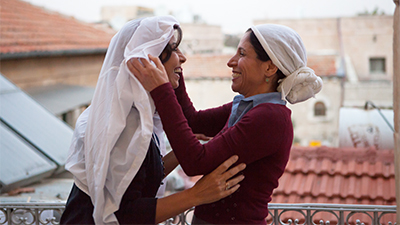
    “The Women’s Balcony” Opening Night Film
One more film festival for those of you living in the Washington, DC metropolitan area – The 27th Annual Washington Jewish Film Festival, May 17-28th.

Lots of good films, including one we saw in our Sunday Cinema Club that we highly recommend – Past Life (see my review, Sneak Previews, from an earlier MillersTime post). Also scheduled is The History of Love, which friends saw at the Miami Film Festival and recommend.  I suspect that neither of these will make it to the major theaters; so here’s a chance to see one or both.

Ordering on the phone was very quick and efficient: 202-777-3250, or you can also do so on line. Most films are showing twice, which gives you some options of when and also where to see them.

Link to the Festival for descriptions of the films and where you can see them: https://www.wjff.org/

Remembering Esty

Tags

, , , , , , , , ,

I was at a funeral recently where the son of the deceased read a lovely eulogy to his dad, Sol. I only knew Sol briefly in his latter years, but Doug’s review of his dad’s life not only told me much I did not know, it also reminded me of the finale song of Act 2 in Lin Manuel’s Hamilton — Who lives, Who dies, Who tells your story?  (…But When you’re gone, who remembers your name? Who keeps your flame, who tells your story?…)

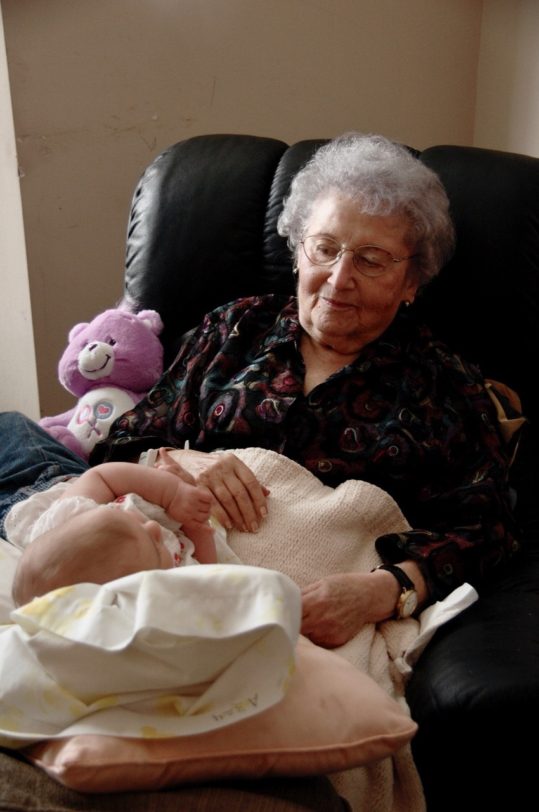
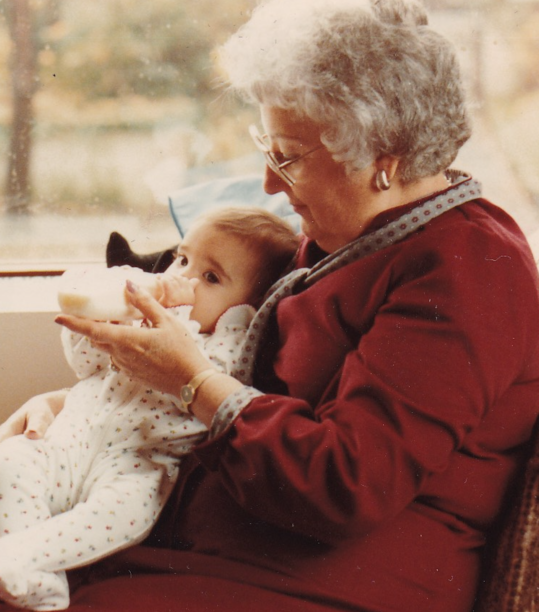
This weekend, Saturday, it will be ten years since my mother, Esther Goodman Miller, (“Esty”) died. Then, on May 18th, it will have been 100 years since she was born.

As it gets further from her life and death, I want to keep her name and flame alive, alive for myself and my sister, alive for the rest of the family who is still living, and alive for the great grand children, only one whom she ever met.

And so I repost** the Eulogy I gave at her graveside.

EULOGY – May 15, 2007

Some of us [here] are teachers; some are doctors. Some make news, and some report it. Some build bridges, or bridge tables. Some are lawyers, government workers. Some grow fruit, and some seek to make the country and the world a better place.

Esty was none of these, at least not directly.

She was a caretaker and a builder of families.

When you know a bit about her background, that’s kind of an amazing choice of careers — or maybe not so surprising.  Esty’s mother died when Esty was four months old. For the next seven years she lived with various relatives and family friends as her father, Rob, was trying to earn a living and couldn’t take care of an infant and young child. She sometimes saw him on weekends but had no real family life of her own during her early, formative years.

When Esty was seven, Rob, Pappy to many of us, and a prince of a man, remarried and Esty suddenly had a family of her own.  Along with her stepmother Ray came Arnold, the older brother Esty had always wanted and whom she instantly worshiped and who was so good to her.

From an early age Esty’s role seemed to involve taking care of others – grandparents, parents, aunts, uncles, cousins.  Many of you here can attest to that. She baby sat for cousin Arthur, standing here, and claims she changed his diapers.

Esty finished high school not far from here (much to her relief) and started nursing school. Her patients loved her, but probably because she so identified with their cares, worries, and illnesses, she agreed with her father’s urging not to pursue that career.

She went the U of NH, met Sam at the opening night mixer, and thought he was a bit mad when walking her back to the dorm, he told her he was going to marry her (I think she had another boyfriend at the time).

Esty and Sam married just a few years later and had Janet and myself in rapid succession. After living in eye sight of Fenway Park (Pappy was a Red Sox devotee all his life) and in Brookline, they moved to Orlando for Sam’s citrus work. Sam soon left to protect his country (as a librarian in San Diego), and Esty devoted herself to a long and never ending career of mothering, care taking, and building of family. Not only taking care of her own, Esty found a circle of young friends with young families and became treasured for her kindnesses and ability to help and care about others.

When I went a few days ago to tell one of these good friends, a friend of more than 60 years, Ruth Esther, that Esty was nearing her end, Ruth Esther cried and cried, saying how Esty was like a sister to her and her best friend and how helpful Esty had been to her in raising her own family. I’ve heard similar stories repeatedly in the last week, many for the first time. I know everyone assembled here could tell about how Esty looked out for you, took care of you, was special in some way in your life, maybe healed a wound or gave you comfort. She just seemed to have a way of touching people and making them feel special.
I’m sure I’m not totally objective, but I spend much of my life listening to and observing people, and I have never once heard an unkind word said about Esty. I would hope and urge you over the next few days and weeks to tell us or to write us of your stories of Esty’s importance to you. We want to know and to remember these stories. It is part of her legacy.

Esty never put herself first. If there was a weakness, it might well have been that she may not have known or appreciated her own worth. Everyone, absolutely everyone’s needs – her husband’s, her parents’, her nieces’, her nephews’, her children’s, her grandchildren’s, her friends,’ whomever she came in contact with – came before her own self.

As most of you know, Esty had breast cancer 25 years ago, had a botched gall bladder operation that almost killed her eight years ago, and over the past three years was overcome by a cascading series of medical issues and crises. But none of these physical difficulties changed Esty’s basic nature. What most distressed her was that she could no longer care for herself. She hated being dependent on others for her care. Starting at 86 she was forced to rely on others. And though she hated this dependency, she did it her way. She kept her frustrations largely to herself (save an occasional harsh word with Sam, probably well deserved) and continued to worry and care about others. (Her sense of humor did seem to emerge and deepen in these later years; just 10 days ago, upon hearing Victor sing, she told him not to give up his ‘day job.’)

A few days ago Janet was asking her if she was afraid, and Esty nodded, ‘Yes.’ “About yourself?” Esty shook her head, “No.” “About your family?” Esty nodded, “Yes.”  She told one of her wonderful aides that she worried about Sam especially, and also her kids and grand kids. We tried to tell her she needn’t worry (she was a world class worrier all her life, tho near the end she seemed to make some progress with no longer feeling responsible for everyone else). She had taught us how to take care of each other — by her example. Even on the day of her death, Mother’s Day, (a week shy of her 90th birthday, which she thought was entirely too many birthdays), she found a way to help her family – Sam, Janet, Victor, and myself.

And so maybe she was not only a mother, a care taker, a builder of family. She was also her own kind of healer, settler of disputes, teacher, cultivator.

While we have already missed Esty some of the last several years – and fear we will miss her even more in the days and years to come – we are glad she is returning to her Goodman family, to lie next to Arnold, Rob, and Ray. She has missed them so much these past years. She deserves to rest, and she deserves this resting place from where she came. And she has certainly earned over and over her maiden name Goodman.

**Posted on MillersTime — 1/15/09 Upon the Birth of Eli David Orgad, Named in Memory of ‘Esty’

Seeing Ourselves in Others

Tags

, , , , , , , , , , , , , ,

For those of you who have read some of my baseball related posts on MillersTime, you know that I’m not only obsessed with the game but also believe that there are many life lessons to be learned from baseball. Unfortunately, it has become a cliche to say that the game imitates life (or is it that life imitates the game?), used mostly by baseball fans trying to justify to nonbelievers the importance and value of this wonderful sport.

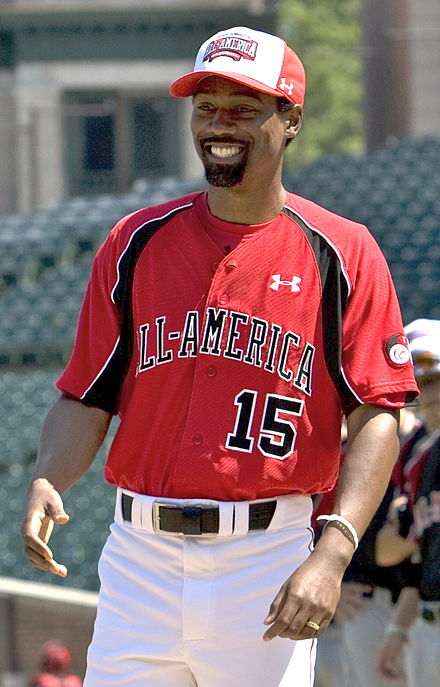
I was reminded of the intersection of baseball and life the other day when an alert reader (Harry Siler) sent me a link to an article by Doug Glanville**, a former baseball player. Since 2008 Glanville has been a guest columnist for the NYTimes and, until a few weeks ago, was a baseball analyst for ESPN for seven years. (He was laid off with several hundred other ESPN employees in a major company staff reduction.)

In a May 5 NYTimes article, Red Sox, Racism and Adam Jones, Glanville writes about his own fears of possibly being traded to the Red Sox, but it is his way of looking at the recent racial incident(s) at Fenway Park in Boston that most interested me. In his usual common sense way, Glanville concludes:

Baseball gives us a chance to see ourselves in everyone, at times reflecting the image of some complex and difficult shadows in our society. That is a big step toward mutual understanding. As hard as it is, we need to see ourselves in the fans who were ejected. Having biases is human, our flawed yet efficient way to create shortcuts in our lives. But we need to check them more honestly if we are to really understand how to move forward.

**(Glanville played 15 seasons in professional baseball, nine of them in the Majors, with the Phillies, Cubs, and Rangers before he retired in 2004. He was outstanding center fielder, going his last 293 games without making an error. He hit .325 one year and had a lifetime BA of .277. He also graduated from U of Penn with a degree in systems engineering.)

Unacceptable, Sox Fans

Tags

, , , , , , , , ,

Baltimore Orioles’ Adam Jones was subjected to racial slurs and at least one object (bag of peanuts) thrown at him last night at Fenway. He indicated this was not the first time this has happened at Fenway but was the nastiest one.

Apparently the person (I hesitate to say fan) who threw the peanuts and some others were removed from the stadium.

That is not sufficient.

The Sox need to make it clear that individuals who behave in such a manner will never be allowed to return to Fenway and that they will be turned over to the Boston police for prosecution.

If currently there are no grounds for legal action in Boston, the city and state legislature should immediately pass such laws.

And fans who hear such taunts and observe such behaviors should vocally object and should call Sox security.

There should be zero tolerance for such abhorrent behavior.

Period.

See: Red Sox Issue Statement on Jones Incident, Sam Kennedy, Red Sox President

See: No Place for what Jones Faced, by Richard Justice

See: Adam Jones Calls Fenway Fans Cowards…

Sneak Previews

Tags

, , , , , , , , , , , , ,

Past Life: ***** (Ellen *****)

So it happened again, this time at Sunday’s DC Cinema Club film: I knew nothing about the film — Past Life — we were going to see, and then I was totally captivated by it. (As I’ve written before, often my expectations overwhelm the reality of a play, a book, or a film, and I am left disappointed.) As the lights were dimmed, we read a synopsis:

Inspired by true events, Past Life tracks the daring 1977 trans-European odyssey of two sisters — one an introverted ambitious classical music composer, and the other a combative liberal magazine editor. As they try to unravel a disturbing wartime mystery that has cast a foreboding shadow on their entire lives, they realized that freedom from the shackles of the past requires painful sacrifices, as does the struggle to discover one’s unique voice.

What followed was 109 minutes of being transfixed. The story largely focuses on three characters, a father and his two daughters and is about the Holocaust and its after-effects. Set in 1977 and based on true events, it’s told almost as a suspense story and through the eyes of each of the three main characters and several minor ones too. (I am curious to know just how closely and how accurately the writer-director Avi Nesher depicts the actual events, and I’ve ordered the diary upon which it is based.)

All three of the main characters are intriguing individuals, and each of their stories, as well as the interrelationships of these characters, is engrossing. The performances of all three (Joy Rieger as Sephi Milch, Nell Tagar as Nana Milch-Kotler, and Doron Tavory as Baruch Milch) are convincing and compelling. The story moves along so quickly that you barely have time to catch your breath and understand what just happened before you’re confronted with new information.

Had I been told before hand that this was “Holocaust film,’ I might have avoided it, or at least ‘approached’ it differently. But knowing nothing in advance, I simply absorbed what director Nesher presented. Once again I learned there is always one more heart-breaking story about that horrific time and that it continues to affect long after the actual events occurred.

Add this well-told Israel-Polish film to your ‘to see’ list, though I’m not sure it will make it to the major theaters. Maybe you can catch it at one of the Jewish film festivals that now take place in many cities throughout the country.

*****************************************************************

We’ve seen a number of films over the past couple of months which I have not mentioned on MillersTime. Too much else going on, perhaps. Nothing stands out as must sees, but here are five that we saw last week at the D.C. International Film Fest. (Yes. We have film festival here) We rate the films independently, using a scale of one to five stars.

The African Doctor **** (Ellen ****) This is a “feel good” movie, also based upon a true story, about a Congolese doctor who moves his family to a small village outside of Paris and about their struggles to earn the villagers’ trust. Biography. Comedy. Drama.

Death in Sarajevo *** (Ellen****) This is an award winning film, full of clever, fast dialogue and good acting, that looks at life in Sarajevo in 2015 on the 100th anniversary of the killing of Archduke Franz Ferdinand. Drama.

Goldstone *** (Ellen**** ) This is also an award winning film (Australian) and is about an Aboriginal federal cop who comes to a frontier town in Queensland searching for a lost girl. There are two interrelated stories. Ellen found the film and the production first rate. Myself, not so much. Crime. Thriller.

Searchers (Maliglutit) **** (Ellen**** ) This is a Canadian film about an Inuk man seeking revenge for the kidnapping of his wife and daughter in the Arctic. Mesmerizing photography and story, with subtitles. Drama.

Solitaire *** (Ellen ****) This is a “Guess Who’s Coming to Dinner” story of a Lebanese girl and her Syrian boyfriend and what happens when their two families meet. Again, Ellen liked it more than I. Comedy. Drama.