“A Best Friend Is Someone Who Give Me a Book I’ve Never Read.” – A. Lincoln
A few years ago I decided that waiting until December was too long a time between posts that share favorite reads among MillersTime readers. As we all age, it seems more difficult to remember what we read in the first half of the year. Plus, it seems that readers of this website have found a midyear list useful as the summer approaches.
So I have started asking about the end of May for books you’ve read so far this year that have particularly resonated with you. And further, I am making a few changes in this call for books that hopefully will make your submissions easier and will reduce my ‘work’ in both reminding you and in collating them.
Thus:
Please send me just three or four titles at the most, listing the book, the author, and whether it is Fiction (F) or Nonfiction (NF). Also, indicate if you have listened to the book in an audible form.
Limit your comments, if you decide to make any, to just one or two sentences. While I believe one of the best aspects of our sharing our favorites is what we say about the books, let’s see what happens if at midyear we limit that a bit. I know it will help me in putting the list together.
The deadline for your submissions is June 14, just a bit over two weeks from now. Send them to my email: Samesty84@gmail.com
I will limit myself to just one reminder, a week or so prior to the 14th, but if you have some time this weekend, maybe you could begin compiling and send me your list prior to the deadline as that spreads out my putting the list together.
And please keep a full list for the end of the year compilation, which will not limit you to just three or four books and one or two sentences.
Eleven years ago, I wrote about a book I had just read that I couldn’t get out of my mind: Random Family: Love, Drugs, Trouble, and Coming of Age in the Bronx (by Adrian Nicole LeBlanc).
“If this book was a novel, readers would probably dismiss it as too chaotic and not believable. But it is in fact a true story, the never ending cycle of living on the edge, the ghetto (largely the Bronx), where the girls get pregnant and the guys sell drugs and go to jail (some of the girls do too.) Somehow, Le Blanc, the author, has gotten inside several families, and the result is you live with them, with all their turmoil, rage, love, and loyalties. I doubt I have ever read a ‘coming of age’ story as intense and memorable as this one. And I’m sure I will remember it for a very long time.”
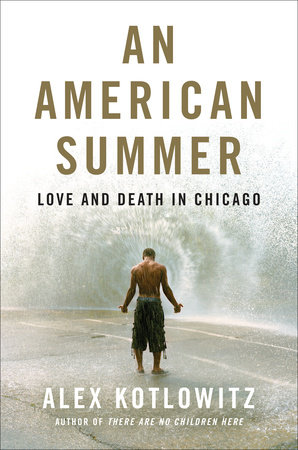
Now, there’s another one to call to your attention. This one, An American Summer also is non-fiction and is equally as memorable. Ellen and I went to see and hear the author, Alex Kotlowitz at Politics and Prose’s new Wharf store in southwest DC, and while that hour added to our enjoyment and understanding of the book and its author, the book by itself is one we’ll also remember for a very long time.
Kotlowitz calls it a series of dispatches, but it’s in fact a picture of life on the south and west sides of Chicago, 14 stories, some self contained but all about the same subject: what it is like for children, adolescents, young and older men, and mothers and grandmothers, some who are victims of gun violence. Some are perpetrators of violence.
The author set out to write about the summer of 2013 in this troubled area of Chicago (though he says he could have written a similar book about any one of ten other cities in American that actually have a higher crime rate than Chicago). Like LeBlanc (above) he was able to embed himself in the communities and families and became deeply invested in the lives of his subjects, ones who upended what (he) thought (he) knew.
There’s a bit of Studs Terkel (a mentor and a friend) in his approach as Kotlowitz is able to convey and portray a world that is behind the statistics (1990 to 2010 when 14,033 people were killed here and more than 60,000 wounded). Although his stories all begin in the summer of 2013, many then go back a number of years and then forward for the four more years it took him to present his portrait(s) drawn from these 14 stories. His ability to interview, to listen, to interact, and to write about the violence in these lives and in this part of the city is simply as good as it gets for a writer and for the reader. He helps us begin to understand things most of us don’t know and can’t even imagine.
What is taking place in Chicago, and in other American cities, is complicated. It’s complex. And it’s heart wrenching. It’s about Thomas, Anita, Crystal, Nugget, Eddie, Lisa, Maria, Marcello, and their families and friends. It’s about trauma from one generation to the next. It’s about something called “Complex Loss.” It’s about loneliness and fear. It’s also about resilience and the price of resilience. And it’s about forgiveness as a way to cope and a way to preserve oneself.
Kotlowitz doesn’t give public policy prescriptions nor claim
to have answers to what can be done.
But he does humanize people from all sides who live with
this daily, weekly, monthly, yearly and decades long violence, and he gives the
reader an unvarnished picture of life in these communities.
While he gives no answers, he does go behind the statistics,
behind the headlines, and deeply into a world that is out of control.
I suspect you have not read anything quite so revealing as An American Summer.
Put it on your summer reading list. It is nothing like the
summer or life most of us will experience this or any other year.
How many times have you yelled, “You’re Blind, Ump”?
There is now proof that at least 20% of the calls by the umpires behind the plate over the last 11 years are wrong. That’s one in every five calls.
Recent data of over four million pitches between 2008 and 2018, with the use of sophisticated, triangulated tracking cameras, say this is so.
Further, there is a two strike bias, where umpires make more mistakes on these counts, calling a pitch a strike when in fact it is a ball. As umpires were twice as likely to call a true ball a strike on a two strike count, batters called out in these situations had reason to be angry with the ump (see photo of Mookie Betts above).
Specifically, 55 games ended with incorrect calls.
In 2018, there were 34,294 incorrect calls, an average of 14 per game, or 1.6 per inning.
And it is the older, more experienced umpires who made the most mistakes as the less experienced and younger ones were more likely to get the calls correct. Long time umpire Joe West had 21 errors per game, and Angel Hernandez had 19, for example, while John Libka, 32 and with only 1.5 years of experience, had got many more calls correct (as did Mark Wegner, 47).
Also, umpires selected for the World Series were not the best performing umps.
You can see these details, and many others, along with charts and names in this article by Boston University’s Mark T. Williams, who, assisted by a group of graduate students at BU’s Questrom School of Business, dove deeply into the data, analytics, and statistics to come up with these results.
Although MLB has had a system of rating their umpires, no one has done the kind of analysis that the new technology of triangulated cameras has made possible.
What will it mean for the future?
Williams believes that it doesn’t mean robots should replace umpires, but he believes there are some solutions that could make the situation significantly better. (See the end of the linked article above.)
In the meantime, it may be an overstatement to say the umpires ARE blind (in fact, they do seem to be getting the calls a bit better, tho they are still missing enough to change outcomes of games).
But if they’re still missing an average of 14 calls a game, then there is something seriously wrong. To what seems an unacceptable degree pitchers are benefiting, batters are losing out, and the outcomes of some of the games are questionable.
If your team has ever been the victim of bad ball/strike umpiring, you were not crazy to say “We waz robbed.”
Check out these five films we’ve seen recently, four reviewed by Ellen and one by Richard. All are worthy of your consideration.
Reviewed by Ellen Miller:
All is True: Ellen ***** Richard *****
All is True, a historical drama that concerns the latter years of Shakespeare’s life, was made for me. Historical films are one of my favorite genres and this one is enhanced by the acting of Kenneth Branagh (as Shakespeare), Judi Dench (as his wife, Anne Hathaway), and Ian McKellen (now 80 years old). With Branagh as the director, producer, and writer, this film “had me from hello.”
The film is set in 1613, immediately following a fire which destroyed the Globe Theater. It opens with Shakespeare returning to his home in Stratford from which he had been long – and frequently – absent. The adjustment of his daughters and his wife to his return is difficult, and he is unsettled. The story of the last three or four years of his life unfolds, and while what is portrayed in the film is not all true, much of it is based on facts of his latter years. But these distortions matter little here as this film depends not on the story itself, but on the acting, the staging, and the filming, all of which are amazing accomplishments.
The combination of the story, the acting, and the cinematography makes the movie mesmerizing. Each scene is filmed as though it was a still life painting, lit only by candles. The acting is taut – Dench, for example, delivers her lines with such expression and passion that her actual words are unimportant. You know exactly what she means. There is so much contained in this film (I keep wanting to call it a play): family dynamics; convention-resisting daughters; titled men and literary figures paying homage to Shakespeare; the relationship between Shakespeare and his wife; and Shakespeare’s planting a memorial garden to honor his son. (Funnily, the deceased son was named Hamnet – who, in this production, is a ghost who haunts his father.)
An interesting note is that Branagh is a Shakespeare obsessive, and he created this film as a bookend for Shakespeare in Love (which we saw and indeed did love). In a way, the play is an elegy, yet it also provides a detailed portrait of a man of creative genius and his many personal flaws.
And one final note: the film was actually released in 2018 so it could be considered for the Oscars. Somehow, it did not receive a single nomination. And that is true.
Go see this. It’s brilliant. It is scheduled to be released May 10th.
Ash Is Purest White: Ellen **** Richard ****
I am not sure how this film came to our attention, but we are certainly glad it did. It is Chinese-made and tells the story of a China we do not know. Perhaps it’s a side of any country not available to outsiders. Even though Richard and I have traveled extensively in China for the last 30 years on our own and with our Beijing and Guangzhou-based friends, we were seeing a side of China we had never seen before. This story was so unusual and so fascinating that about half way through I turned to Richard, at the same time he turned to me, and said, “this is absolutely fascinating.” And he agreed.
This is the story of China’s contemporary gang culture and illegal underground activity. This is a story of rival gangs, of illegal guns, and of maiming, murder, and mayhem. It is also a story of romance and sacrifice.
The film takes place over a period from 2001 to 2018 during which we see the main character fall from being a leading member of the criminal underworld in Datong, near Mongolia, to a broken, sick, and disrespected man. We see his girlfriend endure prison to protect him and survive that hardship to care for him, even though he no longer cares for her. The story is told in three parts that are well linked together.
Ash Is Purest White is filled with scenes (and some places) familiar to us: small cafes filled with working men and women; men smoking and playing mahjong as a respite from their working in coal mines; a boat trip on the Yangtze before Three Gorges Dam is built, high rise modern office buildings, and drab uniformly built worker housing.
The writer-director is a well-known Chinese filmmaker – Jia Zhangke — and here he depicts a view of contemporary China that is not widely known. The pace is slow and steady, allowing you to digest all that is happening as you stare fixedly at Bin (Fan Liao)) and Qiao (Tao Zhao), the fraught gangster couple. This is a big and important story about contemporary China. The acting is extraordinary, and the film raises disturbing questions about contemporary China
We
highly recommend it.
Hotel Mumbai: Ellen***** Richard****
Here’s a big box office film that really worked. It’s a not a great film, but it is one Hell of a good movie. Batten yourself down and imagine a film of unrelenting tension and drama and prepare to either close your eyes or to cover them at any second. This movie tells a fictionalized account (barely, I think) of the horrifying incident of the November 2008 terrorist attacks on the city of Mumbai, India by Pakistani Jihadists. Ten members of an Islamic terrorist organization organization based in Pakistan carried out 12 coordinated shooting and bombing attacks lasting four days across Mumbai, including the world famous, elite Taj Mahal Hotel. The movie graphically presents the indiscriminate murder by the terrorists of innocent people at a train station, various prominent hotels, a Jewish community center, a hospital, and a café. A leader who was present only in their headsets encouraged them in their mayhem and guided the terrorists in their carnage.
And horrifying it is. It is based on a Surviving Mumbai, a documentary, and while this movie was a fictionalized account, it rings true. (I am tempted, but I don’t think I can bear to watch the documentary account.) Watching this film is a sobering experience. Its horror is only lightened slightly by members of the staff of the Taj Mahal Hotel who risked their own lives to save those who were held hostage there.
This is not a movie about the acting (good, but not
amazing), or the production (stunning at times), but its success is due to the
screenplay and direction of the action. It was so well paced to create tension
and uncertainty of the outcome that I’m quite sure that I didn’t take a breath
from start to finish. I was exhausted by the end of it.
You’ve been forewarned. But see it if you can.
Maiden: Ellen ***** Richard*****
This documentary is an example of why we enjoy being members of the Sunday morning DC Cinema Club. Had we only read a description of the film, it’s unlikely we would have seen it, and therefore we would have missed a film of considerable importance and enjoyment.
The story is about the first all women’s boat to participate
in the Whitbread Round-the-World Yacht Race. The year is 1989, and the race is
a beyond dangerous and grueling around-the-world challenge of 32,000 miles. It
takes six to nine months to complete.
It is the story of the grit and determination of one woman – Tracy Edwards (awarded the Yachtsman of the Year, the first woman ever to receive the award) — and her determined and skilled crew. She and her crew faced incredible odds, first even imagining they could participate in the race, to finding financial support. They faced ridicule from the press and other yachtsman; and no one thought they would even complete the first of the five legs of the grueling race.
The one thing that wasn’t difficult was finding competent women with sailing experience. Edwards was doing this initially for herself to prove that she could, but in fact, she and the crew eventually realized, they were also doing it for all women — to prove their competitiveness, toughness, and stamina in this all male sport. Woven into the narrative were recent interviews of many members of the crew who offered reminiscences and reactions from their achievement. This added tremendously to the quality of the film.
The impact of the documentary comes in large part because of the incredible footage that was made at the time. The boat had a fixed camera on it, and one of the crew members took responsibility for additional photography. In addition, the documentary includes aerial photography, along with video and interviews from on-site TV coverage.
For those watching, the tension wasn’t just about whether the team won or lost the race, but also about the skills and fortitude of the sailing crew and the breakthrough for women. Our enjoyment of the film was further enhanced by having one of the crew, Dawn Riley, present Sunday. She talked about the race, the crew, answered our questions about the film and indicated that their involvement has had an impact (positive) on the participation of women in yacht racing.
The film will be released June 28, 2019. Put it on your list and go see it. For sure, we will take our granddaughter and grandson to see this inspiring documentary.
Reviewed by Richard Miller
Crazy Rich Asians Richard ****
I most likely would not have seen this film if I had not been invited to a pre- festival screening of it by a new friend who is the Director of the DC Asian Pacific American Film Festival (Coming up May 31-June 2, 2019).
But
I’m glad he invited me and that I went.
It’s
delightful. Fun. Entertaining. And the story is a universal one, with perhaps a
twist of an ending. It’s a romantic comedy that pleases.
Handsome,
rich Asian man invites his NY Asian girlfriend (who somehow does not know about
his background and comes from a very different economic and social background
herself) to attend his best friend’s wedding back home in Singapore. You can
almost imagine the story. She’s amazed. His mother is dismayed. He’s caught in
the middle. She’s stunned by what she sees, learns, and experiences. I’ll leave
the unwinding and conclusion of the story for you experience on your own if you
see it.
The
film comes from a book of the same name, and we were fortunate to have the one
of the screenwriters, Adele Lim to talk about the film and answer questions
following the screening. The largely Asian audience gave the film and Lim an
enthusiastic reception.
Not
only is the story well told, even if familiar, there are good performances, and
the scenery from Singapore made me want to get on an airplane to see the city
for myself. Plus, there’s the food. Dumplings and dumpling making (flashes of
our own Chinese dim sum preparation at Thanksgiving here in DC for the past 40+
years).
For a satisfying outing, see Crazy Rich Americans and then find a good dim sum restaurant in your area to ‘top off’ the afternoon/evening. (Note: Crazy Rich Americans won the Critics’ Choice Award for the Best Comedy, Jan. 13, 2019 and was nominated for a number of other awards, including a Golden Globe for Best Motion Picture – musical or comedy. It has an all Asian cast and was produced in Hollywood.
** ** ** **
The 33rd Annual Washington International Film Fest is coming up (April 25-May 5), and the program looks very good, including many films we haven’t seen or even heard of. Check it out – 80 films from 45 countries over a period of 11 days.
From Fenway Park in 2005 and soon to be repeated. See Notes below
I. Some Predictions from MillersTime Baseball Contestants
Contest 1: MillersTime contestants say it will be the Dodgers vs either the Red Sox or Yankees in the 2019 World Series, and they believe the American League team will win it in six games.
Contest 3: No doubt here. Overwhelming choice is the American League to win the All Star game. Scherzer (or maybe Sale) will be the first pitcher to win 12 games. Harper, Stanton, and Judge all tied for first to hit 25 home runs.
Contest 4: Contestants split evenly between those who think the Yankees will win the AL East and those who don’t, but they seem to think the Nats will definitely not win the NL East. Everyone seems to think one of my ‘grand’ children will see at least one of the following: a grand slam, a triple play, a no hitter, Teddy winning the President’s race, will go home with a foul ball, will have his/her pix taken with an MLB mascot, or will be on the TV screen at an MLB stadium. (Has happened yet, but I’m working on this one.)
Other Contest Predictions: Too complicated to post here. But thanks to all who participated.
II. Baseball Notes and Two Questions:
***Check out this article that looks at a different, but easy way to judge who are the best hitters in baseball: Secondary Average by Victor Mather, NY Times, April 5, 2019. (Hat Tip to Joe H for alerting me)
***There’s a new book out by one of today’s top baseball writers, Tyler Kepner of the NY Times. A History of Baseball in Ten Pitches. Reviews have been outstanding, and I’ll let you know what I think as soon as I finish it. (It’s due to arrive at my house April 7.)
***Every time I attend a baseball game, I’m looking for something I never saw before. A few days ago this: Tie game between the Phillies and the Nats in DC. Bottom of the 9th. First man up for the Nats gets a single. Then the the Phillies’ pitcher walks the next two batters. Bases loaded. And he does it again. A third walk. Walking in the winning run for the Nats. What do we call that? A Three Walk Walk-Off? A Triple Walk Walk-Off? A Walk-Off Walk? Bad pitching? Terrible managing? Let me know what you would call it. And I suppose you all know the actual definition of ‘Walk-Off’ win. It’s not the winning team walking off. It’s about the losing team having to ‘walk off’ the field after they’ve ‘blown’ the game.
***Not sure if it’s my getting older (which is certainly happening), but I’ve already attended four games at Nats’ Park, and I’m sure they’ve cranked up the loud speakers, making it difficult to talk and hear each other between innings. one of the enjoyable aspects of seeing a game with a son, daughter, wife, father, grandfather, grandchild and/or friends. Is this increase in noise level happening elsewhere too? Or am I just getting more like my parents did at a similar stage in their lives?
III. Repeating History
***Finally, heading to Boston with the three females in my life – wife Ellen, and daughters Annie and Elizabeth – to ‘treat’ them to Opening Day, April 9 in Fenway where the World Series flag will be raised, a huge banner will be dropped across the Green Monster, and the WS rings will be given out. I took them in 2005 (see photo above) when the Yankees had to sit in the Visitors’ dugout and watch the ceremonies after the best ever WS win in my lifetime. Now, with this fourth WS victory in this early part of the 21st century — eat your hearts out Yankee fans — my only regret is that my daughters and grand children will never truly understand what I had to go through for most of my baseball life – though I think Elizabeth kind of understands. If you’ve never read this, don’t miss: The E-Mail on the Kitchen Table,posted 12.19.08 on MillersTime but written just after the Sox finally won it all in 2004. A must read.
IV. PS
***You can look forward to an upcoming post, Opening Day Thru Ellen’s Lens, with commentary attached.
“If difficult issues go unaddressed by responsible leaders, they will be exploited by irresponsible ones.” David Frum
For me, some of the most thoughtful and thought provoking writing about issues in our country today can be found in The Atlantic, the monthly magazine that focuses on contemporary political affairs and issues.
Four of the articles I link to in this post come from The Atlantic, and the first one cited is one I would say is an ‘important read.’ I rarely use the label ‘must read,’ but if as a country we are going to address the issue of immigration from a rational, factual basis and not largely from an emotional one, as is generally happening today, David Frum’s piece strikes me as a good starting point. I suspect you will learn from it, as did I. For those who are looking for a way to understand an important and divisive issue and looking for common ground to discuss it, do spend the time it will take to read this. Even though it’s lengthy, I’ve read it twice as there is so much to absorb. I suspect I will reread too.
How Much Immigration Is Too Much?, by David Frum, The Atlantic, April 2019. This Canadian America is a senior editor at The Atlantic, was a speech writer for George W. Bush, has published numerous books on politics in America, and is generally thought of as a conservative Republican.
Americans Remain Deeply Divided About Diversity, by Emma Green, The Atlantic, Feb. 2019. This Atlantic staff writer looks at our country and recent research about how and where we live and why sameness not difference is prized by many Americans.
What the Crow Knows: A Journey into the Animal Mind by Ross Anderson, The Atlantic, March 2019. Something different from the three above as this writer explores “What science can tell us about how other creatures experience the world.”
52 Books for 52 Places, from the editors of the NY Times, Feb. 14, 2019, wherein they present “some reading suggestions — fiction and nonfiction, essays, poems — that may help you to better explore cities, countries, regions and states” in connection with their series 52 Places to Go in 2019. I have read 10 of these and can vouch for the high quality of those 10 choices.
America’s Best Jewish Delis by the editors of Food & Wine, March 2019. Ten places around the country to satisfy those who know and value this sort of eating and want up-to-date information about where to find what you might remember from your childhood. Hat tip to Chuck Tilis for the link.-
MLB, with the agreement of the MLB Players Association, have announced the rule changes in effect for 2019 and ones that will go into effect in 2020.
The most significant ones won’t be in effect until next year. But take a look, and see what you think. Maybe we can get a bit of a discussion going.
For me, I don’t really care about speeding up the game, and I don’t like taking away decisions that have been traditionally managers’ prerogatives. Some of the other changes seem to make sense (All Star ones and the change in July 31 trade deadline), without impacting the nature of the game.
But I’m conservative (as far as baseball is concerned) and believe that trying to speed up the game to try to placate our Attention Deficit Disordered audiences is generally a fool’s errand.
Comments?
Thoughts?
Changes for the 2019 Season
Inning Breaks: Subject to discussions with broadcast partners, inning breaks will be reduced from 2:05 to 2:00 in local games, and from 2:25 to 2:00 in national games. (The Office of the Commissioner retains the right to reduce the inning breaks to 1:55 in local and national games for the 2020 season.)
Mound Visits: The maximum number of mound visits per team will be reduced from six to five.
Trade Deadline: The trade deadline will remain July 31st; however, trade waivers will be eliminated. Players may be placed and claimed on outright waivers after July 31st, but players may not be traded after that date.
Joint Committee: MLB and the MLBPA will form a joint committee to study other potential changes.
All-Star Game:
All-Star
Game fan voting will be conducted in two rounds. During the “Primary
Round,” each Club will nominate one player per eligible position (three
outfielders), who will be voted on by fans. In late June or early July,
an “Election Day” will be held in which the top three vote-getters at
each position in each League during the Primary Round (including the top
nine outfielders) will be voted on by fans during a prescribed time
period to determine the All-Star Game starters. Further details on the
new fan voting format will be announced in April.
All-Star bonus
payments will be given to the top three vote-getters at each position
in each League during the Primary Round (top six for outfielders).
Additionally, the prize money awarded to players on the winning All-Star
team will be increased beginning with the 2019 All-Star Game.
Both
Clubs will start the 10th inning of the All-Star Game, and each
subsequent inning, with a runner on second base (re-entry substitutions
allowed for runners).
Home Run Derby: Total
player prize money for the Home Run Derby will be increased to $2.5
million. The winner of the Home Run Derby will receive $1 million.
The
single July 31 trade deadline means there will likely be a lot more
action. The MLBPA is hopeful that the single deadline will also
incentivize teams to be more aggressive in the offseason knowing that
trades in August are no longer an option. The All-Star Game Election Day
will be a chance for MLB to market its players. Fans will vote online
for All-Star starters, and the top three vote-getters will take part in a
one-day election. (More details on the two-step voting process here.)
Changes for the 2020 Season
Active Roster Provisions:
The
active roster limit from Opening Day through August 31st and in
Postseason games will increase from 25 to 26, and the minimum number of
active players will increase from 24 to 25. The current Major League
Rules allowing for a 26th player for doubleheaders will be amended to
allow for a 27th player.
Elimination of 40-man active roster
limit in September. From September 1st through the end of the
championship season, all Clubs must carry 28 players on the active
roster.
The number of pitchers a Club may carry on the active
roster will be capped at a number determined by the joint committee.
Clubs must designate each of its players as either a pitcher or a
position player prior to each player’s first day on the active roster
for a given season. That designation will remain in effect for the
player, and cannot change, for the remainder of the championship season
and Postseason. No player on the active roster other than those
designated as pitchers by the Club may appear in a championship season
or Postseason game as a pitcher except in the following scenarios:
Players
designated as a “Two-Way Player.” A player qualifies as a “Two-Way
Player” only if he accrues at least 20 Major League innings pitched and
at least 20 Major League games started as a position player or
designated hitter (with at least three plate appearances in each of
those games) in either the current championship season or the prior
championship season;
Following the ninth inning of an extra-inning game; or
In any game in which his team is losing or winning by more than six runs when the player enters as a pitcher.
Minimum Number of Batters for Pitchers: The
Office of the Commissioner will implement an amended Official Baseball
Rule 5.10(g) requiring that starting pitchers and relief pitchers must
pitch to either a minimum of three batters or the end of a half-inning
(with exceptions for incapacitating injury or illness). The Players
Association has agreed that it will not grieve or otherwise challenge
the Office of the Commissioner’s implementation of the amended Rule
5.10(g).
Injured List and Option Period for Pitchers: Subject
to input from the joint committee, the minimum placement period for
pitchers on the Injured List shall increase from 10 days to 15 days, and
the minimum assignment period of pitchers who are optionally assigned
to the minors will increase from 10 days to 15 days.
Contrary to what some of you may think, Ellen and I are not spending all of our time traveling, going to movies, reading books, seeing friends, finding wonderful restaurants, following baseball, or stressing about the state of our nation.
We now have five grand children, and when Ellen is not making picture books from our travels (she’s up to 25 now!), she focuses on Eli, 10, Abigail, 8, Ryan almost 6, Samantha 3, and Brooke 18 months.
Today’s post are photos from the last three or four weeks, some from a weekend when all five were together and some from KC and others from DC/MD.
This post adds another reviewer, our dear friend Fruzsina Harsanyi, with whom we usually attend the Miami Film Festival. As we were unable to participate this year, Fruzsina kindly agreed to write about three of the films she (and her husband Ray) viewed and recommend.
Following that Ellen Miller reviews two films we’ve seen recently.
Reviewed by Fruzsina:
Miami Basel: Arts Winter Playground ****
If you have attended the world’s biggest art fair for the past 15 years as we have, you would love this documentary. If you have not been in Miami since the 1990’s when Miami’s claim to fame was the Dolphins, Don Johnson, and drugs, you would be amazed by the cultural and architectural transformation that has taken place. This documentary vying for the audience award at the 2019 Miami International Film Festival argues that Art Basel was largely responsible for making it all happen.
Through interviews with
collectors and gallerists and flashbacks to the years when Miami was a
“cultural wasteland,” the film shows us how people of vision and passion … and
money, who love art could create an “ecosystem of philanthropy” to build
museums, and support performing arts centers and arts education. Moreover, as the President and CEO of the
Knight Foundation noted the goal was and is to build community through art, “to
make art general in Miami.”
We loved this movie because
we love Miami Basel and what has happened to Miami. As a documentary, however, we were generous
in giving it a 4 out of 5. We wish it
had been less a commercial for Miami and more a deeper analysis of how the
decision to bring the famous Swiss art fair to Miami came about. We know Miami’s biggest car dealer, Norman
Braman, was instrumental, but what about famous art families like the Rubells (who,
the director says, didn’t answer his phone call) or Marty Margulies. We wanted to know more about why people
collect and how they decide. But maybe
these are topics for another documentary.
Rattlesnakes *****
This riveting neo-noir psycho-thriller kept us on the edge of our seats for 82 minutes. Based on the play by Graham Farrow, it tells the story of Robert McQueen, a happily married man whose focus as a professional therapist is beautiful, unhappy wives. One day on the way to work, he is jumped by three masked men, the husbands of three of the women. They believe Robert is having sex with their wives, and they are out to punish him. The scenes become increasingly violent; the plot twists and turns. We see flashbacks that may or may not have happened; we think we have it figured out, and then we haven’t. And why did a rattlesnake appear at the beginning and end of the movie?
During the discussion after
the film, some said they wished it had been longer. Shot in just 12 days in Santa Barbara during
the fires, director Julius Amedume said it was a marvel the film was made at
all because he moved locations so many times to stay ahead of the flames. I, too, wish the film had been longer, but
that was so I could look at beautiful Haitian-French lead actor Jimmy Jean
Louis. I hope it comes to commercial
theaters so I can see it again. Knowing
the plot, I can then just concentrate on looking at Jimmy.
The Mustang *****
There have been so many movies about horses that it’s hard to think of an emotion that hasn’t been explored. Robert Redford as the trainer in the 1998 film The Horse Whisperer was unforgettable. Redford is back as executive producer of The Mustang directed by Laure de Clement-Tonnerre. This time the horse is a wild mustang, the trainer is now 82-year old Bruce Dern, and the lead is a convict played by Matthias Schoenaert (who played opposite Marie Cotillard in Rust and Bone and as Putin with Jennifer Lawrence in Red Sparrow).
This film is based on a true story about wild mustangs – 100,000 roam the American West – rounded up on federal lands and sent to prisons as part of a program to control their numbers by training them so they can be sold on auction or euthanized. The program also serves as therapy for the convicts who are selected as the trainers. One such convict, Coleman Roman, in solitary confinement for 12 years for a violent crime is assigned to work with a particularly ornery horse.
It’s no surprise the he and the horse eventually bond and both are changed in the process: Coleman discovers his humanity and the horse his gentler nature. But how this unfolds is powerful and beautiful. Shot in a Nevada correctional institution, the movie is as much about the prisoners themselves, the brutality and boredom of everyday life in prison, and the fate of the horses as it is about the feel-good bonding of man and horse. We marveled at how a young, female director could get her arms around such a big story in a physically and emotionally rough location in order to give us a story to remember. The Mustang will be in movie theaters March 15.
** ** ** **
Reviewed by Ellen:
Never Look Away: Ellen ***** Richard *****
This Oscar nominated Best Foreign Language Film is gripping, stunning, and mesmerizing – all at the same time. It had so much going for it that its 3 hour 7 minute run time flew by. While it is loosely based on the life story of Gerhard Richeter (a German visual artist born in 1931 and widely regarded as one of the most important contemporary German artists), the story stands on its own as a testament to the development of a young artist, in extreme political times. These times also provide the context for not only his art but the protagonist’s love and a father’s cruelty towards humanity and his own daughter. Take a deep breath and relive some of the horrors of the Nazis and the Russians in East Germany in the 1940a, ‘50s, and ‘60s. The film will grab you, and you will ‘never look away’.
The film covers a lot of different issues of those turbulent times. It opens with a galley tour of “degenerate art” (put together by the Nazi government) by the protagonist as a young boy and his Aunt. The film follows both the boy and his Aunt: hers to a Nazi inspired end, and his as a sign painter, a painter of Socialist inspired murals, and an art student. He meets his love, which is fraught with horrifying complications.
The film was stunningly acted and directed, the photography was subtle and magnificent, the acting was superb. This film was directed by Florian Henckel von Donnersmarck — best known for his masterful 2006 drama: The Lives of Others.
A.O Scott (NYT film critic) says it “hovers between psychological drama and period romance.” Ann Hornaday (WaPo film critic) says, it’s “nothing short of a moral reckoning.” It’s all this, and more.
The White Crow: Ellen ***** Richard ****
This film tells a remarkable, and true, story about the famous ballet dancer Rudolf Nureyev and his defection to the West from Russia.
The White Crow largely focuses on his life as a 22 year-old, a principal dancer with the Kirov Ballet who on his first trip out of Russia falls in love with the idea freedom and the good life. Through flashbacks to his childhood (cleverly photographed in black and white), and to his early life of professional training, you see the making of the man: an arrogant, thoughtless, self-confident braggart whose confidence in his art was only surpassed by his actual performance of it. This film does not hide his flaws.
The dancing and music, photography and acting (some by nonprofessional actors) of this film is as superb as is the drama of the world of ballet and escaping a totalitarian country under the watchful eyes of the KGB. The director of this movie is Ralph Fiennes who also plays a key-supporting role.
We saw this film in our Sunday DC Cinema Club, and it is not yet out in the theaters. Hopefully, it will make it and be available to a wider audience.
Name the two teams who will play in the World Series in 2019?
Which team will win it all?
Tie-Breaker: What will be the total number of games played in the 2019 World Series – 4, 5, 6, or 7?
Prize: One ticket to the 2020 World Series.
Contest #2:
Pick your favorite MLB team
(or the team you know the best) and answer the following questions to prove
whether you’re just a homer (“Someone who shows blind loyalty to a team
or organization, typically ignoring any shortcomings or faults they have”) or
whether you really know something about your team and can honestly evaluate its
strengths and weaknesses. Please answer all three parts of the question.
1. What will your team’s regular season 162 game record be in 2019?
2. Will they make the playoffs, and if so, how far will they go?
3. What will be the most important SINGLE factor (hitting, starting pitching, bullpen, an individual’s performance, the manager, injuries, etc.) in determining their season?
Prize: Two tickets to a regular season game with your favorite team (details
to be negotiated with me.)
Contest #3: Questions to be decided by the 2019 All Star game, July 9.
Name
which League will win the All Star game.
Name
one AL team & one NL team who will be leading their Division July 9.
Tie-Breakers: (May take longer than July 9 to decide these)Name the first MLB player to hit 25 HRs.
3. Name the first MLB player to hit 25 HRs.
4. Name the first MLB pitcher win 12 games.
Contest 4: True or False:
Prize: Bring a friend and join me for a Nats’ game in the second half of the 2019 season or a Nats’ game of your choice next year (except for Opening Day). If you can’t make it to DC, maybe I can make it to where you live, and we’ll see a game together there.
A. The New York Yankees WILL win the AL East in 2019.
B. The Washington Nationals WILL win the NL East in 2019.
C. There will be at least one 20 game winning pitcher in each League in 2019. (There were two from the AL in 2018 – Snell – 21 & Kluber – 20; none in 2017, three in 2016 – Porcello – 22, Scherzer 20, Happ – 20). (from Chris Boutourline)
D. No pitcher in MLB will have two complete shutout games. (from Ben Sentura)
E. At least two teams in 2019 will lose 100 games or more. (Three did so in 2018 – Orioles lost 115, Royals lost 104 and White Sox lost 100. Five other teams lost between 95-99 games: Reds, Rangers, Padres, Marlins, & Tigers)
F. A manager will be fired by the All Star game in 2019? (from Brent Schultz)
G. In 2019 the two AL & the two NL wild card teams will each come from the same division in their League.
H.
Either Manny Machado or Bryce Harper
will fail to live up to expectations in 2019. In other words, one of the two
will not perform well, will not have a particularly good year as defined by
factors such as BA, HRs, RBIs, OPS, Fielding Average, etc.)
I. At least three teams will win 100 games or more in 2019. (Three teams did so in 2018: Red Sox – 108, Astros – 103, Yankees – 100).
J. One of Grand Papa’s (c’est moi) grandchildren will witness in person (at an MLB game) at least one of the following: a grand slam, a triple play, a no hitter, Teddy winning the President’s race at the Nats’ stadium, will go home with a foul ball, will have his/her picture taken with an MLB team mascot, or will be on the TV screen at an MLB stadium.
These questions are inspired by MillersTime baseball contestants Matt Galati, Nick Nyhart, and Maury Maniff. They are mostly for unrepentent baseball nerds, ones who have been known get up in the middle of the night to see how their favorite team did, check all the baseball scores, look at video of a game, etc. To gather information before answering, you might want to go to this site – http://proxy.espn.com/mlb/stats/team?stat=pitching – to see what the correct answers would have been before 2018:
For all of these five questions, choose the MLB team who in the 2019 regular season will:
1. Have the most wins? (Boston in 2018)
2. Have the worst BA? (Miami in 2018)
3. Have the most errors? (St. Louis in 2018)
4. Have the highest (pitching) save percentage? (Texas in 2018)
All winners get the ‘one-of-a-kind,’ specially designed and updated MillersTime Baseball Winner T-Shirt.
Enter as many or as few of the contests as you want.
Be sure to answer all parts of each contest you do enter.
If you get a friend (or a foe) to participate in these contests, and he/she wins and has mentioned your name in their submission, you will get a prize also.
First time entrants who are runners up in any contest will get THE T-shirt. Any two-generation submissions (mother/son, grandfather/granddaughter, etc.) who are runners up will also get THE T-Shirt
Get your predictions in soon. In case of ties in any contest, the individual who submitted his/her prediction first will be the winner.
Submissions should be sent to me at:
Samesty84@gmail.comor by snail mail – Richard Miller – 2501 Tracy PL NW, Washington, DC 20008.
Deadline for Submissions: Opening Day: Thursday, March 28, Noon, EDT
‘In the Feb. 11, 2019 issue of The New Yorker, there is an Oliver Sacks’ piece that he must have written shortly before his death as I have not seen it anywhere else: The Machine Stops,wherein he writes, among other things, about smart phones and fearing the future. I can’t link to it, but see if you can find it. I liked it (but then I like everything he has written).
My Father’s Body, At Rest and in Motion by Siddhartha Mukherjee, NewYorker, 1/8/18. An author, doctor and son writes about his dealings and thoughts about end of life issues relating to his father.
They Shall Not Grow Old: Ellen ***** Richard *****
This is an extraordinary documentary film. It is unique in its story telling and the technology behind the production. You’ve never seen anything like it.
Noted director Peter Jackson (the New Zealand film director, screenwriter, and film producer best known for The Lord Rings films) was co-commissioned by 14-18 NOW and Imperial War Museums in association with the BBC to make a movie to celebrate the centennial of the Armistice, using original documentation. He was given over 100 hours of World War I archival clips and over 600 hours of audio interviews from Britain’s Imperial War Museum (he used audio from 120 of them in the film) and set to making a film that answered the question: What was it like to be in the trenches. Through some technological wizardry to improve the quality of the archival film itself and overlaying of contemporaneous interviews with former soldiers – from the highest to lowest of rank – he has fashioned brisk, gripping historical record. At the end of the film he is interviewed about how he made the film and why he made the choices that he did. (Stay for this interview if you attend the film.)
Go see it. You won’t be disappointed.
(In theaters now)
Bohemian Rhapsody:Ellen Miller ***** / Richard *****
If you evaluate Richard and me by the movies we see, some of our readers might think we are rather dreary people. We do see many serious films, and we generally like them because they tell us something about the world that we do not know, or need to be reminded of. But sometimes we like to go to the movies just to be entertained. If you like to be entertained….go see this movie – Bohemian Rhapsody. This is a film that has been widely panned by the critics, but, in fact, it is a thoroughly engaging story of one man (Freddie Mercury) and the extremely popular band he helped to create – Queen – that rose to fame in the 1970’s and 80’s.
It is a classic bio epic, with a lot of fabulous music that those of a certain age will recall. The story is elaborately told, filmed, and acted — the passion, the family struggles, the relationships of band members, and the pressures of being under a microscope. (All of this is somewhat predictable). It’s a movie about sex, drugs, and rock n’ roll. You have heard, and maybe seen this story before, but what’s terrific about it is the Hollywood gloss over the grime.
Ann Hornaday from the Washington Post wrote: “Bohemian Rhapsody is just that cinematic unicorn: the bad movie that works, even when it shouldn’t.”
Movies shouldn’t all be examined by the same standard. This one will keep you engaged and entertained.
(In theaters now)
The Invisibles: Ellen ***** / Richard *****
There’s no such thing as too many movies (or books) about the Holocaust. There are great, good, and bad movies about any subject), but this film tells a Holocaust story in a way that is unique and effective. Don’t miss this one when it comes out.
The film is described as a docu-drama, and its presentation feels unique. It involves nearly equal parts interviews, reenacted scenes, and documentary footage focusing on four Holocaust survivors who went underground in Berlin during World War II and survived by the grace of a network of sympathetic German families.
The first person stories are matched with dramatic reenactment of those people as they were in 1940’s, adding to the impact of the personal statements and the dangers, tensions, and fears the invisible Jews faced. The third element of the film is newsreel footage of Berlin at the time, which added a further element of realism to the movie.
This is a stunning film. You will learn things you didn’t know (Goebbels declared Berlin “free of Jews” in 1943, yet there were some 7,000 of them hidden there at that time, and about 1,500 of them survived). You will meet Germans heroes who took enormous risks to shelter and feed the Jews, as well as other Germans who also supported these ‘Invisibles’ (by one account these number in the tens of thousands). Plus, you’ll learn about the risks that the hidden Jews took to inform, liberate, and help others.
This is a stunning movie.
Woman At War: Ellen **** / Richard***
This is an Icelandic film through and through. By that I mean it has a kind of hard-life dreariness to it (and cold and foggy overlay) that so many Iceland films over the last few years seem to have. (Think Rams (2014).
In this very good film a 50-year-old
independent woman leads a double life as an environmental activist fighting the
establishment of an aluminum smelter plant to be developed in the mountains.
She becomes increasingly desperate in her attempts but is stopped in her tracks
when her desire to adopt a child becomes a possibility. There ensues a twist in
the film that keeps you in your seat until the end.
One of the really interesting elements in this film is the music, which lends a surrealistic air to this unusual and a bit other worldly story. The acting is superb.
(Ed. Note.1: Tho I don’t particularly agree that this is a film to recommend, our Sunday DC Cinema Club had a ‘Recommend Rate’ of over 95%, and almost 92% gave it either an “Excellent or Good” rating. Harrumph.)
Can You Ever Forgive Me? Ellen **** / Richard ****
We missed this film when it first came out, though I had noted it as I am a big fan of Melissa McCarthy who plays the starring role. Here she portrays a best selling biographer – Lee Israel – who made her living as a biographer of celebrities in the 1970’s and 1980s. The film is based on and follows closely Lee Israel’s memoir by the same title. The story begins as Israel’s writing goes out of fashion, in a desperate move she starts (with a friend Richard E Grant) to forge (or sometimes steal) correspondence of dead writers and sell the letters to rare-book dealers. She makes a good profit as it takes a while before the deception is found out. This is a moving story of a lonely and anxious middle-aged, single woman struggling to make ends meet but who uses her wit, but not to a good end.
It’s an interesting story, for sure, but the reason to see this film is because of McCarthy’s acting. It’s simply perfect. That’s why she’s nominated for Best Actress in the Academy Awards this year.
(In theaters now)
(Ed. Note .2: I’ve noticed that in addition to the films above, a number of the films we’ve seen and mini-reviewed are currently in the theaters…at least in the greater DC area. Look for these which we highly recommend: Free Solo, Green Book, If Beale Street Could Talk, A Star Is Born, Cold War, Capernaum, On the Basis of Sex, Roma, and Stan & Ollie.)
(Ed. Note .3: For those of you who enjoy searching out new and possibly upcoming films, we came across this article from Thrillist – ht Louise M. : The Best Movies from Sundance 2019. We have not even heard of any of these 25!)
Counting the round trip flight to and from Washington-Dallas-Sydney and our travel around Australia itself (by planes, trains, buses, minibuses, rental cars, Land Rover, limousines, taxis, Uber, boats, ferries, cable cars, etc.), we’ve just completed a 30,000 mile trip, making it one of the longest we’ve taken in many years. Also, it was our “last” continent (to explore), although that was not the reason for this trip.
It was total delight, generally making connections and transfers like clockwork, surviving the west to east jet lag handily, and happily exploring the many cultures, climates, and adventures Australia has to offer. We hiked and snorkeled, we ‘cruised’ along the Tasmanian coast, and some of us even climbed the Sydney Harbor Bridge. We took in the opera, visited museums to see Aboriginal and modern art; ate first class cuisine, (gorging on oysters, loving our first tastes of kangaroo, wallaby, and bug tails); hiked trails in Tasmania and visited an off shore island; learned a new language they called English; and came to have a much deeper understanding about the country’s history. We have random facts tucked away in our brains for future use, including but not limited to: why snake bites in Australia are rarely fatal, why you should never turn your back on a crocodile, the ratio of the wild kangaroo and camel populations to the (very small) human one, why so many Australian beaches are pristine, and why Vegemite must be an acquired taste (which we chose not to acquire).
Our itinerary was roughly this: With good traveling buddies Fruzsina and Ray (and under their experienced guidance and with the assistance of a wonderful travel agent based in Melbourne), we began in Sydney and then headed to Melbourne. From there, we were off to Tasmania where we drove to and spent several nights in the Freycinet Peninsula and returned to Hobart, a city that quickly became a favorite. We separated from our friends as they went off to New Zealand, and we flew to the Northern Territory — Darwin — where we spent a couple of days, exploring the Kakadu National Park. From there we boarded the famous train – The Ghan – to Alice Springs and then took a five hour bus ride to Yularu (Uluru/Ayers Rock). Finally, we took a long flight to Cairns and stayed four nights in Port Douglas to explore The Great Barrier Reef and the rainforests before heading back to Sydney and home.
Each stop had so much to offer – natural beauty to fascinating history, unique museums, and gourmet food, wonderful walks and hikes, and, of course, the best of company – our wonderful friends and each other.
“A Best Friend Is Someone Who Gives Me a Book I’ve Never Read.” – A. Lincoln
This list of favorite reads is comprised of the books most enjoyed in 2018 by 71 adults and five children. Forty-one of them (suggested by thirty-one people) are now on my ‘to read’ list for 2019. (The only way I can read that many, along with other books that will no doubt come to my attention throughout the year, is to fulfill a long considered ‘plan’ of spending a winter in Alaska in front of a fire place. Please don’t mention this to Ellen.)
For the first time since compiling this list (10 years ago!) nonfiction leads the fiction 53% to 47%. Last year those percentages were reversed, and I’m not sure what accounts for the change (aging contributors?). Our youngest participant is almost 18 month’s old; the oldest is approaching the century mark. The rest of you are mostly between the ages of 35- 75. Fifty-five percent of you are women; forty-five percent are men.
While I don’t expect all 76 of you will read all the way through this list (though anyone who does can claim it as a favorite book for next year, assuming you are delighted by the list), know that there is a tremendous amount of information here. Thus, I’ve organized it in several ways, hopefully to make it user friendly:
Section I. The most frequently cited titles (three or more times) are listed first.
Section II. Next, the contributors are listed alphabetically by first name — to make it easy if you are looking for the favorites of someone you know — with the titles and authors next, and then any comments made about those books.
Section III. Finally, there are also two spread sheet lists (see links below) included as easy, searchable references for you to see the titles, authors, and MillersTime contributors in summary form:
(From Ellen’s and my post last year, with a few updates, and which mostly still holds true for us):
People often say the reason they love the movies is because they offer an escape. But that’s not why we enjoy them. We love movies because they tell stories, show us worlds and places we will never know first hand, teach us lessons about life, breathe life into historical or political moments, and/or make us question what we think we already understand. (Ed. additional note.1: And, of course, we’ve been known to see a movie simply for the escapist, thriller aspect of the film.)
Come to think of it, we love movies for the very same reasons we love books and love to travel.
For us, a “great movie” has to have a good story; strong, believable, and well acted characters; great directing; with cinematography, music, and production that adds to the whole. We’re not particularly fans of comedy, satire, or overly intellectual films, where nothing much happens for two hours. And while we can appreciate a “critic’s film” (i.e., a film that critics love but audiences not so much), only sometimes do they rise to the top of both our lists.
We’ve averaged about a movie a week in 2018 (actually a bit more since we rarely post reviews of the movies we don’t really like, ones that are already super popular, or the “big theater” shows). That’s not a bad number, considering the time we travel, how much we read, how much time one of us spends watching baseball in the summer and early Fall – GoSox, and the time we spend with our five grands under the age of 10.
Also, we love going out to the movies. Seeing a film in a theater somehow seems more special than watching one at home, which we rarely do. (We did once watch one at home, our first Netflix movie – Mudbound – thanks to the technical assistance of daughter Annie, as some aspects of the modern TV are still a mystery to us.)
Below is a listing — recap list — of the films this year, 2018, which have received a top rating from at least one of us. We are not going to pull out our top ten for you, even if we could decide on a ten best. Just browse the list and link to our earlier reviews to see if certain ones might appeal. You can also save this list by printing out this post.
Films Either One or Both of Us Rated Four or Five Stars