Something Every Woman Knows
12 Friday Jul 2013
Posted in Articles & Books of Interest
12 Friday Jul 2013
Posted in Articles & Books of Interest
11 Tuesday Jun 2013
Usually I don’t focus too much on particular books on MillersTime, at least not until the year end post of Favorite Reads of the Year.
But I recently finished Douglas Rushkoff’s Present Shock: When Everything Happens Now and didn’t want to wait another six months before I wrote about it.
I want to be careful about over hyping the book, but I want to draw it to your attention.
For me, Rushkoff connects lots of pieces of what I feel personally about what is
happening in our lives with the advent of the Internet/digital age, in my life, in the lives of people around me, in our society, and in the direction of where we as people are headed. (I wrote about this topic in an earlier post, One Downside to our Smart Phones, iPads, etc.)
Rushkoff writes in the Preface about what he terms ‘”the new ‘now'”:
Our society has reoriented itself to the present moment. Everything is live, real time, and always-on. It’s not a mere speeding up, however much our lifestyles and technologies have accelerated the rate at which we attempt to do things. It’s more of a diminishment of anything that isn’t happening right now – and the onslaught of everything supposedly is.
He calls it present shock, and he explores how and why this is occurring and how it is affecting our lives. He focuses on five areas:
Don’t get stuck on the words. It’s his somewhat awkward terminology for how present shock is manifesting itself in our lives. But the book and Rushkoff’s explanations are not awkward. They are illuminating, and they make sense of what I think many of us are sensing.
I purposely read the book in hardback so I could underline what I wanted to highlight.
My book is a mess. There is barely a page that is not marked up, underlined, checked, etc.
In his analysis of what is happening in all aspects of our society, Rushkoff’s focus is not primarily to praise it nor damn it. He explains it.
Plus, he argues that we do have choices and writes about “what we human beings can do to pace ourselves and our expectations when there’s no temporal backdrop against which to measure our progress, no narrative through which to make sense of our actions, no future toward which we may strive, and seemingly no time to figure any of this out.”
I have always felt that when some new technology appears (TV, for example) that there is a period when we often over use it and then, hopefully, learn to make it ours rather than become a servant to it.
The advent of the Internet and digital age, with the computer, cell phones, social media, etc. feels more powerful, more intrusive, more all consuming, and thus the power that it holds over us, over me, is more powerful too.
Present Shock goes a long way toward explaining many things that I, for one, am feeling and am experiencing these days, and helps me both understand it and consider what perhaps I can do to exert some control over the parts of this new world that is bringing both great pleasures and some serious losses.
03 Friday May 2013
Posted in Articles & Books of Interest, The Outer Loop
I saw an article yesterday that reminded me how we so often get focused on the disrupters and often miss the builders in our society. This time, the focus is on young people and what a wonderful antidote to the constant drumbeat of what happened in Boston.
Check out: Young Movers, With a Passion for Change, by David Bornstein, from the NY Times‘ Opinionator, a column that you’ll not see in the newspaper but only online.
It’ll only take you a few moments to read but is a reminder that good things are taking place that are all too rarely reported and that deserve more recognition than the press, etc. usually publishes.
17 Wednesday Apr 2013
Posted in Articles & Books of Interest, Go Sox, The Outer Loop

from The New Yorker


And as some of you may know, the Neil Diamond song Sweet Caroline is the Boston Red Sox theme song. Yesterday, it was played at stadiums around the country, including at Yankee Stadium. Take a couple of moments to see it.
23 Saturday Mar 2013
Posted in Articles & Books of Interest, The Outer Loop
After watching and listening to President Obama’s speech in Israel several days ago, I have now spent a good deal of time reading and listening to reactions to this speech from a wide variety of individuals, officials, and media, both within and beyond Israel.
First, nothing comes close to what I think can be gained simply by watching and listening to the speech. Reading the transcript is good too, but in so doing, you miss much about Pres. Obama’s presentation, and you also miss the reaction(s) of the audience, 2,000 young people chosen by lottery.
Second, as is so often the case with Pres. Obama, it is possible to see what you want to see in what he has to say, to pick pieces of his presentation, to ignore the parts with which you don’t agree.
Of all the reactions I have followed, two sets of responses stand out for me: the reactions of nine young people who were in the audience and interviews with some young, Palestinian activists.
You can see these reactions for yourself:
I don’t often urge readers to spend 50:33 minutes of their time on something I found valuable. This time, however, is different.
22 Friday Mar 2013
Posted in Articles & Books of Interest, The Outer Loop
Tags
"Peace Is Just", "Peace Is Necessary", "Peace Is Possible", Israel, Jerusalen International Convention Center, Obama Speech 3/21/13, Palestine, President Obama
President Obama yesterday spoke to 2,000 young people (and to Israel, Palestine, and the world beyond) at the Jerusalem International Convention Center.
I believe it is worth your time, 50:33 minutes, to see and hear his speech in its entirety, particularly the second half. (if the link to the video does not appear below this paragraph, you can get to it at Video: US-Israel Relations, CSpan.)
It is also possible to read the speech, although in so doing, you miss two important parts of the presentation, the manner in which President Obama presented his words and appeals and the reaction of the 2,000 young people in the audience (chosen by lottery).
15 Friday Mar 2013
Posted in Articles & Books of Interest, Family and Friends

The Admirable Tuosist Life Style
By David P Stang
For foreigners and urban blow-ins the way of the men and women of Tuosist, an important parish in County Kerry, Ireland, may take a long time to comprehend. At least for me it took many years. Some of the facets of the Tuosist life style in contrast to big city life are fairly obvious while others are far more subtle and difficult to detect.
04 Monday Mar 2013
Posted in Articles & Books of Interest, The Outer Loop
Francis Miller/Time Life Pictures/Getty Images
It is like watching two very powerful railroad trains racing at top speed toward each other along a single set of tracks.
Readers of this blog know that I have long been fascinated by Robert Caro’s seemingly endless biography of Lyndon Johnson. I’ve posted about this previously.
One of the many fascinating parts of the most recent volume, The Passage of Power, had to do with the relationship, the hatred, between LBJ and RFK. But, there were so many spellbinding events in this volume of the LBJ narrative, I think this aspect of Caro’s latest did not get much focus.
In his May 2101 NY Review of Books article, Gary Wills, author of the quote above, chose to emphasize this feud, how it came about, how it played out, and the effect it had on both men.
Even if you’ve read The Passage of Power, I suspect you will find new information in this article, America’s Nastiest Blood Feud. It makes the Obama/Boehner struggle look like a preschool tiff by comparison.
21 Thursday Feb 2013
Posted in Articles & Books of Interest, The Outer Loop
I’ve just finished Susan Crawford’s Captive Audience:The Telecom Industry and Monopoly Power in the New Gilded Age, a recently published book that explains in clear language how telecommunications has become the new monopoly and why we are paying more for our connections to the Internet and getting less than people in other countries.
Susan, currently a professor at NY’s Benjamin N. Cardozo School of Law and a former member of the Obama administration, argues that like electricity, water, and other utilities, Internet access has become a necessity for all of us.
However, similar to our history with previous monopolies, a few companies now have gained control of this ‘new utility’, and unless we understand what is happening and do something about it, we will continue to have a Digital Divide in this country, we will continue to fall behind other nations in our high speed connectivity, and we will continue to pay a high price for our use of the Internet.
It does not have to be this way, Susan believes. In this short NY Times article in January, she wrote about what we could do to reverse this direction.
In her recent 25 minute interview with Bill Moyers, see above, Susan expands on her Times article and covers a number of the issues about which she writes in her book. Basically, she tells Moyers:
The Need: All Americans need a fast, cheap connection to the Internet.
Even though our country invented the Internet, we are quickly falling behind other countries in the delivery of access to the Internet. In a time when connectivity is becoming essential in all aspects of our lives, there is a growing Digital Divide between those with access and those without. Those of us who do have that access (generally in larger, urban areas) are paying high rates and those who cannot pay or live in places where it is not available are unable to connect to the Internet.
The Problem: A few companies control access in America, and it’s not in their interest to bring that fast, cheap access to us all.
Basically four companies, Comcast & Time/Warner (on the cable side) and Verizon & At&T (on the wireless side) have non-compete agreements resulting in lack of competition and therefore high prices. Our government officials have participated in allowing this situation to occur.
For those of you who want to delve more into this issue, Captive Audience is worthy of your time.
Although I initially started to read the book because of a friendship with Susan, I quickly found myself captured by the book. She tells us specifically how we have arrived at the place where America now has the worst of two worlds in our telecommunications, no competition and no regulation.
Lucky are the students who have Susan as a teacher.
And we would all be wise to listen to what she has to tell us.
16 Saturday Feb 2013
Posted in Articles & Books of Interest, The Outer Loop
Most readers of this website probably know I have long been a supporter of Barack Obama and even recently spent five days in Ohio working for his reelection.
Also, many of you know that my wife Ellen Miller has worked for years on the issue of money and politics and is currently the Director of The Sunlight Foundation, an organization she co-founded seven years ago to focus, among other things, on the issue of transparency in government.
So with those two acknowledgements, I link to a blog post by the policy director of Sunlight, John Wonderlich, where in he has come to believe President Obama is clearly now part of the problem of money and politics and cannot be taken as someone who can help clean up the system, something Obama promised to do when he ran for the presidency in 2008. If I remember correctly, he promised to have the most transparent administration ever.
Now, John says, “It’s time to stop worrying about how President Obama can help fix the system of campaign finance and instead worry about how we can fix what he has created.”
See the details of why John has come to this conclusion and why he now blames Pres. Obama for contributing to the problem in this short post, Transparency President No More.
28 Monday Jan 2013
Posted in Articles & Books of Interest, Go Sox
Tags
Yes. my third post on Stan Musial in the last week, more than I’ve ever done on any one topic previously.
Why am I so focused on him?
Probably because Musial, more than anyone, embodies “the better angels of our nature.”
If you’ve got about 20 minutes, listen to the Remembrance Bob Costas gave at Musial’s funeral.
22 Tuesday Jan 2013
Posted in Articles & Books of Interest, Go Sox
In response to the Stan ‘The Man’ vs Lance ‘The Liar’ post on MillersTime a few days ago, friend and reader Diane K. bemoaned that there were not more good stories of athletes such as Stan Musial.
As if on cue, my son-in-law told me about a story he had just seen where Ivan Fernandez Anaya, a Spanish runner, did precisely what Diane, and many others, long to hear.
In December, in a long distance race, Abel Mutai of Kenya, who had won a bronze medal in the Olympics, thought he had won this race and slowed, actually short of the finish line. Anaya, coming up behind Mutai, knowing that he could have passed Mutai and won the race, did something different.
21 Monday Jan 2013
Posted in Articles & Books of Interest, Go Sox
(LIFE with The Man: Rare and Classic Photos of Stan Musial – Click to see all 18 pix)
Let me see if I can explain myself.
18 Friday Jan 2013
Posted in Articles & Books of Interest, Go Sox
Now that Lance Armstrong has mostly admitted (to Oprah) what he has done, is forgiveness to follow? (Click on the red ‘link’ above to see for yourself three minutes of highlights of Armstrong’s Oprah interview).
Check out this article — What Lance Armstrong Did — in The New Yorker, written by Michael Specter, Jan. 15th.
I agree completely.
Enough of Lance Armstrong.
15 Saturday Dec 2012
Tags
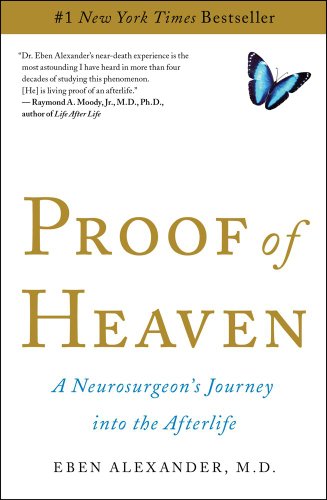
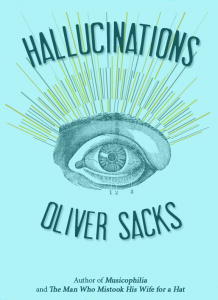
" "Seeing God in the Third Millenium, "Hallucinations, "Proof of Heaven, "The Science of Heaven, David P. Stang, Dr. Eben Alexander, Dr. Oliver Sacks, Near Death Experiences
Family and friends can take you to some really strange ‘places.’ After joining my wife on a trip to Peru and into the Amazon recently, I went to Columbus, OH for six days for the Obama campaign because a friend urged me to do so. And now another friend wants to take a small group of us on horseback through the battlefield at Gettysburg. And then there’s this posting.